The Day I Stopped Pretending: How a Hidden Language Revealed My Family’s Deepest Secret
For three long years, I sat at their dinner table wearing a smile that didn’t quite reach my eyes. My husband’s family spoke freely in Spanish around me, believing I was in the dark.
They assumed I couldn’t understand a single word. That assumption became their shield and my window into truth.
I heard everything. Every quiet judgment about how I prepared meals. Every whispered comment about my body after giving birth. Every criticism about the way I was raising my son.
I told myself it wasn’t worth the confrontation. That keeping peace was more important than defending myself.
That fragile peace shattered completely one ordinary afternoon. My mother-in-law leaned close to my sister-in-law and whispered words that stopped my heart.
“She still doesn’t know, does she? About the baby.”
In that single moment, I realized this had never been about cultural differences or harmless gossip. They were actively hiding something from me.
Something about my child.
The Weight of Unspoken Words
Living with a secret you’re not supposed to know creates a strange kind of pressure. You carry knowledge that changes everything while pretending nothing has changed.
For three years, I’d built my tolerance carefully. I learned to let the small insults roll off my back.
When they criticized my cooking in rapid Spanish, I smiled and offered seconds. When they made comments about my appearance, I changed the subject gracefully.
I convinced myself I was being mature. That understanding their language but choosing silence was a form of strength.
My husband knew I spoke Spanish fluently. We’d discussed it early in our relationship. But he never told his family.
At first, I didn’t think much of it. Language skills didn’t seem like something that required announcement.
Later, I wondered if he’d kept it quiet deliberately. If some part of him knew what I’d hear if they thought I couldn’t understand.
The little judgments I could handle. They stung, certainly, but they were surface wounds.
Comments about how I folded laundry or organized our home felt petty. Annoying but ultimately harmless.
But that whispered conversation about my son was different. It carried weight that settled deep in my stomach.
The way my mother-in-law said “the baby” with that particular tone. The conspiratorial glance between her and my sister-in-law.
The assumption that I remained blissfully ignorant of whatever truth they were protecting.
Questions That Demanded Answers
I didn’t confront anyone immediately. Instead, I became a careful observer in my own life.
I started paying closer attention to their interactions with my son. Looking for patterns I might have missed.
My mother-in-law had always been attentive with him. Maybe slightly more scrutinizing than warm, but I’d attributed that to cultural differences in showing affection.
Now I wondered what she’d been looking for. What evidence she’d been collecting during all those supervised visits.
My father-in-law maintained more distance, but that seemed normal for his generation. He loved his grandson in quiet, practical ways.
Or so I’d thought. Now every gesture felt loaded with possible meaning.
My sister-in-law had always asked pointed questions about my pregnancy. About whether I’d been surprised by the timing.
At the time, I’d found her curiosity a bit invasive but not suspicious. Many people ask too many questions about pregnancy and parenting.
Looking back, her questions felt calculated. Like she’d been gathering information for some purpose I hadn’t understood.
I needed to know what they knew. What secret about my own child they’d been keeping from me.
So I did what any mother would do. I waited for the right moment and asked my husband directly.
The Confession That Changed Everything
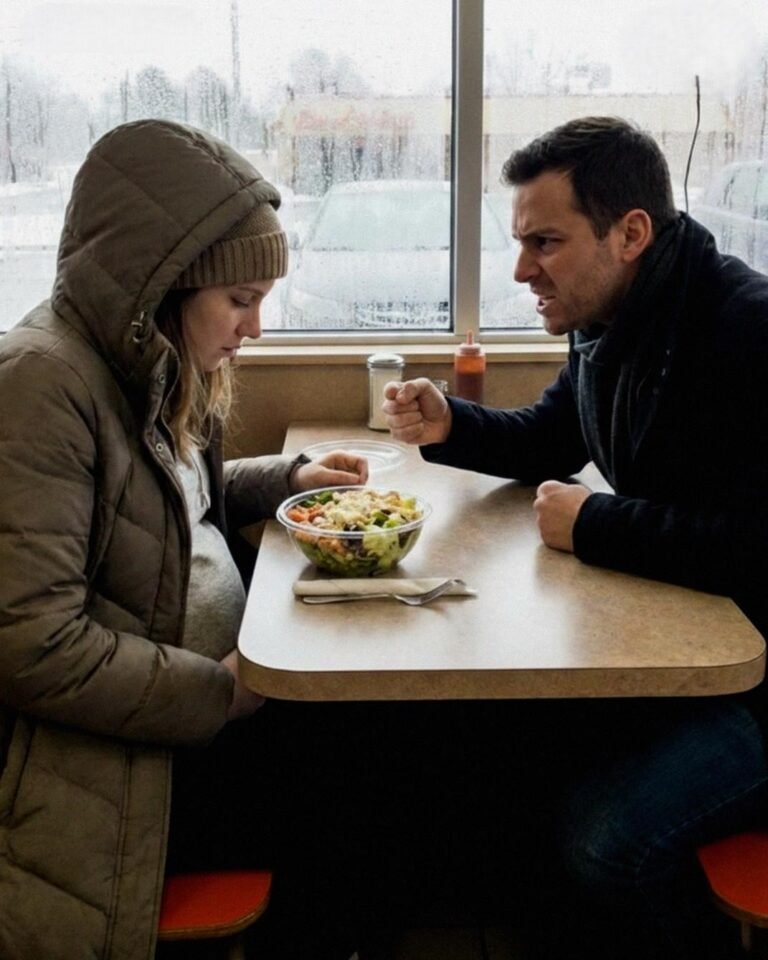
That evening, after we’d put our son to bed, I sat down across from my husband at our kitchen table.
“We need to talk,” I said simply. “About what your mother said this afternoon.”
He looked confused at first. Genuinely puzzled about which comment I meant.
“She spoke in Spanish,” I reminded him gently. “She assumed I wouldn’t understand.”
The color drained from his face. He knew exactly what I’d heard.
“I can explain,” he started, but I held up my hand.
“Just tell me the truth,” I said. “What don’t I know about our son?”
The silence stretched between us. I watched him struggle with words, with loyalty, with shame.
Finally, he spoke. “My parents took a DNA test. Without telling you.”
The words landed like physical blows. I felt my breathing change, become shallow and quick.
“They what?” I whispered.
He couldn’t meet my eyes. “They collected samples from me and from our son. Sent them to a testing service.”
My mind raced through the implications. The violation. The suspicion those actions represented.
“They doubted he was yours?” I asked, my voice hollow.
“They had questions,” he said weakly. “About the timeline. About whether—”
“About whether I’d been faithful,” I finished for him. The truth settling like ice in my veins.
He nodded miserably. “The results came back. He’s definitely mine. Definitely ours.”
“When?” I demanded. “When did they do this?”
“About six months ago,” he admitted. “Shortly after his second birthday.”
Six months. They’d known the truth for half a year and said nothing.
The Betrayal Behind the Secret
But the timeline wasn’t even the worst part. The worst part came next.
“You knew,” I said slowly. “You knew they did this, and you didn’t tell me.”
He finally looked at me, shame written across every feature. “I didn’t know beforehand. They told me after they got the results.”
“And you decided to keep their secret,” I said. Each word carefully controlled.
“I didn’t know how to tell you,” he said. “I knew you’d be hurt. I knew it would cause problems.”
“So you chose to protect their comfort instead of my right to know,” I said.
He had no answer for that. Because there was no good answer.
I thought about all the family dinners since then. All the times I’d sat at their table, laughed at their jokes, accepted their hospitality.
All while they carried this knowledge. This secret violation of my family.
They’d questioned my integrity. Treated me like a suspect in my own marriage.
They’d taken DNA from my child without permission. Without remorse.
And when the test confirmed what any reasonable person would have known—that my son was exactly who I said he was—they decided silence was kinder than honesty.
More likely, silence was easier than accountability.
“They violated our family,” I said quietly. “They violated our son. And you helped them hide it.”
My husband’s shame was genuine. I could see that clearly.
But shame without action is just another form of silence. Another way of choosing comfort over confrontation.
Understanding the Power of Silence
That night, I couldn’t sleep. I lay awake thinking about all the conversations I’d overheard and ignored.
All the times I’d chosen peace over honesty. All the moments I’d convinced myself that silence was the mature response.
I’d believed that understanding their language but not revealing that knowledge gave me some kind of advantage.
That I was somehow in control because I knew more than they realized.
But silence doesn’t create power. It only masks who actually holds it.
They’d had the power all along. The power to suspect. The power to investigate. The power to know.
And I’d been sitting there smiling, believing my silence was a choice when it was actually a trap I’d built myself.
My son slept peacefully down the hall, completely unaware of the questions that had surrounded his existence.
He didn’t know that his own grandparents had doubted his legitimacy. That they’d treated his identity like a mystery to be solved.
He didn’t know that his father had chosen family loyalty over transparency. That secrets about him had been kept in the language I pretended not to understand.
I thought about what kind of lesson this taught. About trust and family and the price of keeping peace.
I thought about what I wanted my son to learn as he grew. About standing up for yourself. About demanding honesty.
About not accepting treatment that diminishes your worth, no matter how politely it’s delivered.
Silence doesn’t preserve relationships. It only preserves the illusion that everything is fine.
Real peace requires honesty. It requires people to face uncomfortable truths and choose integrity over convenience.
Making the Decision to Speak
The next morning, I made my decision. I would no longer pretend.
Not about understanding Spanish. Not about knowing their secret. Not about accepting their behavior.
My husband tried to convince me to let it go. To move forward without confrontation.
“It’s done,” he said. “They know he’s mine. We can just put this behind us.”
But I couldn’t. Because the violation wasn’t just the test itself.
It was the assumption that they had the right to investigate me. The belief that their suspicions justified violating our privacy.
It was the months of carrying this secret while watching me play the role of the ignorant daughter-in-law.
“Your parents need to understand what they did,” I told him. “And so do you.”
He looked pained but didn’t argue. Perhaps he knew I was right.
I didn’t want revenge. I wanted acknowledgment. I wanted them to face what their actions had meant.
I wanted my husband to understand that loyalty to me should have come before loyalty to their comfort.
That being a good son doesn’t mean protecting your parents from the consequences of their choices.
I called my mother-in-law and requested a family meeting. Just the adults.
She sounded surprised but agreed. I heard curiosity in her voice, maybe a hint of concern.
She had no idea what was coming.
The Confrontation
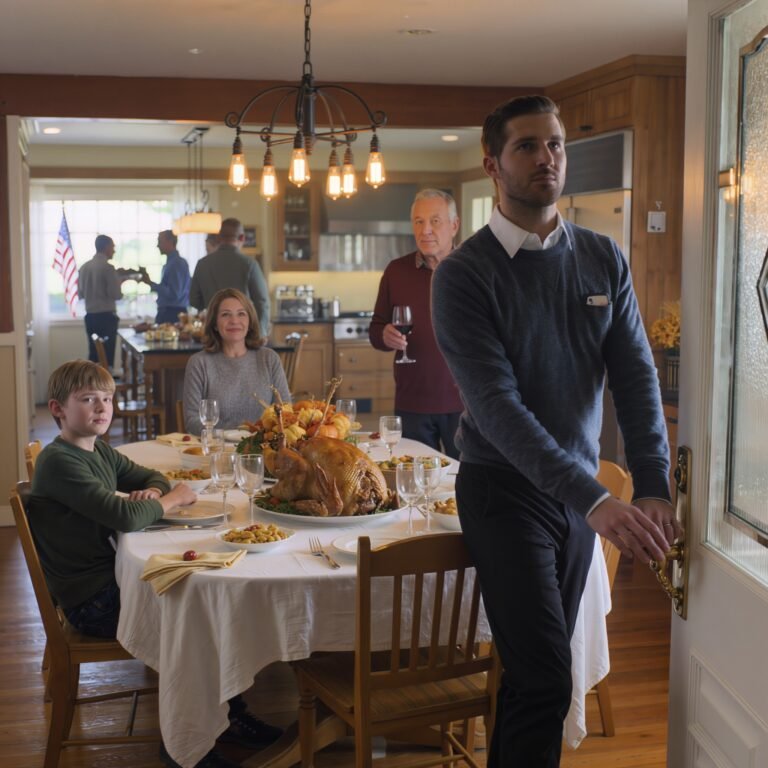
They arrived at our home that Saturday afternoon. My father-in-law, my mother-in-law, and my sister-in-law.
My husband sat beside me, tense and silent. We’d agreed he would let me lead.
I began in English, as I always had with them. Polite. Clear.
“I want to talk about the DNA test you took without my knowledge,” I said.
The room went completely still. My mother-in-law’s face froze mid-smile.
My father-in-law looked at my husband sharply. My sister-in-law suddenly found her hands very interesting.
“I don’t understand,” my mother-in-law said carefully in English.
So I switched to Spanish. Perfect, fluent Spanish with no accent or hesitation.
“Yes, you do understand,” I said. “You understand perfectly. Just like I’ve understood every word you’ve said for three years.”
The shock on their faces would have been satisfying if the situation weren’t so painful.
My mother-in-law opened her mouth, closed it, opened it again. No words came out.
“Every comment about my cooking,” I continued in Spanish. “Every criticism about my body. Every judgment about how I raise my son. I heard it all.”
My sister-in-law looked genuinely horrified. My father-in-law’s expression hardened into something defensive.
“But more importantly,” I said, “I heard you discuss the secret DNA test. The one you took to determine if my child was actually your son’s.”
“We had to know,” my father-in-law said gruffly. The first admission.
“You had to know?” I repeated. “You had the right to take DNA from my child without permission? To investigate me like a criminal?”
“The timeline was suspicious,” my mother-in-law said quietly. “We had concerns.”
“Then you should have asked me,” I said. “You should have come to me with your concerns like adults.”
“Would you have agreed to a test?” my sister-in-law asked.
“I would have been offended,” I said honestly. “But at least I would have had the dignity of knowing I was being accused.”
The conversation that followed was difficult. Voices were raised. Old grievances surfaced.
But something shifted when my mother-in-law finally said, “I’m sorry.”
Rebuilding on New Terms
The apology wasn’t perfect. It came with justifications and explanations I didn’t ask for.
But it was a beginning. An acknowledgment that what they’d done had been wrong.
My husband, to his credit, supported the boundaries I established. He told his parents that visits would change.
That they would need to rebuild trust slowly. That their assumptions about me had damaged something that wouldn’t heal overnight.
His willingness to stand firm mattered more than I’d expected. It showed me he could choose our family over their comfort.
Over the following months, relationships gradually improved. But they were different now.
My in-laws spoke more carefully around me. Not because they feared being caught, but because they knew I was listening.
They asked permission before taking our son anywhere. They respected boundaries they’d previously ignored.
My mother-in-law, surprisingly, became the most consistent in making amends. She called regularly. She asked about my preferences.
She even apologized specifically for individual comments I’d overheard over the years. Comments she’d thought were harmless because she’d believed I couldn’t understand.
My relationship with my husband also shifted. He understood now that silence isn’t neutral.
That choosing not to tell me about the test had been choosing his parents over our marriage.
We attended counseling together. We talked about loyalty and honesty and what it means to build a family separate from the one you were born into.
It wasn’t easy. Some days were harder than others.
But we were talking. Really talking, without secrets hidden in languages I supposedly didn’t speak.
The Lessons Worth Remembering
My son is growing up now, still blissfully unaware of the questions that once surrounded him.
He knows he is loved. He knows his family, both sides, care about him deeply.
He doesn’t need to know that his worth was once questioned. That his identity was treated like something requiring proof.
Someday, perhaps, I’ll tell him this story. When he’s old enough to understand its lessons.
I’ll tell him that silence doesn’t protect you. That pretending ignorance doesn’t give you power.
I’ll teach him that respect isn’t about avoiding conflict. It’s about honoring someone enough to be honest with them.
I’ll explain that family bonds should be built on trust, not on secrets kept in languages someone assumes you won’t understand.
Most importantly, I’ll teach him that betrayal isn’t always loud or cruel.
Sometimes it’s quiet. Calculated. Whispered between people who believe they’re protecting something.
But protection built on deception isn’t protection at all. It’s just another form of control.
The deepest lesson I learned wasn’t about my in-laws’ suspicions or my husband’s silence.
It was about my own complicity in accepting treatment that diminished my worth.
I’d convinced myself that tolerating their comments was strength. That rising above their judgments made me the bigger person.
But there’s nothing strong about accepting disrespect. Nothing noble about silence in the face of violation.
Real strength is speaking truth even when it’s uncomfortable. Even when it disrupts the carefully maintained illusion of family harmony.
Moving Forward with Clarity
Today, I speak Spanish openly with my husband’s family. There are no more secrets hidden in translation.
The relationship isn’t perfect. Some wounds take longer to heal than others.
But it’s honest now. Built on acknowledgment rather than assumption.
My mother-in-law and I will never have the relationship we might have had if this hadn’t happened.
But we have something more valuable: mutual respect earned through difficult honesty.
My son plays with his cousins, completely unaware of the drama that once surrounded his birth.
He experiences his grandparents’ love without knowing it was once contingent on genetic confirmation.
That innocence is precious. I’m grateful he gets to grow up without carrying the weight of their doubts.
But I carry the memory. Not as a burden, but as a reminder.
A reminder that trust doesn’t disappear all at once. It erodes slowly when loyalty is postponed and accountability is avoided.
A reminder that the people who love you should defend you, not investigate you.
A reminder that family relationships worth keeping are built on honesty, not on secrets whispered in languages you’re not supposed to understand.
I learned that silence has a cost. That peace purchased with pretense isn’t really peace at all.
And I learned that sometimes the most important thing you can do is stop pretending you don’t understand.
Even when understanding means facing truths that are painful and complicated.
Because your dignity matters more than their comfort. Your truth matters more than their assumptions.
And your family deserves to be built on foundations stronger than secrets.