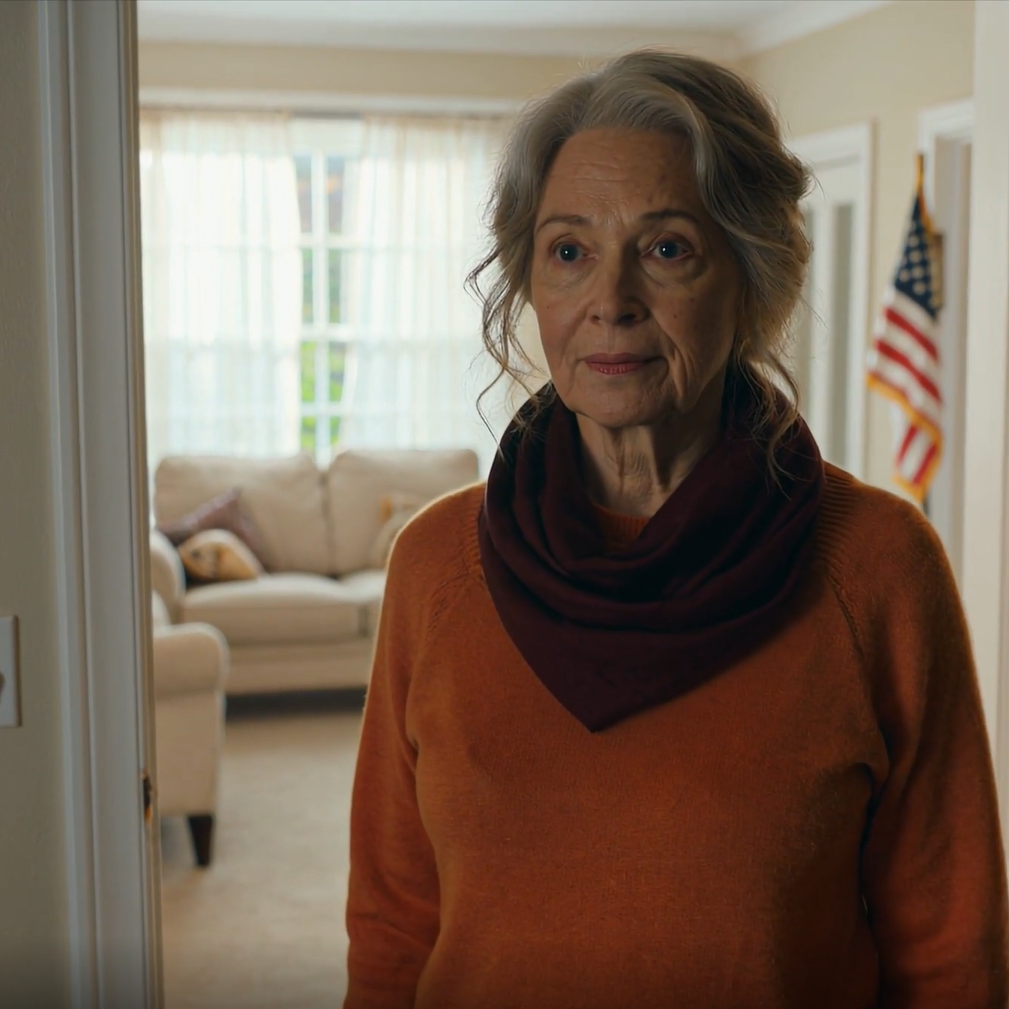
Elderly Mother Wakes Thanksgiving Morning to Empty House: Son and Daughter-in-Law Fled to Hawaii Without Her – Her Quiet Response Changed Everything
After seventy-three years on this earth, I know a dozen flavors of silence. There is the soft hush after a long day, when dishes are washed and lights are low. There is the heavy quiet of grief, when even the ticking of a clock feels loud.
And there is the wrong kind of silence, the kind that feels like a held breath right before something breaks.
That Thanksgiving, the silence was wrong.
I lay in bed for a moment, watching the faint pattern of morning light on the ceiling. On holidays, I am usually awake before the sun, already mentally basting turkeys and counting place settings.
My body is an old clock, it knows the rhythm of family gatherings.
In my mind, I could almost hear it: the thud of little feet in the hallway, the cartoon theme songs leaking under the door, the comforting gurgle of the coffee maker that my son, Michael, always started for me.
None of those sounds were there.
For a few seconds, I thought maybe I’d woken up too early, caught the house still sleeping. Then my ears adjusted to the quiet, and I realized it wasn’t sleep.
It was absence.
The Empty House
My knees complained when I swung my legs over the side of the bed, but that was nothing new. I reached for my blue robe hanging on the bedpost, the one I’ve had so long the cuffs have gone a little shiny, and shrugged it on.
It smelled faintly of laundry detergent and the lavender sachets I tuck into my drawers.
Harold used to say I always smelled like a linen closet. It used to annoy me. Now I would have given anything to hear him tease me again.
When I opened my bedroom door, the hallway was bathed in pale gold light from the window at the far end.
Normally, that kind of light makes a home feel warm.
This morning, the warmth stopped at the walls.
“Michael?” I called, my voice echoing down the hall. “Amanda?”
Nothing.
I listened harder, the way you do when you’re sure you must have missed something. No cartoons from the den. No whispered sibling arguments over a toy. No clatter of pots or the hiss of a preheating oven.
No soft scolding from Amanda telling the kids not to wake Grandma.
I checked the guest room where my grandchildren always insisted on sleeping when they stayed over. The beds were made, sheets pulled tight enough to bounce a coin.
The stuffed rabbit and superhero bear that normally sat on the pillows were gone. So were the mismatched socks usually abandoned on the floor.
The room looked like a picture from a furniture catalog, untouched by real life.
My heart gave a hard, hollow thump.
Maybe they went out early, I told myself. Maybe Michael wanted to beat the crowds at the grocery store. Maybe Amanda took the kids into the city to see the giant parade balloons before the streets got packed.
Maybe this was some surprise I didn’t understand yet.
There are always reasonable explanations, if you want them badly enough.
I wrapped my hand around the railing and went downstairs, one slow step at a time. At my age, you learn to respect gravity.
With each creak of the stair, I waited for the house to answer back.
It didn’t.
The kitchen stopped me cold.
It was spotless. On Thanksgiving morning, it should have looked like a war zone, mixing bowls stacked in the sink, flour dusted across the counter like fresh snow, vegetables waiting in uneven piles on the cutting board.
Instead, everything gleamed. The sink was empty. The towels were folded neatly. The coffee maker sat silent, its little green light dark.
I walked to the window over the sink, every step suddenly loud in my own ears, and looked out at the driveway.
Both cars were gone.
Michael’s truck, the one I’d helped him with the down payment for when he finally “upgraded.” Amanda’s SUV, the one she said she needed because “with two kids, Mom, there’s just no way a sedan is enough.”
Two bare slabs of concrete stared back at me, the only evidence of life a pair of dark oil stains.
That was when I saw the note.
The Note Under the Turkey Magnet
It lay in the center of the counter, folded cleanly in half, held down by a turkey-shaped magnet I’d bought years ago at a church craft fair.
The magnet belonged on the refrigerator, where it had lived every November for as long as I could remember. Seeing it on the counter felt like seeing a family photo turned face-down.
I picked up the note.
The handwriting was Amanda’s, neat, slightly slanted, the kind of script people compliment in the checkout line.
“Mom, Please don’t worry. We decided to spend Thanksgiving in Hawaii this year. You wouldn’t have liked the flight, so we thought it best to let you rest at home. Back in a week. Love, Amanda.”
I read it once. Twice. A third time, hearing the words in her bright, efficient voice.
We decided.
Not we hoped you’d come. Not we wondered what you thought. Not even we’re sorry, this was last-minute.
We decided.
And that little sentence about the flight, “You wouldn’t have liked the flight,” as if my supposed dislike of airplanes were the problem, as if they were doing me a kindness by excluding me.
As if arthritis in my knees made it acceptable to erase me from my own family’s holiday.
I waited for the familiar reactions: the burning eyes, the tight throat, the hot, humiliating sting of tears.
They didn’t come.
Instead, a strange stillness spread through me, like a room when everyone leaves and you can finally hear your own breathing.
I set the note down and turned to the coffee maker. My hands moved on autopilot, measure, pour, press, while my mind ticked through the last few years like it was flipping channels.
As the machine hummed to life, I leaned against the counter and let the memories come.
How It All Began
Three years earlier, my husband, Harold, had died.
We’d been married for forty-eight years. He died in his sleep, lying on his side facing me, his hand open on the sheet like he’d simply let go of something he’d been holding for a long time.
The hospice nurse said it was peaceful. People from church repeated the word everywhere, as if saying it often enough would make it feel true.
“Peaceful,” they called it.
Maybe it was peaceful for him.
For me, it felt like waking up on the edge of a cliff.
Our little house, the one we’d bought when Michael was still toddling around in footie pajamas, turned cavernous overnight.
Harold’s shirts hung in the closet, shoulders still rounded, as if waiting for him to slip back into them. His coffee mug sat in the cabinet, my favorite picture of us smiling from its chipped side.
His recliner by the window kept its Harold-shaped dent.
I moved through those rooms like a ghost. I’d find myself standing in the kitchen with the refrigerator door open, staring at a jar of pickles and realizing I had no idea how I’d gotten there.
Days folded into nights, nights folded into mornings. I ate when my hands remembered how to butter toast. I slept when my body finally shut down from exhaustion.
Michael started appearing more often after the funeral. He brought groceries I hadn’t asked for and left casseroles I didn’t really want.
He called every day.
“You eating, Mom?” he’d ask. “You sleeping okay?”
Sometimes he’d repeat the questions twice, like he didn’t quite believe my answers. It touched me more than I let on.
Losing the person who has known you since you were twenty-four makes you feel like your history just evaporated.
Every “Hey, Mom” on the phone was a little thread back to something solid.
One evening, he came over after work, still in his tie, hair mussed like he’d been running his hands through it all day.
We sat at my old kitchen table, the same one where I’d cut his grilled cheese into triangles when he was small.
“Mom,” he said carefully, fingers tracing the grain of the table, “I’ve been thinking. You shouldn’t be alone. It’s not good for you.”
“I’m managing,” I replied. It was halfway true. I was lonely, but I wasn’t helpless.
“Amanda and I talked,” he continued. “We have that extra room downstairs. The kids would love waking up and having breakfast with you. And honestly, daycare is insane. If you lived with us, it’d help everyone.”
He spread his hands like it was the most reasonable thing in the world.
“You’d have family around,” he said. “We’d look out for you. You’d look out for the kids. Win-win.”
He made it sound like salvation, for all of us.
I thought about the nights I’d heated soup for one, the way the house seemed to grow larger in the dark. I thought about Christmas mornings with only one stocking hanging by the fireplace.
I thought about Harold’s empty side of the bed and the way my own voice sounded too loud when I spoke into the quiet.
So I said yes.
He hugged me, relief flooding his face.
“You won’t regret this,” he said. “We’re going to take such good care of you, Mom.”
What he did not mention until later was the house.
The Down Payment
“The rental’s okay for now,” he said a week later, standing in my driveway with a folder of real estate flyers in his hand, “but with you moving in, it’s going to be tight. We’ve been looking at places. With your help on the down payment, we could get somewhere really nice. A room just for you. Big yard. Good schools for the kids. It’s really an investment in the family’s future.”
Harold had been cautious. We had savings. There was also a tidy life insurance policy.
If I’d wanted, I could have lived quietly and comfortably for the rest of my life in our old little house. I could have repaired the roof, taken modest vacations with senior bus tours, donated more to the church food pantry.
Instead, I wrote a check that made my hand shake just a little.
At the closing, Amanda wore a navy dress and a bright lipstick that made her look like she stepped out of a real estate brochure herself.
She squeezed my arm when the papers were passed around.
“You’re such a blessing, Mom,” she said. “We could never have done this without you.”
I watched Michael sign his name on line after line. Somewhere in the middle, the realtor joked, “You’re going to know that signature better than your own name.”
Everyone laughed. I laughed too, because that’s what you do.
No one commented on the fact that my name was on the check that made all those signatures possible.
The first few months in the new place were nice. Better than nice.
The house smelled like fresh paint and carpet glue. Sunlight flooded the open-concept living room in the mornings.
I woke up to the sound of cartoons in the background and the thud of small feet pounding down the hall.
The grandkids crawled into my bed at six in the morning, breath warm, hair tangled, whispering secrets that didn’t have real words yet.
“Grandma, did you know dinosaurs had feathers?” my grandson asked one morning, his face inches from mine.
“Some of them,” I replied. “But not the ones in your movies.”
He gasped, offended on behalf of the dinosaurs.
Amanda asked for my recipes, called me a “lifesaver” whenever work ran late and I kept dinner warm.
Michael sat at the kitchen island at night, beer in hand, talking about office politics and new projects.
Sometimes, after the kids were in bed, we’d play board games or watch a movie together.
For a while, I felt like I was slipping into a new version of my life instead of standing in the ruins of my old one.
The Slow Shift
I took care of the kids. I packed lunches, checked homework, read bedtime stories until my voice went hoarse.
When the washing machine died with a final, dramatic shudder, I bought a new one, top-of-the-line.
When Michael mentioned the electric bill had gone through the roof during a brutal heat wave, I told him not to worry.
“I’ll take care of the utilities,” I said. “You two focus on the mortgage.”
It felt good to help. It felt like purpose.
“You’re such a blessing, Mom,” Amanda said one night, hugging me from behind while I stirred a pot of sauce.
“We’d be lost without you,” Michael added.
I carried those words around like a warm stone in my pocket.
Then, little by little, the tone shifted.
It started small. That’s the thing about being taken for granted, it rarely arrives all at once. It slides in on the back of convenience.
The first time I mentioned visiting my friend Dorothy for a weekend, Amanda’s reaction caught me off guard.
“But… who’s going to watch the kids?” she asked, genuinely startled.
“I thought Michael could take them,” I said. “He is their father.”
She laughed, a little too quickly, like I’d made a joke.
“Of course he’s their father,” she said. “I just meant, he has so much on his plate. Work is crazy right now. And the kids are used to you. You’re so good with them. It would be… disruptive.”
Disruptive. Like I was a piece of furniture someone wanted to keep in the same corner.
Another night, after a long day of errands and cooking and chasing a sugar-high toddler through the backyard, I said, “I’m tired. Maybe we can order in tonight.”
Michael frowned.
“We were counting on you to cook,” he said. “It’s been a long day.”
We. Counting on you. The word “blessing” started showing up less. The words “we need” started showing up more.
I don’t know exactly when the shift completed itself, only that one day I realized I was planning my entire life around everyone else’s needs while my own sat in the corner collecting dust.
The Conversation I Wasn’t Meant to Hear
Six months before that quiet Thanksgiving morning, I caught a conversation I was never meant to hear.
I had gone to bed early with a head cold. My door was cracked open. The hallway carried sound the way a radio carries a song.
“She means well,” Amanda was saying on the phone, her voice low but sharp. “But she’s so set in her ways. Everything has to be done her way. Sometimes it’s easier to work around her.”
A pause. I could almost hear the other person on the line, the sympathetic murmur, the enabling sighs.
“Oh, we can’t ask her to leave,” she went on. “Michael would never forgive himself. Plus, she helps with so much. The bills, the kids. We’d be lost without her money.”
She laughed softly.
“Honestly? Her money. Not her. Her money.”
I lay there, staring at the dark ceiling, the words dropping into my chest one by one like stones.
“She’s sweet,” Amanda added, “but I miss having our own space. I want my house back. You know?”
My house back.
As if I were a long-term guest who had overstayed the welcome, not the person whose check had put their name on the mailbox.
I did not confront her. I did not march into the hallway and demand an explanation.
I imagined doing it, imagined her wide-eyed denial, the quick apology, the promise that it “came out wrong.”
I imagined Michael caught in the middle, torn between his wife and his mother, weary from the tension.
I did what women of my generation have always been trained to do.
I swallowed it.
I told myself she was having a bad day. I told myself I’d misunderstood.
I pulled the covers up and tried not to think about the way “her money, not her” kept echoing in my head.
But once you hear the truth, it doesn’t un-ring.
And then, three years after Harold’s funeral, I woke up on Thanksgiving to an empty house and a note about a flight I supposedly wouldn’t have liked.
The Decision
The coffee maker beeped softly, pulling me back to the present. I poured myself a mug, added cream, and carried it to the table.
I sat in my usual chair facing the backyard, where Harold’s old bird feeder still hung from a low branch.
A cardinal swooped down, bright red against the pale sky, shook the feeder once with its weight, and began to eat.
“He always loved the cardinals,” I murmured, though there was no one there to hear it.
I took a sip of coffee and let the truth finally sit in the chair across from me.
I was alone in a house I had helped buy, surrounded by things I had paid for, after being left behind with a note.
Not a conversation. Not a phone call. A note.
The humiliation burned, but underneath it, something else flickered.
An old, stubborn part of me, the part that had survived tight budgets and leaky roofs and Harold’s long hours, lifted its head.
Enough.
By the time I finished my coffee that morning, the fog had burned off.
I rinsed my mug, set it gently in the rack, and went upstairs. In my nightstand drawer, beneath my reading glasses and a half-used tube of hand cream, sat a blue folder.
Harold used to tease me for keeping everything.
“You could reconstruct our entire life from your files,” he’d joke.
He wasn’t wrong.
I laid the folder on my bed and opened it.
Receipts. So many receipts.
Television. Sofa set. Refrigerator. Washer and dryer. Patio furniture. Grill. Vacuum.
The fancy blender Amanda had sighed over at a friend’s house. The espresso machine Michael had mentioned once and found on the counter the next week.
The stand mixer in the perfect shade of red that matched Amanda’s kitchen towels.
And, tucked near the back, a copy of the cashier’s check for the down payment on the house.
My name was on every piece of paper.
One by one, pieces of the story I’d been telling myself fell away, leaving only the bare structure underneath.
I sat there for a moment, fingers resting on the edges of the folder.
“It’s all mine anyway,” I said quietly.
The sentence didn’t feel greedy. It felt like truth finally given words.
I picked up my phone.
“Moving companies near me,” I typed into the search bar. My fingers didn’t even tremble.
Calling the Movers
“Good morning, Prestige Moving Services,” a man answered after a few rings. “How can I help you today?”
“Good morning,” I said. “I’d like to schedule a move for tomorrow.”
“Tomorrow’s Thanksgiving, ma’am,” he replied. “We do work holidays, but there’s an additional fee.”
“That’s fine,” I said. “I understand.”
He hesitated.
“How much are we moving?” he asked. “A few items, or…?”
“Quite a bit,” I answered. I looked around the bedroom, at the dresser I’d bought, the linens I’d paid for, the lamps that were mine. “I’ll have a detailed list ready.”
We settled on eight a.m. I gave him the address. He confirmed the time. We hung up.
The house was still silent, but the quiet had changed. It no longer felt like abandonment.
It felt like the pause before the first line of a new chapter.
I spent the rest of the morning at the kitchen table, the blue folder open beside me, a legal pad in front of me.
At the top, in my neat cursive, I wrote: ITEMS TO MOVE.
Then I wrote down everything I had paid for.
The sixty-five-inch television Michael had insisted was “too much” until I offered to make it a Christmas present.
The cream-colored sofa Amanda fell in love with in a catalog. The matching armchair. The coffee table and end tables.
The stainless-steel refrigerator. The washer and dryer. The patio set. The grill. The bar stools at the kitchen island. The rug in the living room.
The lamps with the warm, soft light everyone complimented.
Halfway down the second page, my hand cramped. I flexed my fingers and kept going.
The more I wrote, the clearer everything became. Every line was a memory of me opening my wallet, of me choosing them, of me believing I was investing in love instead of just paying bills.
In the pantry, pushed to the back of the middle shelf, I found a can of pumpkin purée. I had planned three pies that day, one for our table, one for Michael to take to the office, one for the kids to pick at all weekend.
Plans change.
I made one small pie, just for me.
The familiar rhythm of baking, measuring flour, cutting in butter, rolling out dough, calmed me in a way nothing else had in months.
I hummed an old hymn under my breath as I worked. As the pie baked, the kitchen filled with the smell of cinnamon and nutmeg, the scent of a hundred Thanksgivings past.
When it cooled, I cut myself a generous slice and sat back down at the table.
For the first time in years, I took the biggest piece.
I ate slowly, tasting every bite. I let the silence sit beside me, not as an enemy this time, but as a witness.
Moving Day
The next morning, the moving truck pulled into the driveway at seven-fifty.
By then, I’d showered, dressed in comfortable slacks and a soft sweater, and brewed a fresh pot of coffee.
A plate of chocolate chip cookies cooled on the counter. Harold always said my chocolate chip cookies could fix almost anything.
Today, they were a peace offering to three strangers who were about to help me reclaim my life.
Three young men climbed out of the truck, stamping their boots against the cold.
I opened the front door before they could knock.
“Good morning,” I called. “You must be from Prestige.”
The tallest of them stepped forward, offering a polite smile.
“Yes, ma’am. I’m Jason. This is Marcus and Tyler.”
“Come in,” I said. “Coffee’s in the kitchen. Help yourselves to cookies. You’ll need the sugar.”
They exchanged a look, half surprised, half relieved, and followed me inside.
As they sipped coffee and reached for cookies with chilled fingers, their shoulders relaxed.
“Most people are stressed out of their minds on moving day,” Jason remarked as he wrapped his hands around a mug. “You seem… pretty calm.”
“I’ve had some time to think,” I said. “And I’m very organized.”
I tapped the blue folder on the table and slid the legal pad toward him.
“Everything you’re taking is on this list,” I explained. “Everything on this list belongs to me. I have receipts for every item. If anyone questions you, I want you to know you’re moving my property, not stealing theirs.”
His eyebrows rose as he scanned the pages.
“This is… a lot of stuff,” he said.
“I’ve spent a lot of years taking care of people,” I answered. “Now I’m taking care of myself.”
Marcus, the youngest, glanced toward the photos still lining the hallway.
“Family not around?” he asked softly.
“They’re on vacation,” I said. “They left me a note.”
Something in my tone must have told him everything he needed to know. He only nodded.
We started in the living room.
They wrapped the television in thick moving blankets, taped them tight, and eased it onto a dolly.
The sofa took all three of them to angle through the doorway, voices low and steady.
“One, two, three, careful with the corner.”
The cream-colored fabric that Amanda had once cooed over disappeared through the front door and into the truck.
Next went the armchair, the tables, the lamps. The bookshelf followed, but I left Amanda’s decorating books stacked neatly on the floor.
I had bought the shelves, not the pages.
At one point, Marcus paused in front of a framed family photo still hanging on the wall, Michael and Amanda on the front porch, the kids in their arms, me standing to the side with my hand on Michael’s shoulder.
“Do you want this packed, too?” he asked.
I studied the picture for a long beat.
“Leave it,” I said. “They can decide what to do with it.”
By nine-thirty, the living room was nothing but bare walls and carpet dents.
Emptying the Kitchen
In the kitchen, Tyler froze when he opened the refrigerator.
“Ma’am, there’s a ton of food in here,” he said.
“I know,” I replied. “Set it on the counter. They can deal with that part.”
They emptied mayonnaise jars, juice boxes, leftovers in glass containers, cartons of eggs, and three different half-used bottles of salad dressing onto the countertops.
Then they unplugged the refrigerator, wrangled it onto a dolly, and wheeled it out, leaving a pale rectangle and a faint outline of dust.
The blender went. The espresso machine. The microwave. The fancy stand mixer.
In the laundry room, the washer and dryer I’d bought when the old set rattled itself to death were disconnected and hauled away.
The laundry baskets stayed. They were theirs.
We made our way room by room. In the backyard, they loaded the patio set and the grill onto the truck while cold wind tugged at the straps of their overalls.
I watched from the doorway, arms folded, feeling strangely light.
By noon, the truck was full. The house echoed when we spoke. Every step left a hollow sound.
I made the men sit for sandwiches at the bare dining room table.
“You’re really handling this well,” Jason said between bites. “I’ve seen people have full-on meltdowns over a broken lamp.”
“I’ve already done my crying,” I said. “I just did it quietly, years ago, while everyone was busy taking what I kept offering.”
He looked at me for a moment like he wanted to say more, then simply nodded.
After lunch, I walked through each room one last time.
The living room looked bigger without the furniture, like it was relieved to finally stop pretending to be something it wasn’t.
The kitchen counters were empty. Upstairs, the bedrooms were stripped down to their bones.
Sunlight streamed through the windows, catching dust motes that had nowhere left to hide.
In the kids’ room, the beds still made, the superhero posters still taped to the wall, I stood for a long moment.
I could almost hear their giggles, feel the weight of a sleepy child leaning against my shoulder.
“I love you,” I whispered into the empty air. “That part never changes.”
Love and boundaries, I was learning, could exist at the same time.
In the kitchen, Amanda’s note still sat on the counter, held down by the turkey magnet.
I picked it up, read it one more time, then set it back exactly where I’d found it.
Beside it, I placed the stack of fresh utility bills that had come in the mail that morning, electric, water, internet, all now in Michael’s name.
I had called each company earlier that week, before I’d even known about Hawaii, and removed myself from the accounts.
It had been an idle thought then, a quiet tug toward independence I didn’t fully understand.
Now it felt like foresight.
Finally, I took my house keys off my key ring, tied them together with a piece of red ribbon I found in a drawer, and laid them on top of the note and bills.
A little parting gift.
Jason met me at the front door.
“We’re all loaded, ma’am,” he said. “Ready when you are.”
I stepped outside into the cold November air and pulled the door shut behind me.
The lock clicked.
It sounded like freedom.
Meadowbrook Senior Living
“Meadowbrook Senior Living Community,” I told him when he asked for the address.
Meadowbrook sat on a quiet street lined with bare maple trees and neat sidewalks. The building was two stories of brick with white trim, the kind of place you’d barely notice unless you were looking for it.
A modest sign out front listed the name in simple black letters. No fancy slogan, no glossy advertisement photos of laughing seniors holding salads.
The first time I’d visited, weeks earlier, the courtyard fountain had been running.
I’d stood there, hands in my coat pockets, listening to the water and thinking, I could breathe here.
No one had rushed me. No one had asked what I could contribute to the “household budget.”
Patricia, the manager, had simply walked me through the building, pointing out the laundry room, the art studio, the little library where two residents argued cheerfully over a crossword puzzle.
“People here mind their business,” she’d said. “But if you need help, somebody shows up. It’s a good balance.”
That memory had sat in a corner of my mind ever since, like a door I wasn’t quite ready to open.
Now, as the moving truck pulled into the lot, the fountain was turned off for winter, but the familiarity of the place wrapped around me like a blanket.
Patricia met me in the lobby with a smile and an envelope.
“Mrs. Patterson,” she said, “welcome home. Unit 2B. Elevator’s down the hall. If you need anything, I’m right here.”
My new apartment was small, but it felt big in all the ways that mattered.
Sunlight poured through the living room windows, turning the honey-colored floors warm.
The kitchen was compact but bright, with white cabinets that actually closed all the way.
There was one bedroom, one bathroom, and a small balcony overlooking the courtyard.
By mid-afternoon, Jason and his crew had unloaded the truck. My sofa faced my television. My bed was in my room.
Harold’s photo hung on the wall by the time they left. My teapot sat on the stove like it had always belonged there.
“You sure you’re okay here by yourself?” Jason asked at the door.
I looked around at the space, at the boxes waiting to be unpacked, at the afternoon light spilling across the floor.
“I’m more than okay,” I said. “I’m finally where I’m supposed to be.”
After they left, I unpacked slowly, choosing where things would go not based on anyone else’s vision, but on what made sense to me.
My dishes in the cabinet by the stove. My favorite mug on the middle shelf. Harold’s photo at eye level from the sofa.
A throw blanket draped over the arm of the couch in exactly the way I liked.
The knock came a few hours later.
I opened the door to find a woman about my age with bright blue eyes behind wire-rimmed glasses and short white curls.
She held a casserole dish covered with foil that still radiated warmth.
“Hi,” she said. “I’m Ruth from 2D. Patricia told us we had a new neighbor. I brought you dinner. Moving day is brutal.”
For a moment, my throat tightened in that old, dangerous way. Not with hurt this time, with gratitude.
“That’s very kind,” I managed. “Please, come in.”
She stepped inside, looking around.
“Oh, you’ve already made it cozy,” she said. “Some people live in boxes for months. You’ve got a knack.”
We ate her chicken-and-rice casserole at my little table while she told me about the building.
“Book club on Tuesdays,” she said. “We argue about mysteries like they’re Supreme Court cases. Movie night on Fridays, popcorn included. There’s a little garden in the back for anyone who wants to grow tomatoes or herbs in the summer. It’s a good crowd. People keep to themselves, but they show up if you need them.”
“That sounds perfect,” I said.
And I realized, with a slow, quiet shock, that I meant it.
That night, I went to sleep in my own bed, in my own room, in a place where every bill and every piece of furniture had my name on it.
The ache of what I’d left behind was still there, a dull throb under my ribs.
But for the first time in a long time, it wasn’t the only thing I felt.
180 Missed Calls
Five days later, I looked down at my phone and saw eighteen missed calls.
Michael. Amanda. A few numbers I didn’t recognize.
By noon, the number was over fifty. By evening, over one hundred. My voicemail icon blinked like a frantic heartbeat.
The text messages stacked under them.
“Mom, we just got home. Where are you? Call me.”
“Mom, this isn’t funny. Something’s happened to the house.”
“Mom, answer your phone. The house was robbed. Everything’s gone.”
Every message carried some combination of panic, indignation, and sudden concern for my whereabouts.
I brewed myself chamomile tea, sat on the edge of my bed, and opened the Ring app Michael had installed two years before.
He’d added me as a user so I could check on packages.
He’d never taken me off.
I scrolled back to that afternoon.
At 3:42 p.m., the front door camera showed Amanda rolling in her suitcase, tanned and laughing, sunglasses perched in her hair.
Michael followed, juggling bags while the kids bounced around them, skin a few shades darker from island sun.
They stepped into the living room.
Amanda stopped so suddenly the younger one bumped into the back of her legs.
Her laughter dissolved.
“Michael,” she said, voice high, “where’s the couch?”
He pushed past her into view.
“What the… where’s the TV? Where’s everything?”
He rushed into the kitchen. I heard his voice from off-camera.
“They took the refrigerator,” he shouted. “Amanda, they took the refrigerator.”
The kids started crying. Amanda fumbled for her phone.
“I’m calling 911,” she said, her words sharp and breathless.
I watched the rest on fast-forward, the officers arriving, the walk-through, the wild gestures toward empty rooms.
Michael’s face got redder, Amanda’s makeup smeared. They pointed at blank spaces like pointing would conjure furniture back.
For a moment, that old instinct stirred, the one that had kept me cooking and paying and fixing and smoothing for decades.
Call them. Explain. Soften this.
I took a long sip of my tea.
Then I closed the app.
The Police Visit
Two days later, three sharp knocks sounded on my apartment door.
Through the peephole, I saw two uniformed officers.
I opened the door.
“Good afternoon, officers,” I said. “Can I help you?”
“Good afternoon, ma’am,” the younger one replied. “Are you Margaret Patterson?”
“I am.”
“We’re here about a reported theft at your son’s residence,” he said. “He indicated you might have information.”
“Of course,” I said. “Please, come in. I just made coffee.”
They sat on my sofa while I poured coffee and set out a plate of cookies.
The older officer opened the blue folder I handed him and began to read.
“Sixty-five-inch television,” he murmured. “Purchased December 2023. Margaret Patterson.”
He flipped a page.
“Sofa set. Three thousand. Refrigerator. Twenty-eight hundred. Washer and dryer…”
He looked up at me, something like respect in his eyes.
“Ma’am,” he said, “these are all in your name.”
“Yes,” I replied. “I bought those things. I lived there for three years. When I moved out, I took what I had paid for.”
The younger officer frowned slightly.
“Your son didn’t mention that,” he said.
“I imagine he didn’t,” I answered.
The older officer closed the folder and handed it back.
“Mrs. Patterson,” he said, “you were within your rights to remove property you purchased. There’s no crime here. If your family continues to give you trouble over this, call us.”
He set a business card on my coffee table.
We stepped into the hallway together.
The elevator doors opened at the same time. Michael and Amanda stepped out.
Amanda’s cheeks were blotchy, Michael’s jaw was clenched.
“Officers,” Amanda burst out, “did you talk to her? Did she tell you what she did?”
“She stole everything,” Michael said, pointing at me. “She emptied our house.”
“Mr. and Mrs. Wright,” the older officer said evenly, “your mother has extensive documentation proving she purchased the items removed from your home. She broke no laws.”
“But that’s our furniture,” Amanda protested. “Our appliances. Our… our life.”
“Legally,” he replied, “property belongs to whoever paid for it. Your mother did. That makes it hers.”
Michael shook his head.
“That can’t be right,” he said. “It’s our house.”
“Ownership of the house and ownership of the contents are separate issues,” the younger officer said. “As far as the items your mother took, this is a family matter, not a criminal one.”
Amanda’s eyes flashed.
“So she can just… take everything and walk away?” she demanded.
“She took what she paid for,” the officer said. “If you want different arrangements in the future, I suggest you put them in writing before accepting someone’s financial help.”
The officers stepped into the elevator. The doors slid closed.
The hallway went quiet.
Amanda stared at me like she was seeing a stranger.
Michael stared at the floor, hands balled into fists at his sides.
“I hope you enjoyed Hawaii,” I said softly.
Then I closed my door.
On the other side of it, I heard Amanda’s voice rise, sharp and shrill.
“This is your fault,” she hissed. “You told me she wouldn’t do anything. You said she was harmless.”
Their argument faded as they moved down the hall. I stood with my back against the door until the silence returned.
The Lawsuit
Three weeks later, a certified letter arrived from the county courthouse.
Michael and Amanda were suing me for twelve thousand dollars in “emotional damages.”
I showed the summons to Ruth over tea.
“They’re unbelievable,” she said, adjusting her glasses as she read. “Are you going to get a lawyer?”
“I think I’ll bring my receipts,” I said. “That should be enough.”
On a gray Tuesday in December, I stood in a small courtroom while Amanda told the judge how devastated they were, how my actions had left them in hardship, how I had “stripped” their home.
She wore black, as if in mourning. Michael sat beside her in a suit he hadn’t ironed properly.
They looked less like wronged victims and more like two people who had finally realized their safety net had been rolled up.
“Your Honor,” Amanda said, voice trembling just enough to sound practiced, “we returned from a family vacation to find our house empty. No warning. No discussion. My mother-in-law took everything. Our children came home to bare walls. They were confused and scared. We have suffered severe emotional distress. We’re asking for twelve thousand dollars in damages to help us rebuild what was taken from us.”
The judge, a man with silver hair and weary eyes, listened politely, hands folded.
When she finished, he turned to me.
“Mrs. Patterson?” he asked.
I stood, smoothing my skirt.
“Your Honor,” I said, “I don’t deny that I removed those items. I bought them. I have documentation for each one.”
The bailiff handed him my blue folder.
He flipped through it slowly. The room was quiet except for the soft murmur of fluorescent lights and the occasional flip of a page.
“Television,” he read. “Furniture. Appliances. All in your name.”
He looked at Michael and Amanda.
“Do you have any proof you purchased these items?” he asked.
Michael shifted.
“They were in our house,” he said weakly. “She was living with us. She was helping with the household. Those things were part of our shared life.”
“That may be how you felt,” the judge said evenly. “But the law is clear. Ownership follows the money. Mrs. Patterson has provided thorough documentation. The property is hers.”
Amanda opened her mouth, but he held up a hand.
“As for emotional damages,” he added, “being upset that someone took property they legally own does not qualify. It is unfortunate that this has caused a rift in your family, but this courtroom cannot fix hurt feelings.”
He tapped his pen once.
“Case dismissed.”
The gavel came down with a sharp crack.
Amanda flinched like someone had slapped her. Michael stared straight ahead, jaw clenched so hard I wondered if his teeth would crack.
Outside, fine snow had begun to fall, dusting the steps of the courthouse.
I pulled my coat tighter and walked to the bus stop, my breath puffing in the cold air.
It should have felt like a loss, losing my son, my place in his home, my easy access to my grandchildren.
Oddly, it felt like standing at the edge of a wide open field.
Finding My New Life
Winter passed. The maples in the courtyard at Meadowbrook became etched black lines against white skies.
Then, slowly, the snow melted. Buds appeared. The fountain came back on.
I slipped into a new rhythm.
Tuesdays were for book club with Ruth and a handful of other women who had strong opinions about fictional detectives.
We argued about endings, about motives, about whether a particular author had “cheated” by hiding a crucial clue.
Wednesdays, I volunteered at the community center, teaching people my age how to unfreeze their email or see their grandkids on video calls.
“Click there,” I’d say, guiding a hand more wrinkled than mine. “No, not that pop-up. That X. There you go.”
Every time someone’s face lit up at the sight of a grandchild’s smile on a tiny screen, I felt something mend inside my own chest.
Thursdays, I tried my hand at watercolors in the art room downstairs.
My first attempts were awful, muddy blobs of color that looked nothing like the flowers I’d intended.
But slowly, with patience and gentle encouragement from the instructor, I managed a small painting of a cardinal that didn’t make me wince.
I framed it and hung it by the window.
My apartment filled with small, quiet joys. A bright throw pillow Ruth insisted I needed. A framed print from a local artist that made my kitchen feel less like a temporary stop and more like a home.
Fresh flowers from the farmers market on my table every Sunday.
My phone stayed mostly silent.
Michael didn’t call. Amanda didn’t text.
Sometimes, late at night, I thought about the kids, how tall they must be getting, what they were being told about why they didn’t see Grandma anymore.
A part of me ached. I had no control over the story being told about me in that house.
But the ache no longer swallowed everything else.
Because somewhere between one Thanksgiving and the next, I learned something I wished I’d known sooner.
You cannot make people value you.
You can only stop handing them the tools to use you.
The Second Thanksgiving
On the next Thanksgiving morning, I woke up at five-thirty to sunlight sneaking around the edges of my curtains and the smell of coffee I’d set on a timer the night before.
This time, the quiet felt good.
I had plans.
Ruth from 2D, Bernard from upstairs, and Louise from 1C were coming over.
Nothing elaborate, just four people and a modest turkey in a small apartment.
I seasoned the bird, put it in the oven, peeled potatoes, and hummed along with the oldies station on the radio.
The announcer talked about parades and football games and Black Friday sales.
None of it felt like it had anything to do with me, and for once, that was fine.
By mid-morning, the place smelled like sage and butter and something warm that had nothing to do with obligation.
I set my little table with my good china, the set that had belonged to my mother, then to me.
Four plates. Four cloth napkins. Four glasses.
On impulse, I added a fifth plate at the head of the table.
Not for Michael. Not really.
For the idea that my heart was still capable of hope, even if my boundaries were stronger now.
Ruth arrived with her pumpkin pie, cheeks pink from the cold.
“Happy Thanksgiving,” she said, hugging me. “Your place smells amazing.”
Bernard showed up with warm rolls from his favorite bakery, his wool cap dusted with the first lazy flakes of snow.
Louise came with cranberry sauce in a cut-glass bowl that caught the light and scattered it across my walls.
We squeezed around my table and said a short grace, thanking God for food, for friendship, for getting through another year.
Then we passed dishes, insisting everyone take more than they needed.
No one demanded I get up and fetch anything. No one acted like the meal appeared by magic and I was the magician they’d forget to tip.
We just ate.
We laughed. Bernard told stories about students who still wrote to him thirty years later. Ruth complained about her daughter’s attempts at sourdough in California.
Louise insisted my gravy was better than hers, which I knew was a lie but appreciated anyway.
After dinner, we moved to the living room with coffee and slices of pie.
Ruth pulled out a deck of cards from her purse and we played rummy while the afternoon light turned the room golden.
At one point, Bernard leaned back, hand on his satisfied stomach.
“Who knew,” he said, “that the best Thanksgiving I’d have in ten years would be in a two-bedroom apartment instead of my son’s McMansion?”
We all laughed, a little too hard, because sometimes you laugh instead of crying.
When they left, my apartment was full of dirty dishes and the kind of quiet that feels rich, not empty.
I washed plates, wiped counters, and finally poured myself a cup of tea.
I took it out to the balcony and sat down, cardigan wrapped around my shoulders.
Below, the courtyard fountain bubbled. Someone had already strung Christmas lights in the bushes, they blinked on as the sky darkened, soft and steady.
Last year, I thought, I woke up in someone else’s house and found a note telling me I wouldn’t have liked the flight.
This year, I woke up in my own home, brewed my own coffee, cooked for people who saw me, not just what I could provide.
Losing Michael still hurt. I don’t think that will ever go away entirely.
But staying in that house, waiting for scraps of appreciation, would have hurt worse.
Sometimes the bravest thing you can do is walk away from people who refuse to see your worth and build a life that does.
I finished my tea, went back inside, and rinsed my mug.
I glanced once at the extra place still set at the head of the table.
Hope could sit there as long as it liked.
I turned off the lights and paused in front of Harold’s photograph on the wall.
“We did all right,” I told him quietly. “You’d like my friends.”
He smiled back from the frame, eternally mid-laugh.
I went to bed in a room full of furniture I had chosen, in a life I’d rebuilt with my own two hands and a stack of receipts.
They had left me behind that first Thanksgiving, assuming I would stay small, grateful for whatever crumbs of attention they chose to toss.
Instead, I discovered something they never expected.
Silence is not always weakness.
Sometimes, silence is the space where you finally hear your own voice.
I closed my eyes, surrounded by peace I had earned.
This was my life now.
And for the first time in a very long time, it was exactly enough.