At a Family Meeting, My Dad Announced He Was Giving My Apartment to My Pregnant Sister in Law. He Didn’t Know the Building Was Already Mine
The family meeting was scheduled for Sunday afternoon, which should have warned me all by itself.
My father did not schedule things for Sunday afternoons. Sundays belonged to him. Golf in the morning, the newspaper spread like a tablecloth across the dining room, sports commentary playing just a little too loud as he muttered at the television and pretended not to care whether anyone else could hear it.
So if he was interrupting that ritual, it wasn’t because he wanted opinions. It was because he had already decided something and needed witnesses.
I sat on the scratchy floral couch in my parents’ living room with a mug of coffee cooling between my palms. The mug was warm. My hands felt cold anyway. The room smelled like pot roast and lemon cleaner, layered with the powdery sweetness of my mother’s perfume, the same one she’d worn my entire life. Everything felt familiar in a way that pressed in on my ribs.
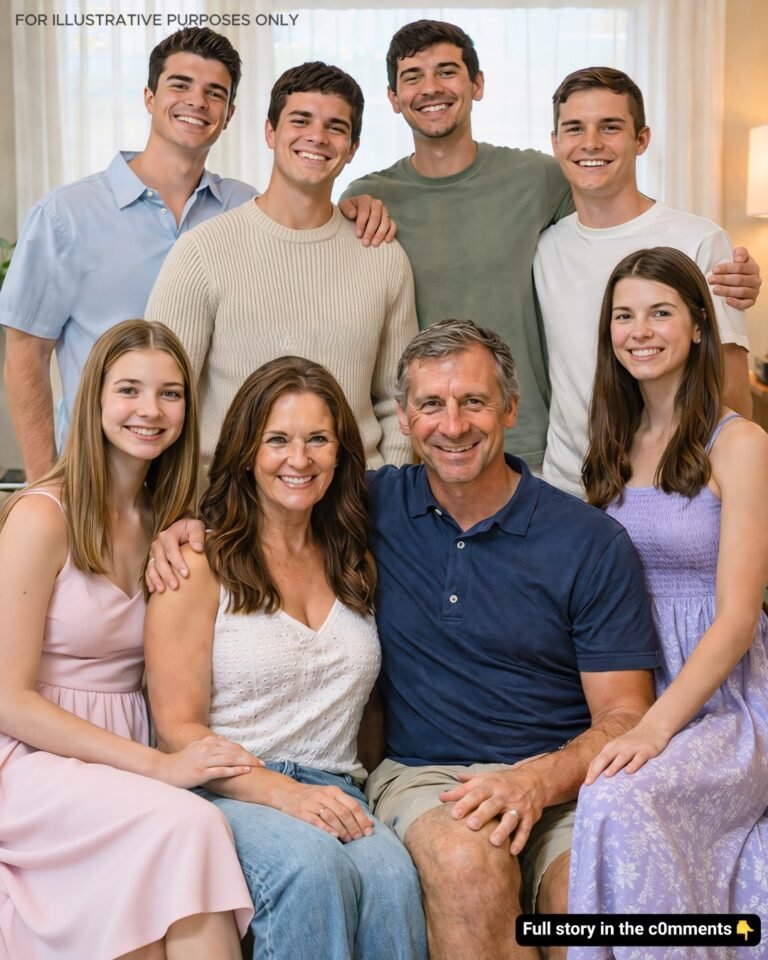
Dad stood near the fireplace in his Sunday polo as if it were a boardroom. Mom perched on the edge of her armchair, twisting the hem of her cardigan. My brother Eric paced in front of the coffee table, the muscles in his jaw working like he was grinding down a thought he didn’t want to swallow.
Shannon sat beside Mom, spine straight, both hands cradling her belly.
Her pregnancy sat at the center of the room like a silent command. No one said it out loud, but everything lately had begun to orbit around it. Plans, priorities, patience. Even the way people looked at Shannon changed. Softer. More deferential. Like she had become fragile glass.
Dad cleared his throat.
“Thank you all for coming,” he began, using the same polished cadence he used at work.
My stomach sank. That tone never brought anything good.
“We need to discuss the downtown apartment situation.”
He didn’t say the address. He didn’t need to. My mind filled it in instantly.
1247 Westbrook Avenue.
Red brick. Narrow entryway. Old checkerboard tile worn smooth in places. The mailbox with “Morrison” stenciled on it in fading letters. The building my grandfather bought in 1987. The building I knew by sound and smell and texture. The building that creaked and sighed at night like an old animal settling into sleep.
My building.
My home.
Dad went on as if he were reading prepared remarks.
“As you all know, the two bedroom unit at 1247 Westbrook has been in our family since your grandfather purchased the building.”
He glanced at Eric and then at me, the way he did when he wanted acknowledgment, as if he were reciting a story we’d somehow forgotten.
I remembered it. Every version of it. Grandpa’s lectures about real wealth. Dad’s pride in the “family assets.” Eric’s smug little comments whenever anything money related came up. I remembered all of it.
I took a sip of coffee I didn’t want. The mug clinked faintly as my hand trembled.
“I’ve lived there four years,” I said, because I could feel the trapdoor beneath this conversation starting to open.
“Exactly,” Dad replied, like I’d made his point for him. “Four years. You’ve had the two bedroom to yourself, paying utilities and a small monthly fee to the family trust that technically owns it.”
Technically.
The word scraped. It would have been almost funny if my pulse wasn’t banging in my ears.
He clasped his hands behind his back, the stance I’d seen since childhood, the stance that meant he expected obedience.
“Eric and Shannon are expecting their first child,” he said, gesturing toward Shannon’s stomach. Shannon offered a tight smile that looked practiced. “They need more space than their one bedroom. You, meanwhile, have two bedrooms.”
I set my mug down slowly. My fingers felt numb.
“I use the second bedroom as a home office,” I said. “I work remotely three days a week.”
“You can work from a coffee shop,” Mom cut in briskly, as if she were suggesting a different brand of detergent. “Young people do that all the time. With laptops and headphones and whatnot.”
“I manage a team,” I replied, keeping my voice careful. I could feel heat creeping up the back of my neck. “I’m on video calls constantly. I need privacy, quiet, reliable internet.”
“Eric has a family starting,” Dad said, sliding right over my words as if they were a minor inconvenience. “The apartment makes more sense for them. We’ve decided you’ll be out by the end of the month.”
The sentence didn’t land all at once. It came in pieces.
Out.
End of the month.
Decided.
I blinked at him. For a second, the room seemed to shift, like the floor had tilted without warning.
“You’ve decided,” I repeated, slowly.
“The family has decided,” Dad corrected smoothly, as if this were consensus rather than a decree. “We have to do what’s best for everyone.”
Eric stopped pacing and leaned on the mantel like he was settling in to watch a show. That smug look slid across his face, familiar as an old bruise.
“Come on, Cass,” he said. “Don’t make this difficult.”
I turned on him so fast my throat tightened. “Difficult.”
“You’re single,” he said, ticking points off on his fingers. “No kids. Good job. You can rent anywhere. Shannon and I need a nursery and we can’t afford market rate downtown.”
“And I can,” I asked, voice tightening, “because you decided I can.”
“You make more than we do,” Shannon said quickly, cheeks flushing as she realized she’d spoken. “Eric told me about your salary. You’re doing fine.”
My jaw clenched so hard it hurt. I had never told Eric my salary. I hadn’t even discussed the details with my parents. The idea that he’d been sitting somewhere, speculating about my income like it was entertainment, made something sharp and hot flare in my chest.
“My finances,” I said, letting each word fall cleanly, “are not a family topic.”
“When they affect family resources, they are,” Dad snapped, voice sharpening. “The apartment belongs to the family trust. Your grandfather intended it to serve the family. Right now, Eric and Shannon need it most.”
I held Dad’s gaze. I could feel my heartbeat in my wrists.
“Did anyone,” I asked, “actually read Grandpa’s documents recently. The trust paperwork. The deed.”
Mom waved a hand. “Your father manages it. He knows what’s appropriate.”
“I’d like to see the documents,” I said.
Dad’s voice dropped into the warning register I grew up with, the one that used to make me go quiet even when I was right. “Cassie, don’t be difficult. It’s decided. Eric and Shannon move in November first. You make arrangements.”
My legs felt hollow as I stood. A younger version of me would have argued louder, pleaded, cried, tried to crack them open with emotion. The older version of me knew what fighting in that room did.
It didn’t change outcomes. It just gave them material to use against me.
“All right,” I said, and the calmness in my voice seemed to irritate them more than anger would have. “Then I’d like formal copies of the trust documents, the building deed, and any paperwork that shows you have the authority to terminate my residency.”
Dad’s face reddened. “You don’t need paperwork. I’m telling you as your father and as trust manager.”
“Then as the current resident,” I replied, voice steady, “I’m requesting formal documentation of this eviction.”
“It’s not an eviction,” Mom said sharply, her composure cracking. “It’s family helping family.”
“Then there should be documentation,” I said simply.
I grabbed my coat and walked out. No one stopped me. No one followed. The door shut behind me with a soft click that felt too small for what had just happened.
Outside, October air hit my lungs like cold water.
By the time I got home, my phone was vibrating itself off the counter with messages from the family group chat.
Eric: Come on, Cass. You’re being selfish.
Mom: I raised you better than this. You’re breaking my heart.
Dad: We’re disappointed in your attitude.
Different voices. Same demand.
Fall in line. Stop questioning. Accept what we decided for you.
I set my phone face down. The apartment was quiet, familiar, holding me in its worn-in stillness. Sunlight pooled on the hardwood floors. The second bedroom door sat half open, revealing my desk, my monitors, my calendar pinned neatly above it. The life I had built in this space was not accidental. It was deliberate. It was mine.
They thought they could take it.
They had no idea.
I knelt by the filing cabinet tucked beside the TV stand. The top drawer stuck the way it always did. I smacked it lightly until it slid open with a familiar screech. Inside were folders labeled in my neat handwriting, everything in order. It was a habit my grandfather teased me about and secretly admired.
I pulled out a thick folder marked 1247 WESTBROOK, LEGAL.
The sight of it steadied me instantly.
Four years ago, Grandpa had called me to the hospital. I had assumed it would be goodbye. I had walked down a corridor that smelled like antiseptic, under buzzing fluorescent lights that made everything look slightly unreal. Mom had texted me earlier, saying he was having a bad day.
When I entered his room, he was sitting up, eyes clear, oxygen tubes looped lightly around his face.
“Close the door,” he’d said as soon as he saw me.
I did, confused, and his expression softened.
“There she is,” he said. “My favorite property manager.”
I laughed, throat tightening. “I’m not a property manager, Grandpa. I do project management. Software.”
He waved that away. “You manage people. You manage details. Same thing. Sit.”
When I pulled the chair close, his hand wrapped around mine. Even with the IV taped to his skin, even with his body worn down by illness, his grip was still surprisingly firm.
“I’m changing the trust structure,” he said.
“Grandpa,” I whispered, “you should rest.”
“Listen,” he said, voice sharpening. “Your father assumes. He decides. He calls it guidance. He doesn’t read the details. He never has.”
I swallowed. There was no point pretending he was wrong.
“The building,” he continued. “Westbrook. I’m changing the ownership.”
My heart thudded harder.
“The building goes to you,” he said, plain and direct. “Transfer effective on my death. Paperwork already filed.”
I stared at him. “What.”
He gave a small, satisfied huff. “Your father gets the other properties. Commercial downtown. Duplex on Riverside. Strip mall in Oakmont. He’ll think he controls Westbrook too because he won’t read carefully, but he won’t. It’s yours. All six units.”
My mind raced, trying to catch up with the words. “Why me.”
He smiled, eyes crinkling.
“Because you ask what I want,” he said. “Because you come every week. Because when I started forgetting where I put things, you labeled my drawers instead of treating me like I was useless.”
Something thick rose in my throat.
“And because,” he added softly, “I trust you. You read the fine print. You listen.”
Two weeks later, he died in his sleep.
A month after the funeral, an envelope arrived from his attorney. Inside were the amended documents and the deed transfer, notarized, recorded, stamped, undeniable. 1247 Westbrook Avenue belonged to me. Sole ownership. No trust control. No shared authority.
I sat on my living room floor that night surrounded by papers that weighed more than money. They weighed like responsibility. Like a choice.
I didn’t tell my family.
Part of it was fear of the blowup. Part of it was self-preservation. But mostly, it was because Grandpa had asked me not to make it a fight.
He had been right about Dad. Four years had passed, and Dad had never once read closely enough to realize he had no control over that building.
And now he was trying to give away something that was never his.
I opened the folder fully, letting the documents spread across the coffee table. The deed with my name. The amended trust pages with Grandpa’s signature. The letters that had been mailed out back then, the ones my parents must have received and set aside without really reading.
I stared at the ink, at the dates, at the clean certainty of it.
On Monday morning, I called Patricia Chen, the attorney a coworker once described as “scary in the best way.”
By the time I sat in her conference room later that week, she had already reviewed the deed, tapped a manicured finger against it, and smiled like she was about to enjoy herself.
“So,” she said, leaning back, “your family is trying to evict you from your own building.”
“Yes,” I said.
“And they don’t know you own it.”
“No.”
Her eyes flickered with dark amusement. “They have absolutely no authority. None. If they try to force you out, it becomes illegal eviction, trespassing, potentially theft.”
“There’s more,” I said, voice tightening. “Eric texted that he’s helping me pack. He has a spare key. My mom kept one in their junk drawer.”
Patricia’s expression sharpened. “That’s unauthorized entry. Do you have security cameras.”
“In the common areas,” I said. “The system logs everything.”
“Good,” she replied. “Get the footage. And tell me what you want, Cassie. Do you want a gentle family reality check, or do you want firm boundaries.”
I saw Dad’s face near the fireplace. Eric’s smug smile. Mom dismissing my work like it was a hobby. Shannon discussing my salary as if it were public information.
“Firm boundaries,” I said.
Patricia smiled. “Perfect.”
When I got home that evening, my phone buzzed again. Another group chat message. Another push to comply.
I set the phone down, opened my laptop, and began pulling security logs.
They had called it a family meeting.
What they had really done was declare war over property they did not own.
And the moment they learned the truth, the entire room would tilt.
The moment they learned the truth, the entire room would tilt.
I stayed up later than I meant to, scrolling through time stamps and grainy hallway footage. The security system wasn’t fancy, but it was reliable, and Grandpa had insisted on it years ago after a break-in two blocks over. The camera angles caught the front entry, the stairwell, the mailbox wall, the narrow corridor outside my unit.
A small part of me still hoped I’d find nothing. That Eric’s text had been another attempt at intimidation, another bluff he expected would send me back into my childhood role of appeasing everyone.
Then the footage loaded for Tuesday at 7:18 p.m., and there he was.
Eric, shoulders hunched like he owned the place, using a key at my door. The lock turned. He slipped inside without hesitation, not pausing even for a second to consider he might be doing something wrong.
The video didn’t have sound, but I could still hear him in my head. That confident tone. The laugh he used when he wanted to make me feel unreasonable.
I watched the clip again, slower. His wrist. The key. The way he looked down the hall before entering, as if checking whether anyone saw him. Then he disappeared inside my home.
My hands were steady when I exported the file. I labeled it with the date and time, saved it in a folder Patricia had instructed me to create, and emailed it to her with a short note: Unauthorized entry, as discussed. Tuesday 7:18 p.m.
By morning, there were three more entries.
He wasn’t just posturing. He was actively trying to force the outcome he wanted while my family drowned me in guilt and phone calls.
Patricia called me at ten thirty.
“You weren’t exaggerating,” she said, voice crisp. “We’re escalating. I’m sending a cease-and-desist to your father and a separate one to your brother. The next step is a police report if he enters again.”
There was a pause, the kind that implied she was choosing how to phrase something.
“Cassie,” she continued, “do you understand how serious this is. He’s not just being pushy. He’s testing what he can get away with.”
“I understand,” I said, staring at my front door as if Eric might materialize again. “I’ve been dealing with him my whole life. He always assumes the loudest person wins.”
“Not this time,” Patricia replied. “Forward me any texts. Don’t engage beyond what I tell you. Let the paper speak.”
By Wednesday afternoon, the family group chat had shifted from accusations to panic so quickly it almost gave me whiplash.
It started with Dad’s call. I let it ring until it stopped. Then it rang again, immediately. Eric followed. Mom. Then Shannon, which was new.
I didn’t answer any of them.
Instead, I watched the messages stack up.
Dad: What is this legal letter. Call me immediately.
Eric: You got a lawyer. Are you insane.
Mom: How could you do this to family. I’m shaking.
I stood at my kitchen counter with Patricia’s letter open on my laptop. It was short and devastating, written in the tone that courts took seriously and manipulators hated.
It stated, in plain language, that I was the sole legal owner of 1247 Westbrook Avenue. That no other party had authority to make occupancy decisions, access units, or interfere with tenants. That any attempt to remove me, enter my unit, or touch my belongings would be treated as illegal eviction, trespass, theft, and harassment, with immediate legal action to follow.
The second page was addressed to Eric personally.
It referenced the footage by date and time and told him to stop entering my unit immediately. The tone was so controlled it felt colder than anger. There was nothing to argue with. Nothing to twist.
Dad called again that night. His voicemail was clipped, brittle, furious.
“This is ridiculous,” he said. “You’re embarrassing us. You’re making Shannon’s pregnancy stressful. Call me back right now.”
I replayed the message once, then deleted it.
The next morning, a new call came in from Dad. This time he didn’t leave it to voicemail.
“We’re having another family meeting,” he said the moment I answered, like my voice had triggered a script. “Today. Eleven o’clock. My office.”
“Okay,” I said.
He paused, clearly thrown by the lack of pleading or resistance.
“That’s it,” he demanded. “Okay.”
“That’s it,” I replied.
I hung up before he could regain control of the conversation.
On the drive to his office, my mind kept pulling up childhood images like they were trying to warn me. Dad standing in doorways with crossed arms. Dad’s voice in the car telling me I was ungrateful. Dad reminding me of everything he paid for whenever I tried to set a boundary.
But I wasn’t twelve anymore, pressed into that floral couch. I wasn’t asking permission to exist.
I parked, smoothed my blazer, and walked in.
Dad’s office was a cluttered contradiction. He liked to think of himself as organized, but his idea of organization was stacking papers until they looked deliberate. Old bank statements spilled out of boxes. Folders leaned at precarious angles. The framed photo of Eric holding a fish was centered proudly on the credenza. My graduation photo was there too, hanging slightly crooked, as if someone had bumped it and no one bothered to fix it.
Eric was already in the room, arms crossed defensively. Shannon sat in a corner chair, hands over her belly, looking like she wanted to melt into the fabric. Mom stood behind Dad’s leather chair with one hand gripping the backrest like she was bracing against a wave.
Patricia’s letter lay on Dad’s desk like a dare.
“Explain this,” Dad snapped, sliding it toward me as if I’d forged it myself.
“The building is mine,” I said, and the simplicity of it felt almost surreal. “Grandpa transferred it to me before he died. I’ve owned it for four years.”
“That’s impossible,” Dad barked. “The trust—”
“The trust was amended,” I said, pulling copies from my bag. I placed them on the desk neatly, one on top of the other, as if I were laying out evidence for a judge. “You received the amended documents in 2020. You didn’t read them.”
Dad snatched the papers and scanned them like he could intimidate the words into changing. His eyes moved quickly, then slower. Then back again, a second pass, as if he couldn’t accept that legal language did not bend to his will.
“Your grandfather wouldn’t do this,” he muttered, voice cracking with disbelief more than anger.
“He did,” I replied. “And he didn’t cut you out. You got three other properties. This one went to me.”
Mom leaned in, lips moving silently as she read. When her eyes landed on the line naming me as sole owner, her mouth parted.
“Why wouldn’t you tell us,” she whispered, and the hurt in her voice was real. For a second, it almost made me flinch.
“Grandpa asked me not to,” I said. “He told me to take care of the building and the tenants. So I did.”
Dad looked up sharply.
“Tennants,” he repeated, as if the word offended him. “You’ve been collecting rent.”
“Yes,” I said. “From the other five units. For four years.”
He stared at me like he didn’t recognize me anymore.
“You’ve been collecting money from family property,” he said, voice rising.
“My property,” I corrected, keeping my tone even. “And I’ve been paying the taxes, insurance, repairs, permits, and contractor bills. Every month. I created a reserve fund. I replaced the boiler last winter. I repainted the hallways. I updated the leases with legal counsel. I’ve been running it like a business, because that’s what it is.”
Eric made a short, harsh sound, half laugh, half disbelief.
“This is insane,” he said. “You’re acting like you’re better than everyone.”
“No,” I replied, turning to him. “I’m acting like an owner who has been forced to defend her property from people who don’t listen.”
Shannon shifted in her chair, pressing her palm protectively over her belly.
“But we need the apartment,” she said, voice tight with panic. “For the baby.”
“There are other two-bedroom apartments,” I replied. “I can help you find listings. I can even recommend neighborhoods.”
“We can’t afford downtown,” Shannon whispered, eyes glossing.
“That’s not my problem to solve,” I said, and the words came out colder than I intended. Still, I didn’t soften them. Cold wasn’t cruelty. Cold was clarity.
Eric leaned forward, anger sharpening his features.
“This isn’t what Grandpa wanted,” he said. “He wanted family security. He wouldn’t want you hoarding it.”
“It’s not hoarding,” I said, and my voice finally picked up an edge. “He made a decision. He put it in writing. Properly. Legally. It’s not a debate.”
Dad’s face had gone a strange grayish red.
“He was sick,” he said, grasping for an argument. “He wasn’t thinking clearly.”
“He was lucid,” I replied. “His doctor documented it. His attorney documented it. Patricia has the records. If you push this, you’ll lose in court and you’ll spend a lot of money doing it.”
Mom’s eyes flashed between Dad and me like she was trying to find a version of this that didn’t fracture the family.
“You’re really going to do this,” she said, voice trembling. “You’re going to make it legal.”
“It already is legal,” I replied. “I’m making it enforced.”
Dad’s hands tightened on the papers.
“So what,” he said, voice clipped, “you expect your brother to pay you rent.”
“If he wants to live in one of my units, he can apply like any other tenant,” I said. “There’s a waiting list. If a two-bedroom opens up, I’ll consider his application first. That’s what I’m willing to offer.”
Eric’s face twisted.
“How much,” he demanded.
“Market rate for a two-bedroom in that neighborhood is about twenty-four hundred a month right now,” I said. “I keep mine slightly below that for stability.”
Shannon let out a small, involuntary sound, like she’d been punched.
“That’s insane,” she whispered.
“That’s the city,” I replied. “That’s what you’re asking for.”
Dad’s eyes narrowed.
“You’re punishing them,” he said, as if he’d found the moral angle he needed. “You’re making your pregnant sister-in-law suffer because you want to feel powerful.”
“I’m not punishing anyone,” I said. “I’m protecting what’s mine.”
The room hummed with anger and disbelief. The old dynamic tried to reassert itself: Dad as authority, Mom as emotional leverage, Eric as the enforcer, Shannon as the fragile symbol everyone rallied behind.
But something had shifted. They could feel it, even if they couldn’t name it.
Dad’s voice softened suddenly, dangerously.
“This is tearing the family apart,” he said.
I met his gaze.
“You decided to tear it apart the moment you announced my eviction without asking me anything,” I replied. “You don’t get to call it family unity when it only counts if I comply.”
For a moment, no one spoke.
Then Dad gathered the papers into a messy stack, jaw clenched.
“This isn’t over,” he said.
I stood. “It is, unless you make it worse.”
I walked out of his office with my spine straight and my hands calm.
On Friday, I came home from a coffee meeting around two o’clock and found Eric in my living room.
Cardboard boxes were stacked by the sofa. My closet doors were open. He was shoving my clothes into a box with rough, impatient hands, cramming sweaters like they were rags.
The sight was so wrong my body reacted before my mind did. Cold rushed through me, followed by heat so sharp it made my vision narrow.
“What are you doing,” I demanded.
Eric looked up, cheeks flushed with effort and something I recognized immediately.
Triumph.
“Helping you pack,” he said, voice falsely bright. “Since you’re being stubborn, Shannon and I are moving in anyway. You can leave peacefully, or we’ll make it difficult.”
I stood in the doorway, my pulse loud in my ears, and stared at my half-packed life.
“Eric,” I said, forcing calm into every syllable, “you need to leave my apartment. Right now.”
He scoffed. “Or what.”
I pulled out my phone.
“I’ll call the police,” I said. “You’re trespassing. You were told in writing not to enter. You’re touching my belongings.”
Eric laughed, like the idea was adorable.
“You wouldn’t,” he said. “This is family business. Stop being dramatic.”
I pressed the emergency call button.
When the dispatcher answered, I spoke clearly.
“I need to report a trespass in progress. My brother entered my apartment without permission using an unauthorized key and refuses to leave. I’m safe. I’m standing by the door.”
Eric’s bravado drained in real time.
“Cassie,” he said, suddenly pleading, “come on. Don’t do this. We can talk.”
“It’s beyond talking,” I replied, eyes locked on him. “You did this after I told you to stop.”
The minutes stretched. He shifted his weight. His hands hovered over the boxes like he didn’t know what to do with them now. The confidence that had carried him into my home had nowhere to land.
Then came the knock.
Loud. Official. Unmistakable.
Two police officers stood in the hallway, faces neutral, hands resting casually near their belts. Their presence filled the space with a kind of authority my family had never been able to manufacture.
“Ma’am,” one said, “you reported a trespass.”
“Yes,” I replied, stepping aside so they could see Eric amid the boxes. “He entered without permission and refuses to leave.”
Eric jumped in fast, flashing charm like a reflex.
“Officers, this is just a misunderstanding,” he said. “My father owns the building. We’re sorting out the transfer.”
“I own the building,” I said, calm and steady. I handed them my ID, the deed copy, and Patricia’s cease-and-desist. “And he’s been formally notified.”
One officer skimmed the papers. His eyebrows lifted slightly, just enough to show he understood the situation completely.
“Sir,” he said to Eric, “you need to leave the premises immediately. If you return without the owner’s explicit written permission, you’ll be arrested for criminal trespass.”
Eric’s face went red, then pale, then red again.
“She’s my sister,” he snapped, like it was a legal defense.
“And this is her residence,” the officer replied evenly. “We’re giving you a chance to leave voluntarily. Take it.”
Eric’s shoulders sagged. He dropped a sweater into the box and stormed past me toward the door, close enough that I could feel the heat of his anger.
“This isn’t over,” he hissed.
I looked at him, then at the boxes, then back at him.
“Actually,” I said quietly, “I think it is.”
After he left, one officer lingered.
“Ms. Morrison,” he said, voice gentler, “given the pattern, you might want to consider a restraining order if this continues.”
“I’m changing the locks,” I replied.
“Good idea,” he said, and then he was gone.
Two hours later, a locksmith stood in my doorway replacing the cylinders with brisk efficiency. Metal clinked. New keys slid into my palm with satisfying weight. I emailed building security with explicit instructions: no access granted to my parents or brother without my written consent. I saved the sent email, copied Patricia, and filed it in my legal folder.
That evening, I sat on the floor and re-folded every piece of clothing Eric had crammed into boxes. Slowly. Carefully. Like I was putting myself back into order.
One of my favorite mugs had a chip now. A framed print had a crack spidering across the glass. The small damage felt strangely appropriate. Proof that boundaries had cost me something, even if they were necessary.
By Sunday, the calls had slowed, replaced by relatives quietly circling the drama like it was entertainment.
Aunt Linda left a voicemail that made me laugh despite myself.
“Cassie,” she crowed, delighted, “your grandfather always did love an ending like this. Call me if you want the stories. Harold outmaneuvered your dad in the eighties too. This is poetic justice.”
I listened once, then saved it. Not for proof. For comfort.
Late Monday morning, Patricia called again.
“We have a situation,” she said, voice brisk.
“Only one,” I asked, dryness slipping out before I could stop it.
“Your father filed a petition to contest the transfer,” she said. “He’s claiming your grandfather was incompetent or unduly influenced when he amended the trust.”
I closed my eyes and leaned my forehead against the cool kitchen cabinet.
“Of course he did,” I murmured.
“His case is weak,” Patricia continued. “But he can still force the process. It will be expensive. It will take time.”
“Do it anyway,” I said, without hesitation. “We’re not backing down.”
I could hear the smile in her voice.
“Good,” she said. “Then we’re going to finish this properly.”
And as I hung up, staring at the warm light pooling on my hardwood floor, I realized something I hadn’t fully admitted to myself yet.
This wasn’t just about an apartment.
This was about every time they’d decided my life for me, every time I’d been expected to shrink, to yield, to be reasonable while they were anything but.
They’d tried to take my home because they believed I would step aside.
Now they were going to learn what happens when the person they underestimated finally stands still and refuses to move.
The court hearing took place six weeks later, on a Tuesday morning so ordinary it felt almost insulting to the amount of energy my family had poured into fighting it.
The judge didn’t need much time.
He listened. He skimmed documents. He asked a few precise questions. Then he ruled.
The amended trust was valid. My grandfather had been mentally competent. The transfer of ownership stood. The petition was dismissed.
That was it.
No dramatic speech. No moral lecture. Just a calm confirmation of what had been true all along.
Outside the courthouse, my father didn’t look at me. Eric stared at the pavement like it might open and swallow him. Shannon rested a hand on her stomach and said nothing. My mother hovered, torn between indignation and resignation, unsure which version of herself to present now that the outcome was no longer negotiable.
I didn’t linger.
Life didn’t snap back into harmony after that. It settled into something quieter, more honest. My parents stopped calling about the apartment. Eric stopped speaking to me entirely. Shannon sent a polite message after the baby was born. I sent a gift and a card with no return address drama attached.
The building stayed steady. Tenants renewed leases. Repairs got done. Rent checks cleared. The hallway light on the second floor finally stopped flickering after I replaced the wiring Grandpa had complained about for years.
Sometimes, late at night, I think about that Sunday afternoon. My father standing by the fireplace, confidently giving away something that was never his. Eric packing my things like the outcome was inevitable. All of them so certain I would fold.
They never asked what I wanted. They never checked the paperwork. They never imagined I might already be standing on solid ground.
The apartment didn’t change. The building didn’t change.
I did.
And that made all the difference.