When Elderly Parents Disguised Themselves as Homeless: The Daughter-in-Law They Rejected Showed Them What Family Really Means
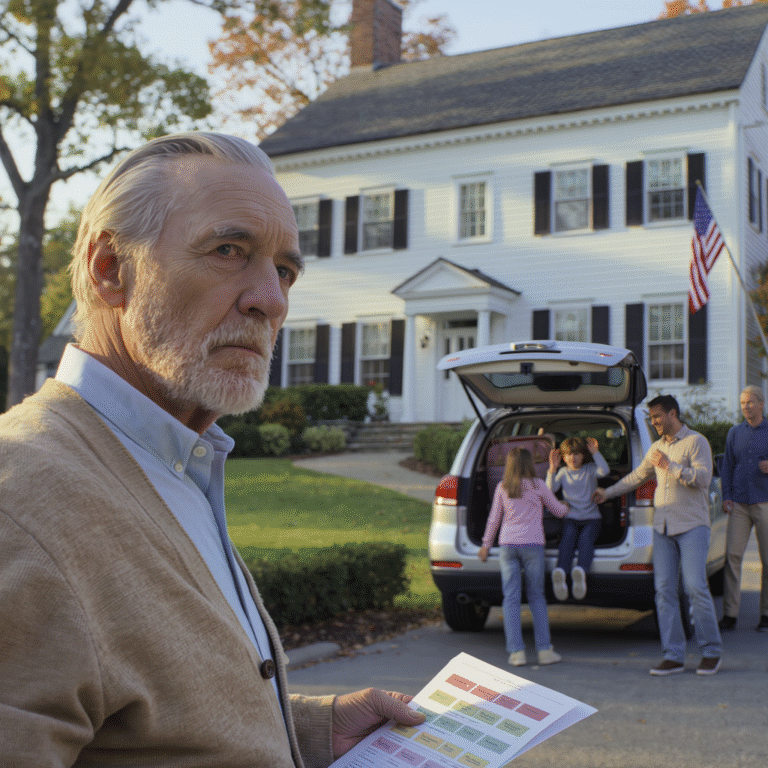
Peter Grayson stood in front of his bedroom mirror at seven o’clock on a Tuesday morning, staring at a stranger. At seventy-one years old, he’d always taken pride in his appearance.
Pressed shirts, clean shaves, shoes polished every Sunday evening while his wife Ruby read beside him in their Connecticut living room. These small rituals had defined their retirement years, the quiet dignity of a life well-lived.
But today was different. Peter wore clothes he’d pulled from a donation bin behind the Methodist church on Fifth Street.
A stained gray jacket two sizes too large hung from his shoulders. Pants with a deliberate tear at the knee that he’d widened with his pocketknife sagged around his waist. Shoes without laces completed the transformation into someone he barely recognized.
Ruby emerged from the bathroom, and Peter’s chest tightened painfully. His wife of forty-three years looked like she belonged on a street corner.
The woman who had taught piano lessons for three decades, who had sewn Halloween costumes until her fingers ached, who had packed lunches with handwritten notes tucked inside, now looked utterly unrecognizable.
Her silver hair, usually swept into an elegant twist, hung loose and tangled around her face. She wore a shapeless brown dress from the thrift store, its hem uneven and fraying at the edges.
A thin cardigan with missing buttons completed her disguise. The transformation was complete and heartbreaking.
“You look terrible,” Peter said softly, his voice catching in his throat.
Ruby managed a small, sad smile that didn’t reach her eyes. “So do you.”
They stood together in silence, two people who had raised five children and funded four college educations. Two people who had co-signed three mortgages and written more checks than they could count for graduations and weddings and grandchildren’s birthday presents they’d never been invited to celebrate.
Two people who had given everything they had to their family were about to discover what any of it had actually meant. The test would reveal truths they weren’t prepared for.
The idea had come to Peter three weeks earlier, on the night of his seventieth birthday. Or rather, on the night his seventieth birthday should have been celebrated but wasn’t.
Ruby had called each of their children personally, weeks in advance, giving them plenty of notice. She’d marked it on the calendar, sent reminder texts, made sure everyone knew.
Victoria, their eldest daughter and a prominent cardiologist in Boston, couldn’t make it. She had a medical conference in Switzerland that absolutely couldn’t be missed, she explained with barely concealed impatience.
Richard, their eldest son and a corporate attorney in Chicago, had a crucial deposition. The case would determine the outcome of a major lawsuit, he said.
Margaret, their middle daughter who’d married a tech executive, was already committed to a weekend getaway in Napa Valley. Her husband had planned it months earlier, and she couldn’t disappoint him.
Steven, their second son and a successful investment banker, was closing a deal that would determine the entire trajectory of his career. The timing was non-negotiable.
Only Daniel had said yes immediately. Daniel, their youngest son, who lived ninety miles away in a farmhouse with a leaking roof.
Daniel, married to a woman the family had never truly accepted. Daniel, working as a handyman while his wife grew vegetables and raised chickens.
Daniel, who drove his twelve-year-old truck through a thunderstorm to sit at his father’s birthday table. He arrived with a homemade card and a bottle of wine that probably cost more than he could afford.
That night, after Daniel and his wife Jenny had driven home through the rain, Peter sat alone in his study. After he’d scraped most of the untouched cake into the garbage disposal, he did something he’d never done before in his adult life.
He cried. Real, wrenching sobs that shook his shoulders and left him gasping for air.
And then, wiping his eyes with the back of his hand, he started planning. A test that would reveal the truth about his family.
“Are you absolutely sure about this?” Ruby asked now, adjusting the strap of the worn canvas bag she carried.
Inside was a change of clothes, their medications hidden in an old aspirin bottle, two hundred dollars in emergency cash, and a small notebook. Peter intended to record everything that happened.
“I need to know,” Peter said, taking her cold hand in his. His grip was firm despite the trembling in his fingers.
“We need to know the truth about what we’ve built here. About whether this family we sacrificed everything for actually exists or if it’s just an illusion we’ve been maintaining.”
They had created a simple story, because the best lies are always built on fragments of truth. They were Peter and Ruby Miller, not Grayson.
Retired factory workers, not a former high school principal and a piano teacher. They’d lost their home to medical bills after Peter’s heart surgery.
The surgery had actually happened five years ago, but it had been covered by excellent insurance. The details would remain vague because desperate people rarely have the energy for elaborate explanations.
The first stop was Boston, twelve hours away by Greyhound bus. They took public transportation because driving their own car would have immediately ruined the illusion.
Twelve grinding hours of watching America scroll past grimy windows. They sat surrounded by other travelers who carried their entire lives in bags and backpacks, who kept their eyes fixed on middle distances and spoke to no one.
Ruby dozed fitfully against Peter’s shoulder while he stared at his own reflection in the glass. He wondered if Victoria would even recognize them, wondered if she would care enough to look closely.
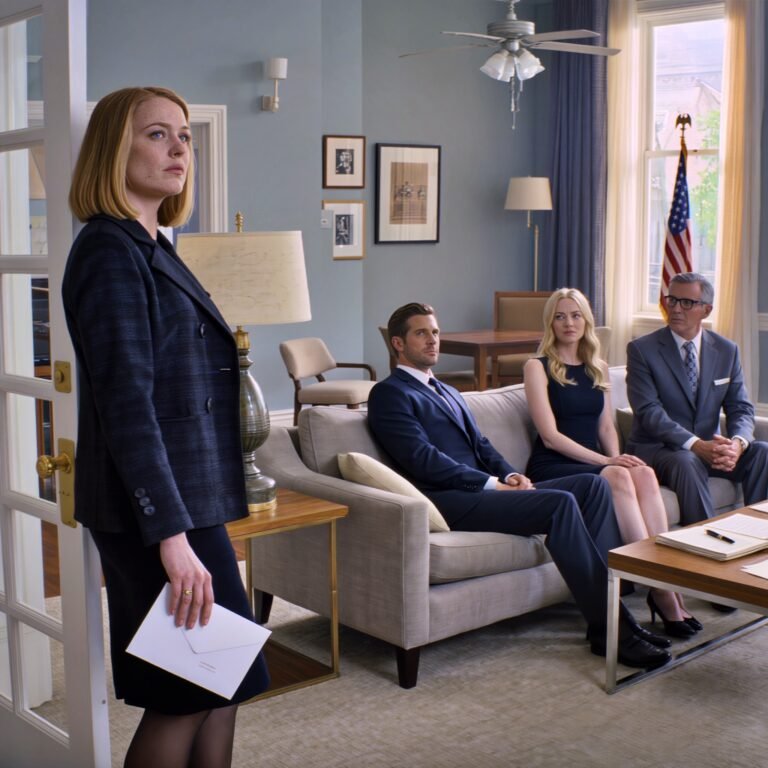
Victoria’s neighborhood in Boston announced itself through increasingly manicured lawns and wrought iron gates. Every detail whispered wealth and exclusivity.
Her home sat on a tree-lined street where even the silence felt expensive. The meticulously restored Victorian had a Tesla in the circular driveway and a lawn service that came twice weekly.
Peter and Ruby walked the final mile from the bus stop because calling a taxi would have broken character. By the time they reached Victoria’s address, Ruby was limping slightly from an old knee injury.
Peter’s back ached from the cheap bus seats that offered no support. They looked, he realized with grim satisfaction, exactly like what they were pretending to be.
Exhausted, desperate, and utterly invisible to the kind of people who lived in neighborhoods like this. The perfect test subjects.
Victoria’s housekeeper answered the door when they rang the bell. A middle-aged woman with kind eyes and an accent Peter couldn’t quite place.
“We’re looking for some help,” Peter said, keeping his voice humble and his eyes lowered. The posture of someone accustomed to rejection came surprisingly naturally.
“We’ve been traveling a long way. We’re just wondering if there’s any food you might be able to spare, or perhaps some work we could do in exchange for a meal.”
The housekeeper’s expression softened immediately with genuine sympathy. Her eyes took in their disheveled appearance with real concern.
“Wait here,” she said quietly, her voice carrying authentic compassion. “Let me ask the lady of the house.”
They waited on the porch for seven minutes. Peter counted each one, his heart hammering against his ribs as he wondered what would happen when the door opened again.
When it finally did, it wasn’t the housekeeper who stood there. It was Victoria.
His daughter. His firstborn child. The baby whose first steps he’d captured on a camcorder the size of a small suitcase.
The girl who’d made him promise to walk her down the aisle, who’d cried in his arms when she didn’t get into her first-choice medical school. The woman who’d called him sobbing after her first patient died on her operating table.
She didn’t recognize him. Not even a flicker of recognition crossed her perfectly composed face.
“I’m very sorry,” Victoria said, her voice carrying that polished, professional tone she’d cultivated for delivering bad news. Her expression was carefully neutral, practiced.
“We don’t give handouts at this residence. There’s a shelter about four miles from here. They serve dinner at six o’clock.”
She reached into the pocket of her expensive athleisure wear and produced a crisp twenty-dollar bill. She extended it toward them without making eye contact, as if looking directly at homeless people might somehow contaminate her.
“For bus fare,” she added, her tone suggesting this was already more generosity than they deserved. Her hand remained outstretched, waiting impatiently.
Ruby made a small, wounded sound beside him that she quickly tried to suppress. Peter squeezed her hand in warning, fighting every instinct that screamed at him to grab his daughter by the shoulders.
He wanted to demand that she actually look at them, really look. But that would ruin everything.
“Thank you,” he said quietly, accepting the money with a trembling hand. The bill felt like judgment in his palm.
“God bless you,” he added, the words tasting like ash in his mouth.
Victoria was already turning away, dismissing them from her consciousness as easily as swatting a fly. “Rosa, please make sure they leave the property before you lock up for the evening,” she called over her shoulder to the housekeeper.
The door clicked shut with a sound of finality that echoed in Peter’s chest like a gunshot. The rejection was complete.
They stood on that pristine porch for a moment that stretched into eternity. Surrounded by the trappings of Victoria’s success, the expensive furniture visible through the windows, the luxury car in the driveway, the perfectly landscaped garden.
Then Peter gently guided Ruby down the steps and back to the sidewalk. His hand trembled against her arm.
“She didn’t know us,” Ruby whispered, her voice breaking with each word. Tears spilled down her cheeks, cutting tracks through the carefully applied dirt.
“She looked right at us and she didn’t even see us. Her own parents, standing right in front of her.”
“No,” Peter agreed, feeling something cold and heavy settling in his stomach like a stone. “She didn’t even look long enough to try. We were just an inconvenience to be dealt with as quickly as possible.”
They found a park bench three blocks away and sat in the gathering dusk of a Boston evening. Ruby’s shoulders shook with silent tears while Peter stared at the twenty-dollar bill in his hand.
His daughter’s price for making homeless people disappear from her doorstep without troubling her conscience. Twenty dollars to buy peace of mind.
“We could stop now,” he offered, though the words tasted bitter and wrong. “We don’t have to keep doing this to ourselves. We already know enough.”
Ruby wiped her eyes with the back of her hand, smearing the carefully applied dirt on her cheeks. She took a shuddering breath, trying to compose herself.
“We’ve come this far. I need to know if Victoria is unusual or if she represents all of them. I need to know if there’s something different waiting with the others.”
The next morning, still aching from a night spent on a shelter cot surrounded by strangers’ quiet desperation, they took another bus to Chicago. The journey felt longer this time, heavier with the weight of what they’d already learned.
Richard’s building was a steel and glass tower that pierced the skyline like an accusation against everything modest and humble. He lived in the penthouse, which meant security guards and key cards and intercoms that filtered out anyone deemed unworthy of entry.
Peter and Ruby didn’t even get inside the building. The doorman stopped them at the entrance with an outstretched hand.
The young man had forearms like ham hocks and eyes that had clearly seen every con and scheme imaginable. His expression was professionally neutral but utterly unmoved.
“Building residents only,” he said flatly, his tone allowing no room for argument or negotiation.
“We’re trying to reach someone who lives here,” Peter explained, trying to inject his voice with just the right amount of desperation. Not too much, not too little.
“Richard Grayson, on the top floor. We knew his parents once, years ago. We’re hoping he might be willing to help us in their memory.”
The doorman’s expression didn’t change by even a millimeter. He’d heard every variation of every story desperate people could invent.
“Mr. Grayson doesn’t accept visitors without appointments scheduled through his assistant. If you’d like to leave a message, I can see that it gets to his office.”
Peter thought of his son Richard, who’d been terrified of thunderstorms until he was twelve years old. Richard, who’d begged for a dog every single Christmas until they finally brought home a golden retriever named Scout.
Richard, who had delivered the eulogy at his grandmother’s funeral with such eloquence that the minister pulled Peter aside afterward. “That boy has a genuine gift with words,” the minister had said.
“Please,” Peter said, letting real emotion creep into his voice now. The desperation didn’t have to be faked anymore.
“Tell him that two people who once loved him very much are standing outside his building and desperately need help. Tell him exactly that.”
The doorman’s eyebrows rose slightly, perhaps at the unusual phrasing. Whether out of pity or professional obligation to at least appear helpful, he picked up his phone and made the call.
Peter watched him speak quietly into the receiver. Watched him glance back at them with an expression that shifted subtly into something like embarrassment.
“Mr. Grayson says he doesn’t know anyone matching your description,” the doorman reported, setting the phone back in its cradle. His voice carried a note of finality.
“He suggested I direct you to the city’s homeless services hotline.” He handed over a pre-printed card with a phone number, the kind they kept stacked by the desk for exactly this purpose.
“There are warming centers that open at seven if you need somewhere safe to stay tonight.”
Ruby’s grip on Peter’s hand tightened until it hurt. He could feel her whole body trembling beside him, could hear the small gasping sounds she was trying to suppress.
“Thank you for your time,” Peter managed, his voice barely above a whisper. The words felt like they were being dragged from somewhere deep inside him.
They walked to Millennium Park and sat by the famous Bean sculpture. That massive silver monument where Peter had once posed for photographs with all five of his children during a family vacation fifteen years ago.
Tourists swirled around them now, taking selfies and laughing, but no one stopped to look at the two bedraggled figures hunched on the bench. They had become part of the invisible landscape of urban poverty, as unremarkable as the pigeons pecking at scattered crumbs.
“Two down,” Ruby said, her voice flat and hollow, drained of all emotion. “Three to go.”
Margaret lived in Palo Alto, which would have been too far for their dwindling resources if fate hadn’t intervened. Peter spotted a rideshare posting on a community board at the bus station.
A young woman named Destiny was driving to San Francisco and needed help with gas money. She had vibrant multicolored braids and a nose ring that caught the light.
She asked more genuine questions in the first hour than Victoria had asked in the past five years of superficial holiday phone calls. Real questions about who they were, where they were going, what they hoped to find.
“So where are you really headed?” Destiny asked, glancing at them in her rearview mirror with eyes that were far too perceptive. She didn’t miss much.
“And please don’t say you’re just wandering. Nobody your age wanders without a destination and a reason.”
Peter looked at Ruby, saw something shift in her expression, and found himself telling a version of the truth. Not all of it, but enough.
How they’d raised five children who’d grown successful and distant. How this trip was meant to answer a question that had been eating at them both.
Whether the family they’d sacrificed everything to build actually existed, or if they’d been deluding themselves all along. Whether love and values actually transferred across generations or just got lost somewhere.
Destiny was quiet for a long time after he finished. The miles rolled past while she processed what he’d said.
Then she said, “My grandmother raised me after my mom couldn’t handle it. Never had much money, but she gave me everything that actually mattered.”
“When she got sick last year, I moved back home for six months to take care of her. Lost my job, almost lost my apartment, burned through my savings.”
“But it was worth it. Some things you don’t put a price on, you know? Family is one of those things, when it’s real family.”
When Destiny dropped them at a bus stop thirty miles from Palo Alto, she refused to take their carefully counted gas money. She pushed their hands away gently but firmly.
“You need it more than I do,” she insisted, her eyes serious and kind. “And whatever you find at the end of this trip, I hope it’s what you’re looking for. Or at least what you need to know.”
Margaret’s house was somehow worse than Victoria’s, not because it was less grand but because it was so clearly designed as a monument to wealth. A modern architectural statement that had been featured in design magazines.
All sharp angles and floor to ceiling glass, with a pool that probably cost more than Peter’s entire annual pension. The house looked expensive but cold, impressive but not welcoming.
Thomas, Margaret’s husband, answered the door. Peter had never particularly liked Thomas with his too-white teeth and his performative handshake.
His way of making every conversation somehow circle back to his own achievements and connections. But he’d never said anything because Margaret seemed happy, and wasn’t that what mattered?
Thomas didn’t recognize his father-in-law standing on his doorstep in dirty clothes. His expression was carefully blank, professionally neutral.
“Can I help you?” he asked, his body already positioned to close the door. To make this interaction as brief as possible.
“We’re traveling through the area,” Peter said, careful to keep his voice humble and non-threatening. The voice of someone who knew their place.
“We were hoping someone might spare a meal, or just some water. We’ve been walking for a long time and we’re very tired.”
Thomas’s expression flickered with something Peter couldn’t quite read. Disgust? Annoyance? Fear that homeless people on his doorstep might affect his property values or what the neighbors thought?
“Margaret,” Thomas called over his shoulder without taking his eyes off them. As if they might try to rush the door if he looked away for even a moment.
“There are some people here asking for something.”
Peter’s daughter appeared, wearing yoga clothes that probably cost more than Destiny’s monthly rent. Her hair was perfect, pulled back in an expensive salon style.
Her nails were perfect, recently manicured. Everything about her was curated and controlled and completely empty of anything resembling compassion or genuine feeling.
“What do they want?” Margaret asked her husband, not addressing Peter and Ruby directly. As if they were objects rather than people, things to be dealt with rather than spoken to.
“They say they’re looking for food or water,” Thomas reported, his tone suggesting this was already far more trouble than they deserved.
Margaret sighed, the sound of pure inconvenience. Of a busy person being interrupted by something trivial and annoying.
“Thomas, we’ve talked about this. We can’t just let random people come to the door. The neighborhood watch group specifically warned us about scams like this.”
“We’re very sorry to bother you,” Ruby spoke up, her voice carrying steel beneath the weariness. Some core of dignity she couldn’t quite suppress.
“We’ll leave you alone. We didn’t mean to cause any trouble.”
Margaret actually looked at them then, her eyes passing over their faces for perhaps three full seconds. Long enough for recognition to flicker, if it was going to happen.
It didn’t. Her gaze was clinical, assessing, utterly devoid of recognition or care.
“Wait,” Margaret said, disappearing back into the house. She returned moments later with a reusable shopping bag, the kind used for groceries.
Inside were two bottles of water and what looked like leftover sandwiches wrapped in paper towels. The bread looked slightly stale, the edges curling.
“These are from a catering event we hosted yesterday,” she explained, her voice carrying a note of self-congratulation. As if she deserved credit for this minimal gesture.
“They were going to be thrown out anyway, so you might as well take them.”
She handed the bag to Ruby, careful not to let their fingers touch. As if poverty might be contagious, as if touching them might somehow contaminate her.
“There’s a motel about two miles east. They sometimes have day rates if you have any money. And the downtown soup kitchen opens at five.”
She offered a smile, her professional charity gala smile. The one she used for photo opportunities at fundraising events.
“Good luck to you both. I hope things work out for you.”
The door closed, leaving them standing on the pristine doorstep with a bag of garbage-quality leftovers. The rejection felt even more complete somehow than Victoria’s twenty dollars.
Peter and Ruby walked until they found a bus stop bench and sat in the California sunshine. They ate sandwiches their daughter had deemed unworthy of her refrigerator space.
The food tasted like cardboard in Peter’s mouth, dry and flavorless, but he forced himself to chew and swallow. They needed the calories, needed the sustenance.
“She looked right at me,” Ruby said, her voice barely audible, trembling with suppressed emotion. “Her own mother. The woman who carried her for nine months, who stayed up all night when she had colic.”
“The woman who taught her to read and held her when boys broke her heart. And she saw nothing but a nuisance to be dealt with as efficiently as possible.”
Peter had no words of comfort to offer. Nothing he could say would make this better or easier.
He simply put his arm around his wife and held her while she cried. He thought about the little girl who used to run to him whenever she scraped her knee, absolutely certain that his kiss could make anything better.
They had two children left to visit. Steven in Seattle, and Daniel.
Part of Peter wanted to skip Steven entirely, to go straight to Daniel’s farmhouse and end this excruciating experiment. But Ruby insisted they see it through to completion.
“We have to know,” she said, her jaw set with determination despite the tears still wet on her cheeks. “All of them. If we leave Steven out, we’ll always wonder if maybe he would have been different.”
So they took yet another bus, another endless journey through an America that seemed designed exclusively for people who could afford to move faster. Peter’s back screamed with every pothole, every rough patch of road.
Ruby’s cough, which she’d been trying to hide for days, grew noticeably worse. By the time they reached Seattle three days later, they’d spent two nights in bus stations and one in a shelter that smelled of disinfectant and quiet desperation.
Their disguises no longer felt like disguises at all. They were becoming the people they’d pretended to be.
Steven’s apartment was in a neighborhood that had been genuinely poor once and was now suffocating under the weight of its own forced trendiness. Breweries and artisanal coffee shops and apartments where young people with big dreams paid outrageous rent to live in converted storage spaces.
There was no doorman this time, just a buzzer system beside a locked door. Peter pressed the button next to his son’s name and waited, his finger trembling slightly.
The intercom crackled to life with a burst of static. “Yeah?” Steven’s voice was impatient, distracted, annoyed at being interrupted.
“We’re looking for help,” Peter said carefully, choosing his words with precision. “Food, or maybe some work we could do. We’ve been traveling and we’re very tired.”
“Wrong apartment.” The intercom went dead with a click that felt like a slap.
Peter pressed the button again, more urgently this time. His heart was pounding now, desperation making his movements clumsy.
“I said wrong apartment, man.” Steven’s voice was harder now, irritated.
“Please,” Ruby leaned toward the speaker, her voice cracking with exhaustion that wasn’t entirely an act anymore. The lines between performance and reality had blurred.
“We’ve come such a long way. We just need a little help, just something small. Anything you can spare.”
“Lady, I don’t know how you got into this building, but I’m not opening my door for strangers. There’s a shelter on Pine Street. Go there and stop bothering people.”
Peter pressed the button a third time, desperation overriding his plan. The careful strategy dissolving into raw need.
Nothing. Just silence. The intercom remained dead no matter how many times he pressed.
They stood in that hallway for several long minutes, two old people who smelled like bus stations and looked like everything comfortable society wanted to forget existed. Two people whose own son had refused to even speak to them for more than thirty seconds.
Then Peter took Ruby’s hand and they walked back down the stairs and out into the Seattle drizzle. They let the rain wash over them like tears they were too tired to cry.
Four children. Four chances to show basic human decency to strangers in need.
Four closed doors. Four rejections. Four failures.
One child remained. The one they’d written off as a failure, the one they’d barely spoken to in eight years.
The bus ride toward Daniel’s town felt different from all the others. Maybe it was because Peter knew this was the final stop, the end of their painful journey.
Maybe it was because some terrified part of him was afraid the pattern would hold. That even Daniel would turn them away like all the others.
Or maybe, Peter thought as he watched the countryside scroll past the grimy window, he was afraid of the opposite. Afraid of what it would mean if Daniel was the only one who recognized them, the only one who cared.
Afraid of the implications of that particular truth. Of what it would say about the children they’d raised and the values they’d failed to instill.
The bus dropped them at a rural crossroads seven miles from Daniel’s property. There was no shelter here, no taxi stand, no rideshare apps that serviced roads this isolated.
Just a faded wooden sign pointing toward town in one direction and farmland in the other. A sky that couldn’t decide whether to rain or simply threaten.
Peter helped Ruby down the bus steps carefully, feeling every single one of his seventy-one years in his knees and spine. His wife moved slowly, her breathing rough with the cold she’d been fighting for days.
Her face was pale beneath the accumulated grime of their journey, her lips slightly blue from the cold and exhaustion.
“We can rest here for a while,” Peter offered, nodding toward a weathered wooden bench beneath a sagging bus shelter. “Catch our breath before we walk. There’s no rush.”
Ruby shook her head firmly, summoning reserves of strength from somewhere deep inside. “If I sit down now, I’m genuinely not sure I’ll be able to get back up. Let’s just finish this, Peter. One way or another, let’s finish it.”
They walked. The road was unpaved for the last three miles, rutted with dried mud and bordered by harvested fields.
Corn stubble stood in neat rows, golden in the late afternoon light. Somewhere in the distance, a tractor hummed steadily, the sound of honest work.
The rhythm of a life measured in seasons rather than quarterly earnings reports. A different kind of success than what they’d taught their children to value.
Peter thought about his children as they walked, not the strangers who had closed doors in their faces, but the children they had been before success and status had calcified around them like armor. Victoria, serious even as a toddler, organizing her dolls in perfect rows.
Richard, who’d wanted to be a firefighter until he discovered lawyers made more money. Margaret, dancing alone in the living room to records she’d borrowed from the library.
Steven, fiercely competitive about everything, crying when he lost at Monopoly until he was nearly fifteen. And Daniel, who’d never quite fit the mold his siblings had cast.
Daniel, who’d preferred books to sports and quiet conversations to networking events. Daniel, who’d dropped out of business school after two years and announced he was going to “figure things out for a while.”
Daniel, who’d met Jenny at a farmers market and called home three weeks later to say he was getting married. Peter and Ruby had not taken that news well.
They’d tried to talk him out of it, listing all the reasons Jenny wasn’t suitable. No college degree, no career prospects, no family connections that could help Daniel advance in the world.
She grew vegetables and kept chickens and lived in a house her grandmother had left her. A house with no air conditioning and a wood-burning stove, for God’s sake.
Ruby had refused to attend the wedding. Peter had gone, but his toast had been stiff and formal, the words of a man fulfilling an obligation rather than celebrating his son’s happiness.
He’d left early, claiming a headache, and hadn’t visited the farmhouse since. That was eight years ago.
Eight years of silence and distance and opportunities lost forever. Eight years of stubborn pride and misplaced values.
The farmhouse appeared as they crested a small hill, and Peter’s breath caught in his throat. It was a modest two-story structure with white clapboard siding that needed fresh paint.
The wraparound porch sagged slightly on one side. The roof had clearly been patched rather than replaced, visible from the mismatched shingles.
But flower boxes hung beneath every window, still blooming despite the lateness of the season. Bright geraniums and trailing ivy that someone tended with care.
A tire swing hung from an old oak tree in the front yard, swaying gently in the breeze. Children’s toys were scattered across the grass, evidence of active, happy lives.
A tricycle, a rubber ball, a small wagon filled with pine cones. The detritus of childhood.
Peter’s heart seized painfully in his chest. Grandchildren. Daniel had grandchildren they’d never met, grandchildren they’d never even asked about.
Ruby had stopped walking, her face a complicated landscape of grief and regret and something that might have been hope. Tears spilled down her cheeks unchecked.
“I didn’t know,” she whispered, her voice breaking completely. “Why didn’t he tell us about the children?”
“Would we have listened?” Peter asked quietly, the question heavy with truth. “Would we have cared, or would we have just seen it as more evidence that he was wasting his potential?”
Ruby didn’t answer, because they both knew the truth. They would have judged, criticized, found fault.
They approached the front gate, a simple wooden thing with a latch that stuck stubbornly. Peter was still fumbling with it when the front door opened and a child emerged.
A little girl perhaps four years old with wild brown curls and her father’s distinctive gray-green eyes. She wore denim overalls with a smudge of dirt on one knee.
She carried a well-loved stuffed rabbit that had clearly seen better days, one ear partially detached and the fur worn smooth in places from constant handling.
She stopped on the porch and stared at them with the fearless curiosity of the very young. No judgment, no fear, just pure interest.
“Are you lost?” she asked directly, her voice clear and confident.
Peter couldn’t speak around the lump in his throat. This was his granddaughter, his own flesh and blood.
And she was looking at him like he was a complete stranger, because that’s exactly what he was to her. A stranger who had chosen to be absent from her life.
“We’re looking for the people who live here,” Ruby managed, her voice thick with unshed tears. She gripped Peter’s hand so tightly it hurt.
The girl considered this seriously, her little face thoughtful. “Mommy’s inside. She’s making soup that smells really good.”
She tilted her head, studying them with disconcerting intensity. The unfiltered observation of a child.
“You look tired. And kind of dirty. Are you okay?”
“Lily.” A woman’s voice called from inside the house, warm but cautious. “Who are you talking to out there? You know you’re not supposed to answer the door by yourself.”
Footsteps approached, and then Jenny appeared in the doorway. Peter had only met her twice, briefly at the wedding he’d barely attended, and once at a tense family gathering where everyone had been painfully polite.
His memory of her was vague at best. A quiet woman, plainly dressed, who’d seemed intimidated by his other children’s accomplishments and his wife’s pointed questions about future plans.
The woman standing before him now was fundamentally different. Still plainly dressed in jeans and a flannel shirt with the sleeves rolled up.
An apron dusted with flour tied around her waist. But there was nothing intimidated about her posture or her direct gaze.
Her face was weathered by sun and honest work. Her hands showed calluses from labor, from building a life with her own efforts.
Her entire bearing radiated the confidence of someone utterly comfortable in their own skin. Someone who had nothing to prove to anyone.
She looked at Peter and Ruby standing at her gate, two filthy strangers with exhaustion carved into every line of their faces. Her expression immediately transformed from curiosity to genuine concern.
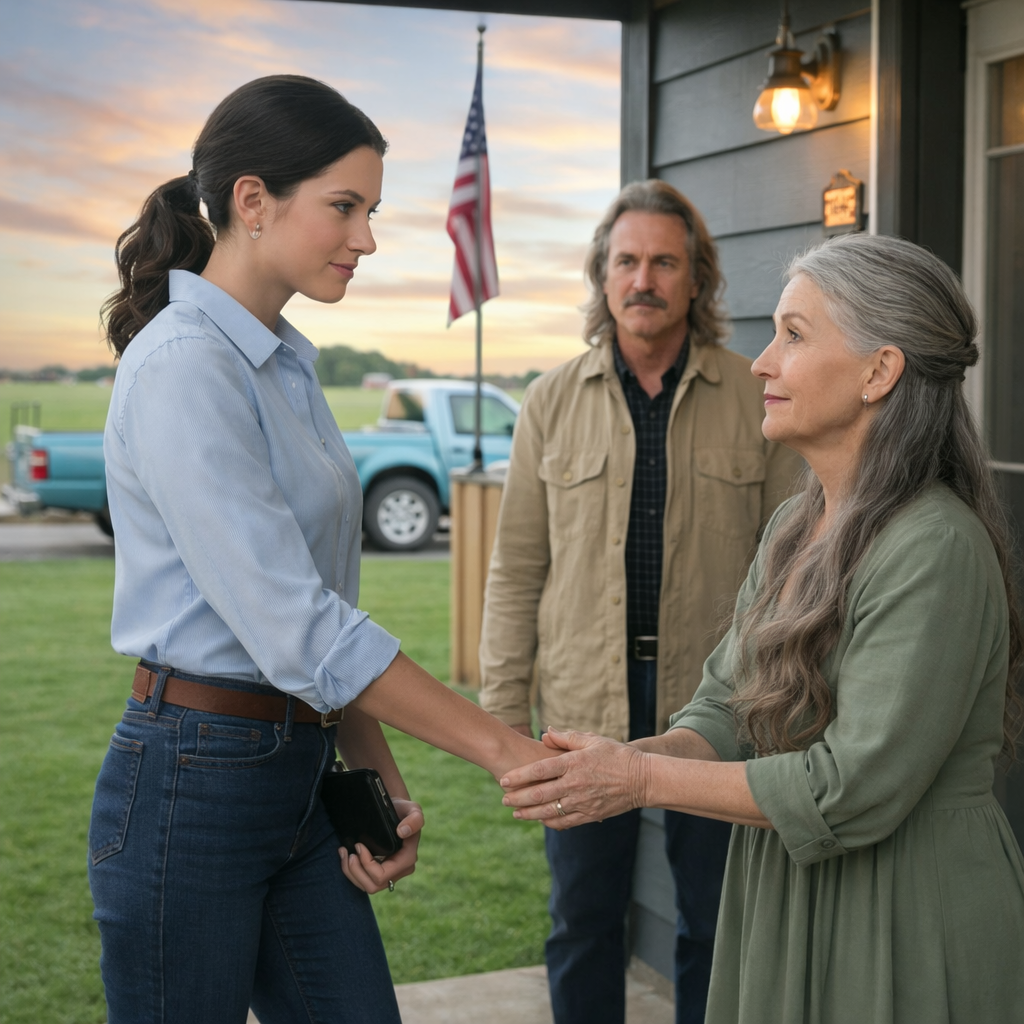
“Oh my goodness,” Jenny said, already moving down the porch steps toward them. Her movements were quick, purposeful, decisive.
“Are you all right? Come inside, please. Lily, go tell Daddy we have guests who need help.”
She unlatched the gate herself and reached for Ruby’s arm, supporting her with practiced ease. The kind of ease that suggested this wasn’t the first time she’d helped someone in distress.
“When did you last eat a proper meal?” Jenny asked, her voice gentle but commanding. Taking charge of the situation with natural authority.
“You look like you’ve been traveling for days without rest. And that cough sounds terrible.”
Ruby’s carefully maintained composure finally cracked completely. Tears spilled down her cheeks, tears she’d been holding back since Boston.
Since every closed door and averted gaze. “I’m so sorry,” Ruby whispered brokenly, the words tumbling out in gasps. “We don’t mean to intrude. We just needed help and we didn’t know where else to go.”
“Hush now,” Jenny said with gentle firmness, guiding them up the steps with a steady hand. “You’re not intruding. You’re exactly where you need to be right now.”
“Come inside. I’ve got vegetable soup on the stove and fresh bread in the oven. There’s a warm fire in the living room. We’ll get you settled and fed, and then we can worry about everything else.”
She led them through the front door into a house that was small but immaculate. Worn wooden floors were covered with braided rugs, clearly handmade.
Furniture that was old but lovingly maintained sat in comfortable arrangements. Books were stacked everywhere, on shelves, end tables, windowsills.
Children’s artwork was taped to the refrigerator with obvious pride, colorful crayon drawings and finger paintings. A fire crackled welcomingly in a stone hearth, filling the room with warmth and the scent of burning wood.
The house smelled like soup and fresh bread and wood smoke. It smelled, Peter realized with a pang so sharp it was almost physical, like home should smell.
Like the home they’d had once, before success and status had replaced warmth and connection. Before they’d lost sight of what actually mattered.
Jenny settled them on a couch near the fire and disappeared briefly into the kitchen. She returned moments later with two steaming mugs, wisps of fragrant steam rising.
“Tea with honey,” she explained, pressing the warm cups into their cold hands. Her touch was gentle, careful.
“It’ll help with that cough,” she added, looking at Ruby with knowing, concerned eyes. “That sounds like it’s settled deep in your chest. You’re going to need to see a doctor soon if it doesn’t improve.”
“We don’t have the means to pay for a doctor,” Peter started automatically, the admission difficult and shameful.
“We’ll worry about that later,” Jenny interrupted kindly but firmly. Her voice left no room for argument.
“Right now, you need warmth and food and rest. Everything else can wait its turn. First things first.”
The little girl, Lily, had returned and now stood in the doorway watching them with undisguised fascination. Her eyes were wide and curious, taking in every detail.
“Mommy, why are they so dirty?” she asked with a child’s brutal honesty. No malice, just pure curiosity.
Jenny knelt beside her daughter, taking the question seriously rather than dismissing it. She looked Lily in the eyes.
“Sometimes people have very hard times, sweetheart. Sometimes they don’t have a house to go home to, or a bathtub to wash in, or clean clothes to wear.”
“When that happens, we help them however we can. We share what we have because that’s the right thing to do. Do you understand?”
Lily nodded solemnly, processing this lesson with the seriousness children bring to important matters. “Like when we found that bird with the hurt wing last month and we took care of it until it could fly again?”
“Exactly like that,” Jenny confirmed with a warm smile, pride evident in her expression. “We take care of those who need help.”
Lily approached the couch with the determined purpose of a child on a mission. She climbed up beside Ruby and carefully offered her the stuffed rabbit.
The gesture was solemn, deliberate, clearly something she considered important. “You can hold Mr. Buttons for a while,” she said seriously, her voice earnest.
“He makes me feel better when I’m sad or scared. Maybe he’ll help you too.”
Ruby accepted the worn rabbit with trembling hands, cradling it like it was made of spun glass. Like it was the most precious thing she’d ever been given.
“Thank you, sweetheart,” she managed, her voice choked with emotion. “That’s very kind of you. What’s your name?”
“I’m Lily,” the girl announced proudly, sitting up straighter. “What are your names?”
Peter answered before he could stop himself, before he could remember they were supposed to be the Millers, not the Graysons. The deception crumbled in the face of this child’s innocent kindness.
“I’m Peter. This is my wife, Ruby.”
“Those are nice names,” Lily said thoughtfully, considering them with a child’s gravity. “My grandma’s name is Ruby too, but Mommy says she lives far away and doesn’t visit us. I’ve never met her.”
The words were completely innocent, delivered with a child’s straightforward honesty. But they landed like physical blows, each one hitting with devastating accuracy.
Peter watched Ruby flinch, watched her arms tighten around the stuffed rabbit as if it were the only thing keeping her from completely falling apart.
Jenny had clearly noticed the reaction. Her eyes flickered thoughtfully between her daughter and her unexpected guests.
Something shifted in her expression, something knowing and complicated. A puzzle piece clicking into place.
“Lily,” Jenny said gently, placing a hand on her daughter’s shoulder. “Why don’t you go help Daddy in the workshop for a bit? Tell him dinner will be ready in about thirty minutes.”
“You can see our guests again at dinner, I promise. They’re not going anywhere. Go on now.”
The child obeyed with only mild reluctance, casting curious glances over her shoulder as she headed toward the back door. When it closed behind her, Jenny turned back to Peter and Ruby with an unreadable expression.
For a long, uncomfortable moment, she simply looked at them. Not suspicious exactly, but searching, thoughtful.
As if she were solving a puzzle in her head, fitting together pieces that didn’t quite make sense. Her gaze moved from their faces to their hands to the way they sat together.
Peter felt certain she was about to ask the questions they weren’t prepared to answer. Certain their cover was about to be blown completely, that she would demand the truth.
Instead, Jenny said, “The bathroom is upstairs, first door on the left. There are clean towels in the cabinet and soap in the dish by the sink.”
“Take as long as you need. Don’t rush. I’ll find some clean clothes that might fit you both.”
“We can’t possibly accept more from you,” Ruby started to protest, the words automatic even as tears continued to fall. “You’ve already been so kind, more than we deserve.”
“You can, and you will,” Jenny said with gentle authority that brooked no argument. Her voice was kind but absolutely firm.
“Whatever brought you to my door, whatever you’ve been through to get here, right now, in this moment, you’re guests in my home. And in this house, we take care of our guests properly. No arguments.”
She helped Ruby up from the couch and guided her toward the stairs while Peter sat frozen. Trying to process what was happening, trying to understand.
Four of his children, successful, wealthy, highly educated, had turned him away without a second thought. Without even looking closely enough to recognize their own parents.
This woman, the daughter-in-law they’d dismissed and avoided for eight years, the woman they’d considered beneath their son, had opened her door without a moment’s hesitation.
She was treating them with more genuine kindness than their own children had shown. More care, more compassion, more basic human decency.
Peter heard water running upstairs. He heard Jenny’s voice, gentle and patient, asking if Ruby needed help with anything.
He heard his wife’s quiet, broken sobs. And Jenny’s soothing responses that he couldn’t quite make out but could feel in their tone.
Peter put his face in his hands and let himself feel the full weight of what they’d done. What they’d become. What they’d missed.
What had they done to their children? What had they taught them about worth and value if four out of five couldn’t even spare basic human decency for strangers in need?
What had they done that they’d written off this genuinely kind, generous woman simply because she didn’t fit their narrow image of success? Because she grew vegetables instead of climbing corporate ladders?
Footsteps on the stairs drew his attention. Jenny descended alone, moving directly to the kitchen where she began efficiently ladling soup into bowls.
The movements were practiced, automatic, the work of someone who’d done this a thousand times. Who took genuine pleasure in feeding people.
“Your wife is resting in the bath,” she said without looking up from her task. “She was more exhausted than she wanted to admit.”
“And that cough worries me significantly. We should have Dr. Harmon look at her tomorrow if it hasn’t improved. Pneumonia is nothing to play around with, especially at her age.”
“You really don’t have to do all this,” Peter said, his voice rough with emotion he could barely contain. “You don’t know us. You don’t owe us anything. We’re complete strangers.”
Jenny paused, ladle suspended over a bowl. When she turned to face him, her expression was calm but absolutely direct.
Her eyes met his without wavering, without judgment, just clear and honest. “Mr. Peter,” she said quietly, her voice carrying weight and conviction.
“I don’t help people because I know them personally, or because they’ve somehow earned my assistance. I help people because they need it. That’s how I was raised by my grandmother.”
“That’s how I’m raising my children. And that’s the only way I know how to live my life.”
She returned to her task, slicing bread with efficient, practiced movements. The knife moved through the loaf with precision.
“My grandmother used to say that every stranger is just a friend you haven’t properly met yet. Maybe that sounds hopelessly naive to some people.”
“Maybe it’s even foolish to open your door to anyone who knocks. But I’d rather be foolish and kind than smart and cruel.”
“I’d rather risk being taken advantage of than risk turning away someone who genuinely needs help. I couldn’t live with myself otherwise.”
Peter thought of Victoria’s crisp twenty-dollar bill, offered without eye contact. Of Richard’s security guard and the pre-printed card with a hotline number.
Of Margaret’s leftover catering sandwiches that were going to be thrown away anyway. Of Steven’s refusal to even open his door or speak for more than thirty seconds.
He thought of the casual cruelty wrapped in the language of practicality and self-protection. The thousand ways his children had justified turning away people in need.
“Your grandmother sounds like she was a very wise woman,” he said quietly, meaning it with every fiber of his being.
“She was,” Jenny agreed, a soft smile touching her lips. Fondness and grief mingling in her expression.
“She also used to say you can tell everything important about a person’s character by watching how they treat someone who can do absolutely nothing for them in return.”
She set a bowl of soup on the table, steam rising invitingly. “Come eat, Mr. Peter. You need your strength. You look like you’re about to fall over.”
The soup was simple, vegetables from the garden, herbs from the windowsill, broth made from scratch. But it was the best thing Peter had tasted in days, maybe years.
Each spoonful warmed him from the inside out, thawing something in his chest that had been frozen for so long he’d forgotten it was cold. He hadn’t realized how hungry he was, how depleted.
The front door opened, and Daniel walked in. Peter’s breath caught in his throat, his spoon frozen halfway to his mouth.
His son had changed in eight years. He’d filled out, grown fully into himself, acquired the weathered, capable look of a man who worked with his hands.
A man who took pride in that work, whose strength came from actual labor rather than gym memberships. But his eyes were the same.
Kind, earnest, worried right now as they took in the stranger sitting at his kitchen table. The same eyes that had looked at Peter with hope and love as a child.
“Jenny,” Daniel said carefully, his voice measured and cautious. “Lily mentioned we had guests?”
“This is Peter and Ruby,” Jenny said smoothly, not missing a beat. Her voice was perfectly natural, as if this happened all the time.
“They were traveling through the area and needed somewhere to rest for a bit. They’ll be staying with us for a few days until they get back on their feet.”
Daniel looked at Peter. Looked hard, the way you look at something you can’t quite place. Something that’s triggering a memory you can’t fully access.
Peter’s heart hammered frantically against his ribs. This was it. This was the moment.
Daniel would recognize them. Would see through the disguise. Would know. And then what? What would happen when the truth came out?
“Nice to meet you both,” Daniel said, extending his hand to shake Peter’s. His grip was firm, his palm calloused from work.
“I’m Daniel. Welcome to our home. Any friend of Jenny’s is welcome here.”
He didn’t know. His own son, standing less than three feet away, didn’t recognize him.
Peter shook Daniel’s hand, feeling the calluses earned through honest labor. The strength that came from real work rather than gym memberships or carefully managed appearances.
The warmth of a grip that was firm but not competitive. Not trying to prove anything. Just genuine.
“Thank you,” Peter managed around the lump in his throat, forcing the words out past the pain. “For your hospitality. For your kindness. We’re very grateful.”
“Jenny’s the hospitable one,” Daniel said with an easy smile that transformed his whole face. Made him look younger, happier.
“I just live here and try not to mess things up too badly. She’s the one who keeps everything running.”
He sniffed the air appreciatively, his eyes closing briefly. “Is that your vegetable soup? I’ve been dreaming about that all day.”
“Sit down and eat before it gets cold,” Jenny instructed, already setting another place at the table. Her movements were efficient, practiced, loving.
“You’ve been working since before dawn. You need to eat properly.”
The family gathered around the table naturally, effortlessly. Daniel and Jenny, moving around each other with the practiced choreography of a long marriage.
Lily chattering excitedly about her day, her words tumbling over each other. A little boy of perhaps two, freshly woken from his nap and rubbing his eyes sleepily from his high chair.
Jenny moved between them all with patient grace. Filling plates, wiping faces, maintaining gentle order without ever raising her voice or showing frustration.
The children talked over each other while Daniel listened with genuine attention. Asking questions about the bug Lily had found, the tower Noah had built from blocks.
Ruby joined them halfway through the meal, moving slowly down the stairs. She wore borrowed clothes that hung loose on her diminished frame.
Her damp hair made her look older and more fragile than Peter had ever seen her. But her face was clean for the first time in days, and there was a hint of color returning to her pale cheeks.
Jenny immediately rose to help her to the table, pulling out a chair with one hand while steadying Ruby with the other. Daniel stood as well, his manners automatic and genuine.
The kind of respect you showed to elders, to people who deserved care. “Please, sit here next to me, Miss Ruby,” Lily commanded with a four-year-old’s absolute certainty.
“I’ll share my bread with you because you look like you need extra. You’re too skinny.”
“Thank you, sweetheart,” Ruby said, her voice thick with barely controlled emotion. Tears threatened again but she blinked them back.
“That’s very kind of you to share.”
“Mommy says kindness is free but it’s worth more than all the gold in the world,” Lily recited seriously. Clearly repeating a lesson she’d heard many times, one that had taken root in her young heart.
“Your mommy is very, very smart,” Ruby whispered, a tear finally escaping despite her best efforts.
After dinner, after the children had been bathed and read to and tucked into their beds, Jenny showed Peter and Ruby to a small guest room at the back of the house.
The nightly ritual had unfolded with the unhurried patience of parents who genuinely enjoyed this time with their children. No rushing, no impatience, just love.
The guest room was simply furnished with a double bed covered in a handmade quilt. A dresser with a slightly cloudy mirror stood against one wall.
A window overlooked the garden, now dark and quiet. But it was spotlessly clean and genuinely warm, with extra blankets folded at the foot of the bed.
“The bathroom is just down the hall,” Jenny explained, her hand resting lightly on the doorframe. “There are extra blankets in the closet if you get cold during the night.”
“Breakfast is at seven, but please don’t feel obligated to join us. Sleep as long as you need. Your bodies need rest.”
“Why are you doing this?” Ruby asked, the question escaping before she could stop it. The weight of the day, of the week, of everything, finally breaking through.
“You don’t know anything about us. We could be anyone. We could be dangerous people, criminals, anything.”
Jenny smiled, a complex expression that held both amusement and tenderness. As if the suggestion was absurd but touching.
“Ma’am, you’re about as dangerous as our barn cats. And I’m doing this because it’s the right thing to do.”
“Because my grandmother took in strangers when she was alive, and my mother did the same when I was growing up. I believe that kindness is the rent we pay for our place on this earth.”
She paused at the door, something shifting in her expression. Her eyes grew distant for a moment, remembering.
“Also,” she added quietly, her voice carrying a weight that made Peter look up sharply. “Because I know exactly what it feels like to be judged unworthy by people who’ve never bothered to actually know you.”
“To have people look at you and decide, before they know anything real about you, that you’re not good enough for their world. I wouldn’t wish that feeling on anyone.”
“So in this house, everyone is worthy. Everyone is welcome. No exceptions.”
She closed the door softly behind her, leaving Peter and Ruby standing in the center of the small, warm room. Surrounded by evidence of a life they’d dismissed as insufficient.
Surrounded by a kindness they absolutely hadn’t earned and certainly didn’t deserve.
“She knows,” Ruby whispered urgently, gripping Peter’s arm with desperate fingers. “She has to know who we are. The way she looked at us, the things she said.”
“No,” Peter said, shaking his head slowly. Processing what he’d witnessed, what he’d felt.
“She doesn’t know. She’s just this way with everyone. This is who she actually is, how she treats everyone, regardless of who they are or what they can offer her.”
Ruby sank onto the bed, her face crumpling with the weight of eight years of terrible mistakes. Of pride and judgment and missed opportunities.
“We were so wrong about her, Peter. So terribly, unforgivably wrong.”
“We looked at her and saw everything she didn’t have. The degree, the career, the connections, the money. We never once saw who she actually was, what she had that actually matters.”
Peter sat beside his wife and took her hand, feeling the tremor in her fingers. Feeling his own hands shake with the magnitude of what they’d discovered.
“We were wrong about a lot of things,” he admitted, his voice barely above a whisper. “About Jenny, about Daniel, about what actually matters in this life.”
“Our other children,” he couldn’t finish the sentence, couldn’t voice the devastating truth they’d discovered. That four of their five children had failed the most basic test of human decency.
“They didn’t even look at us,” Ruby said, her voice breaking completely. The words came in gasps now, between sobs she couldn’t hold back.
“Their own parents, standing right in front of them, and they couldn’t be bothered to actually look. They saw poor people, homeless people, inconvenient people.”
“But Jenny, a woman we’ve ignored and dismissed and treated like she wasn’t good enough for eight long years, she looked. She saw. She opened her door and her heart without a moment’s hesitation.”
Peter thought about the test they’d designed, the experiment meant to reveal his children’s true characters. The elaborate plan that had seemed so necessary, so important.
He’d expected to learn something painful about his family. He just hadn’t expected to learn something equally devastating about himself and Ruby.
About the values they’d actually taught versus the values they thought they’d taught. About the gaping chasm between their intentions and their results.
“What do we do now?” Ruby asked, her voice small and lost. Like a child seeking guidance she no longer trusted herself to provide.
Peter didn’t have an answer. The path forward wasn’t clear, the solution not obvious.
He simply held his wife’s hand and listened to the sounds of the farmhouse settling peacefully around them. The creak of old wood adjusting to the temperature.
The distant murmur of Daniel and Jenny talking quietly as they cleaned up the kitchen. The wind rustling through trees outside their window.
They had come looking for truth about their family. They had found it, in the most unexpected and painful way possible.
But the truth was more complicated and more devastating than they had ever imagined. More damning and yet somehow more hopeful.
For now, they were warm. They were fed. They were safe.
And for the first time in longer than Peter could remember, they were exactly where they were supposed to be. Even if they’d had to destroy themselves to get here.
The days at the farmhouse unfolded with a gentle rhythm that Peter had forgotten existed. He woke each morning to sounds he hadn’t heard in decades.
A rooster announcing the dawn with proud insistence. Children’s laughter drifting up from the kitchen, bright and genuine.
The rhythmic creak of someone working a hand pump at the well. These were the sounds of a life lived close to the earth, measured in seasons and sunrises rather than stock prices and status.
On their third morning, Peter came downstairs to find Jenny already at the stove. And Ruby, his Ruby, who hadn’t cooked a meal in their own kitchen in five years, standing beside her.
Learning to make biscuits from scratch with flour dusting her hands and a look of concentration on her face. She looked happier than he’d seen her in years.
“You have to work the dough gently,” Jenny was explaining, her hands demonstrating the technique with practiced ease. Years of experience evident in every movement.
“Too much handling and they’ll come out tough. My grandmother used to say biscuits are like relationships. They need a light touch and plenty of warmth.”
Ruby actually laughed. A real laugh, warm and genuine, from deep in her chest.
The sound made Peter’s heart ache with how rare it had become. When had his wife stopped laughing like that?
After breakfast, Jenny handed Peter a basket and garden shears. “We don’t have guests often,” she explained with a gentle smile.
“But when we do, everyone contributes what they can if they’re able. Think you can handle harvesting some tomatoes? The ripe ones are deep red and come off easily.”
The garden was Jenny’s kingdom. Neat rows of vegetables stretched in organized abundance, each plant labeled with hand-painted markers.
Peter worked slowly, learning to distinguish ripe from nearly ripe. His soft hands, accustomed to paper and pens, gradually remembered what real work felt like.
The sun warmed his back, pleasant and honest. The soil smelled alive, rich with nutrients and promise.
And somewhere along the way, his mind quieted in a way it hadn’t in years. The constant chatter of worry and judgment and comparison simply stopped.
Daniel found him there an hour later, his hands full of tools from the workshop. “Jenny’s got you working, I see,” he said with a faint grin that reminded Peter of the boy he’d been.
“She says idle hands make idle minds. Keeps everyone busy around here.”
Peter straightened, his back protesting the unfamiliar position. “It’s good work. Honest. I’d forgotten what this feels like.”
“That’s what I love about it,” Daniel said, his eyes scanning the garden with practiced care. Checking for problems, noting what needed attention.
“No politics, no games, no pretending. You plant something, you take care of it properly, and it grows. There’s a purity to that. A simplicity that’s actually quite complex.”
“Can I ask you something?” Peter said carefully, setting down the basket. His curiosity getting the better of his caution.
“Sure.” Daniel pulled a weed, examining it thoughtfully before tossing it aside.
“Why this life? You could have done anything, been anything. Why choose,” he gestured at the fields, the modest house, the chickens scratching contentedly in their coop, “this?”
Daniel was quiet for a long moment, his hands working while he thought. Pulling weeds, adjusting stakes, the mindless work that allowed for deeper thinking.
“When I was in college studying business like everyone expected, I used to have these nightmares. I was in a building made entirely of glass, and everyone around me was shouting numbers that didn’t mean anything.”
“I was trying to find a door to escape, but there weren’t any. Just glass walls going up forever. Higher and higher until I couldn’t see the ground.”
He tossed another weed aside, his expression distant with memory. “Then I came out here one summer to help a friend fix his grandmother’s barn. The first night, I slept better than I had in years. No nightmares. Just peace.”
He smiled, the memory clearly pleasant. “Met Jenny at the farmers market that same week. She was selling tomatoes and herbs. I bought twelve pounds of tomatoes just to keep talking to her. Didn’t even like tomatoes that much.”
Peter couldn’t help but smile at that image. His serious son, normally so reserved, buying twelve pounds of tomatoes.
“My family doesn’t understand,” Daniel said, his voice taking on a harder edge. Old pain surfacing in carefully controlled words.
“They think I failed because I didn’t follow the path they laid out. But I didn’t fail, Mr. Peter. I just chose differently.”
“I chose this garden, this house, this woman who sees the world the way I do. I chose to measure my life in moments with my kids instead of meetings with clients. In seasons instead of quarters.”
“Do you regret it?” Peter asked quietly, genuinely wanting to know. Needing to understand.
“Not for a second,” Daniel said immediately, his conviction absolute and unwavering. “Do I wish my parents understood? Sure. Do I wish they’d visit, get to know Jenny and the kids, see that this life isn’t lesser just because it’s simpler?”
His jaw tightened almost imperceptibly, a muscle jumping. “Yeah, I wish that. But I can’t make them see what they’ve decided not to look at. I can’t force them to value what I value.”
The words landed like stones in Peter’s chest, each one heavy with truth and hurt. “What if they came around?” he asked carefully, testing the waters.
“What if they realized they’d been wrong about everything? About this life, about Jenny, about you?”
Daniel shrugged, his expression guarded now. Protecting himself from hope that had disappointed him too many times.
“Honestly? I don’t know. I’ve spent eight years waiting for a phone call that never comes. For an invitation that’s never extended. For some sign that I matter to them as something other than a disappointment.”
“At some point, you have to stop waiting and just live your life. You have to build your happiness on what you have, not what you’re missing.”
Ruby’s cough worsened dramatically on the fourth day, deepening into something that rattled in her chest and left her breathless. The sound was alarming, wet and harsh.
Jenny noticed immediately, because Jenny seemed to notice everything. She called Dr. Harmon without asking permission first, her voice firm on the phone.
“Walking pneumonia,” the doctor diagnosed after a thorough examination in the small guest room. He packed up his bag with practiced efficiency.
“Not severe yet, but it will be if she doesn’t rest properly. I’m prescribing antibiotics and at least a week of complete bed rest. No arguments, Mrs. Ruby. This is serious.”
So Ruby settled into the guest room for an extended stay. And Peter watched as his wife received care they’d never allowed anyone to give them before.
Jenny brought soup and tea at regular intervals, checking temperatures, adjusting blankets. She sat by Ruby’s bed reading aloud from novels, her voice soothing and steady.
She taught Lily to be quiet in the afternoons so Miss Ruby could sleep. She changed sheets, opened windows for fresh air when the weather allowed.
She applied mustard plasters with the confidence of someone who’d learned medicine from generations of women. Folk remedies passed down and proven effective.
On the sixth day, as Ruby finally began to improve, Peter made a decision. They couldn’t stay hidden forever, not behind fake names and borrowed clothes.
Not accepting kindness they weren’t sure they deserved, built on a foundation of lies. The deception was eating at him, making everything feel false.
“We have to tell them,” Peter said that night after Jenny and Daniel had gone to bed. They were alone in the guest room, speaking in whispers.
Ruby nodded slowly, her face pale but resolute. “I know. I’ve known for days. I’m just afraid of what happens when we do.”
“Afraid of what?” Peter asked, though he knew. He shared the same fears.
“That they’ll hate us,” Ruby whispered, her voice trembling. “That Jenny will realize she’s been taking care of the people who rejected her, who judged her unworthy.”
“And it’ll ruin everything beautiful we’ve found here. This peace, this acceptance. It’ll all turn to ash when they know the truth.”
“We might lose this,” Peter agreed, the admission painful. “But we can’t keep lying. They deserve better than our deception.”
“Jenny deserves better. And Daniel,” he thought of his son’s calloused hands, his quiet strength, his gentle way with his children, “Daniel deserves to know that his father finally sees him. Really sees him. Even if it’s too late.”
They agreed to tell them the next morning at breakfast. To come clean and face whatever consequences followed.
But fate, as it so often does, had other plans.
The storm rolled in around midnight, sudden and violent. Weather that transformed the world in minutes, as if nature itself was responding to the tension building in the farmhouse.
Lightning cracked the sky with explosive force. Rain came down like judgment, sheets of water driven by howling wind.
Peter woke to shouting, voices raised in alarm and urgency.
“The barn! The new lambs are in the barn!”
He was out of bed and down the stairs before he fully understood what was happening. Moving on instinct, on the need to help.
Daniel was pulling on boots by the door, his face grim and determined. Jenny was already outside, a dark figure running toward the barn where orange light flickered.
Orange light that had nothing to do with lightning. Fire. The barn was on fire.
Peter ran after them, his old legs protesting, his heart pounding so hard he thought it might burst. The barn was fully engulfed on one side, flames licking up wooden walls despite the rain.
The heat was intense even from a distance. Inside, animals screamed in terror, high-pitched and desperate.
Daniel was already inside, emerging seconds later with lambs under each arm. His face was blackened with smoke, his eyes streaming.
“There are more in the back stalls! The mare is trapped!”
Peter didn’t think. Thinking would have meant recognizing the danger, the stupidity, the risk.
He just moved, running into the burning building while some rational part of his brain screamed at him to stop. Later, he wouldn’t remember the details clearly.
The heat searing his lungs with each breath. The smoke stinging his eyes until he could barely see.
The sound of timbers groaning overhead, threatening to collapse at any moment. He remembered finding the mare’s stall, her eyes rolling white with terror.
Fumbling with a latch that wouldn’t cooperate, his fingers clumsy and shaking. His own voice talking the terrified animal through the doorway, surprising himself with how calm he sounded.
He remembered Daniel’s shout, urgent and terrified. “The roof! Get out now! It’s coming down!”
And then the world collapsed around him. A tremendous crash, pain exploding through his arm and head, darkness.
Peter woke in a hospital bed with his head pounding, his left arm in a cast, and his family surrounding him. The harsh fluorescent lights made him squint.
Ruby sat beside him, her face streaked with tears, her hand gripping his with desperate strength. Daniel stood at the foot of the bed, his hands wrapped in white bandages.
Jenny sat in a chair by the window with Lily sleeping in her lap, the child’s face peaceful despite the drama. The scene was surreal, dreamlike.
“The barn?” Peter asked, his voice coming out as a rasp. His throat felt raw, damaged by smoke.
“Gone,” Daniel said quietly, his voice heavy with grief and something else. “But we got all the animals out. Every single one. Thanks to you.”
His voice broke slightly, emotion cracking through his control. “You saved the mare. You went back for her when the roof was already coming down. You could have been killed. You almost were. Another few seconds and…”
“A beam fell,” Ruby whispered, gripping his hand so tightly it hurt. “Daniel pulled you out. He went back in for you, dragged you through the flames.”
Peter looked at his son, really looked. Saw the burns on his hands, the singed hair at his temples.
The exhaustion carved into every line of his face. This man had run into a burning building to save his father. A father who hadn’t even claimed him, who’d been lying to him for days.
“Daniel,” Peter said, the name coming out broken and urgent. “I need to tell you something. Something important.”
“It can wait,” Daniel said quickly, his voice gentle but firm. “You need to rest. You have a concussion, broken arm, smoke inhalation. The doctor said you need to stay quiet.”
“It can’t wait,” Peter insisted, struggling to sit up despite the pain shooting through his body. Despite Ruby’s protests and the nurse’s alarmed look.
“It’s waited far too long already. Eight years too long.”
With Ruby’s help, he managed to sit upright. Every movement sent sharp pains through his ribs, but he pushed through.
“There’s something you need to know about who we really are. About why we came here.”
Daniel’s expression shifted from concern to confusion, the first flicker of something that might have been suspicion. His body language changed, becoming more guarded.
Peter met his son’s eyes directly, willing him to understand. Praying for forgiveness he knew he didn’t deserve.
“My name isn’t Peter Miller. It’s Peter Grayson. And this is my wife Ruby. Your mother.”
The silence that followed was absolute, broken only by the beep of hospital machinery. The rhythmic sound seemed impossibly loud in the frozen moment.
Daniel’s face went through a rapid cascade of emotions. Disbelief, shock, anger, and something heartbreakingly like hope before it all settled into careful blankness.
An expression that revealed nothing, protected everything. “What?” The word was barely a whisper, forced out through shock.
“We came to test our children,” Ruby said, her voice breaking with each word. Tears streaming down her face unchecked.
“We disguised ourselves as homeless strangers to see who would help us. To see who remembered what we tried to teach them about kindness and compassion. To see if anything we’d built was real.”
“Victoria turned us away,” Peter forced himself to continue, each word a confession. Each sentence a nail in the coffin of who they’d been.
“Richard too. Margaret. Steven. Four of your siblings, and none of them recognized us. None of them even tried to see us as human beings.”
“But you did. You and Jenny. You opened your door to complete strangers. You fed us, cared for me when I got sick, treated us with more genuine love than our own children showed their parents.”
Daniel didn’t move. His stillness was terrifying, absolute. The calm before a storm.
“You lied to us,” he said finally, his voice flat and dangerous. Each word precisely articulated, controlled.
“You came into our home. You ate at our table. You let Jenny take care of you for a week. You played with my children. And the whole time you were lying. Testing us like we were subjects in some experiment.”
“We were wrong,” Peter said, his voice cracking completely now. “We were wrong about everything. About you, about Jenny, about what matters in this life.”
“We spent eight years punishing you for not following the path we laid out. And we missed everything. We missed your wedding. We missed your children being born. We missed who you actually are, who you became.”
“And you thought this,” Daniel gestured at the hospital room, the bandages, the impossible situation, his voice rising now with barely contained fury, “would somehow fix that? That lying to us, manipulating us, testing us like lab rats would make up for eight years of absence?”
“We thought we could learn the truth,” Ruby whispered, her voice small and broken. “We did learn the truth. The truth is we raised four children who care more about appearances than people.”
“And we raised one child who understood what we never managed to teach ourselves. That kindness and love matter more than success and status. That how you treat people when they have nothing to offer you reveals everything about your character.”
Daniel turned away, his shoulders rigid with emotion. His hands clenched into fists at his sides.
Jenny, who had been listening in silence through all of this, finally moved. She set Lily gently in the chair and walked to stand beside her husband.
She placed her hand on his arm without speaking, a gesture of support and solidarity. Her presence seemed to anchor him, to provide some stability in the chaos.
Minutes passed. The silence stretched, painful and necessary.
Peter watched his son’s back, remembering all the times he’d turned away from Daniel. Dismissed his choices, refused to see the man he’d become.
All the times he’d let disappointment blind him to love. All the opportunities lost to pride and stubbornness.
When Daniel finally turned around, his eyes were wet. Tears threatened to spill but he blinked them back.
“You missed her first word,” he said quietly, his voice wavering with suppressed emotion. “Lily’s. It was ‘Mama.’ She said it right there in the kitchen, and I was so excited, so proud.”
“I called you that night to share it. You said you were busy. That you’d call back when you had time. You never did. I waited by the phone for three days.”
Ruby made a sound like something breaking inside her. A wounded animal sound.
“You missed Noah’s birth,” Daniel continued, the words spilling out now. Years of pain finally finding voice.
“Your grandson. I sat in that waiting room for twelve hours and I wanted, I wanted my parents. I wanted someone to tell me it would be okay, that Jenny would be fine, that the baby would be healthy.”
“But you weren’t there. You’ve never been there for any of it. Not the first days of school, not the birthday parties, not the skinned knees or bad dreams or proud moments.”
“We should have been,” Peter said, his voice barely audible. “We should have been there for all of it. There’s no excuse, no justification. We were wrong and we hurt you and I’m sorry.”
“Yes,” Daniel said simply, his voice flat. “You should have.”
Another heavy silence fell, thick with years of accumulated hurt. With things said and unsaid, done and undone.
Then Jenny spoke, her voice gentle but absolutely firm. Cutting through the tension with quiet authority.
“Daniel, look at them. Really look at your mother. She has pneumonia because she spent a week on buses trying to reach your siblings. Look at your father. He has a broken arm because he ran into a burning barn to save our animals.”
She squeezed her husband’s arm, her touch both comforting and insistent. “They made terrible mistakes. Mistakes that hurt you deeply, that you have every right to be angry about.”
“But they’re here now. And they almost died trying to find their way back to you. That doesn’t erase eight years of pain, but it’s a start. And sometimes a start is all we get.”
She moved to stand between Daniel and his parents, a bridge between past and future. “I knew,” Jenny said simply, her voice calm and clear.
Peter’s heart stopped, his breath catching. “What?”
“I knew who you were,” Jenny explained, her tone matter-of-fact. “Not right away. The first night, I genuinely didn’t recognize you. But by the second day, I’d figured it out.”
“The way Ruby looked at Lily, like her heart was breaking. The way Peter told that story about the princess at bedtime. Little things that didn’t add up until suddenly they did.”
“Why didn’t you say anything?” Ruby whispered, disbelief and gratitude and confusion all mingling in her expression.
Jenny’s smile was sad and knowing, full of wisdom beyond her years. “Because I wanted you to see. I wanted you to spend time in our home, with our children, living our life.”
“I wanted you to understand that what we have here isn’t less than what your other children have achieved. It’s more. It’s everything that actually matters. Love, connection, purpose, peace.”
“And I wanted to give you the chance to tell the truth yourselves. To choose honesty over deception. That matters too. You had to come to it on your own.”
The room fell silent again, but it was a different kind of silence now. Things shifting, rearranging, finding new positions.
Possibilities opening up in spaces that had been closed. Not forgiveness yet, but maybe the path toward it.
Daniel wiped his eyes roughly with the back of his hand. He looked at Jenny, and something passed between them in that look.
A whole conversation in a glance, the kind of communication that only comes from years of partnership. Then he looked at his parents.
“I don’t know how to do this,” Daniel admitted, his voice raw with honesty. “I don’t know how to go from eight years of silence and hurt to whatever this is supposed to be. I don’t have a roadmap for this.”
“Neither do we,” Peter said honestly, meeting his son’s eyes without flinching. “But we’d like to try, if you’ll let us. If you can find it in yourself to give us a chance we don’t deserve.”
Daniel was quiet for a long moment, his expression unreadable. Processing, weighing, deciding.
“There’s a lot to work through. A lot of hurt that doesn’t just disappear because you showed up and did one brave thing. Trust isn’t rebuilt overnight.”
“We know,” Ruby whispered, her voice thick with tears. “We know we have years of work ahead of us. We know we might never fully repair what we broke.”
“But,” Daniel said slowly, the word carrying enormous weight, “the barn needs rebuilding. It’s going to be a big project. I could use an extra pair of hands when that arm heals. If you’re willing to stick around long enough to use them.”
Peter felt something crack open in his chest, something that had been sealed shut for years. Light flooding into dark places.
“I’d like that very much. More than anything.”
“And Lily,” Jenny added softly, her voice warm, “has been asking why Mr. Peter and Miss Ruby have the same names as her grandparents. She’s a smart girl. She’s putting pieces together. I think it might be time to explain, to tell her the truth.”
Three weeks later, the barn was a skeleton of new timber rising against the autumn sky. Clean lines and fresh wood, smelling of sawdust and possibility.
Peter worked alongside Daniel every day, his healing arm in a brace but his good hand learning the rhythm of honest labor. Learning to measure twice, cut once. Learning patience and precision.
They spoke little at first, the silence between them still awkward and heavy. But gradually words began filling the gaps.
Stories from Daniel’s childhood that Peter had forgotten. Observations about the weather and animals. The way Lily had started naturally calling them Grandpa Peter and Grandma Ruby, as if they’d always been part of her life.
Ruby recovered fully and became Jenny’s constant companion in the kitchen and garden. The two women moved around each other with an ease that seemed impossible given their history.
But Ruby had discovered something unexpected. She genuinely liked and admired her daughter-in-law, saw in her a strength and wisdom she’d been too blind to recognize before.
Six months after that night in the hospital, Peter and Ruby sold their Connecticut house. The big house full of memories, both good and painful.
They moved into a small cottage on the edge of Daniel’s property. The old groundskeeper’s cabin that Daniel helped them rebuild, transforming it from ruins into something livable and warm.
It wasn’t large, just a bedroom, bathroom, small kitchen, and living area with a wood-burning stove. But it had windows that caught the morning light, flooding the rooms with gold.
A porch overlooking the fields where Peter could watch the seasons change. And a garden where Ruby planted herbs and flowers, getting her hands in the soil daily.
One morning, Peter stood on that porch watching the sunrise. A cup of coffee warming his hands, steam rising into the cool air.
Daniel emerged from the main house, crossing the yard with a basket of fresh eggs. His daily routine before starting work.
“Jenny says breakfast is ready. She made those biscuits you like.”
“In a minute,” Peter said, gesturing to the chair beside him. “Sit with me first. Watch the sun come up.”
They sat in comfortable silence, father and son, watching the sun climb higher. Turning frost on the fields to diamonds, making the whole world sparkle.
“You know,” Daniel said eventually, breaking the silence with careful words, “when I was a kid, I used to imagine what it would be like if you understood me. If you were proud of me for who I was, not who you wanted me to be.”
He paused, choosing his next words carefully. “Now I realize parents are just people. Flawed and scared and doing the best they can with what they know. You hurt me, Dad. For a long time. Deeply.”
“But I see you now. Really see you. I see you trying, changing, showing up every day even when it’s hard. And I think maybe that’s enough. Maybe that’s all any of us can do.”
Peter felt tears prick his eyes, emotion rising in his throat. “It’s more than I deserve. More than I had any right to hope for.”
“Probably,” Daniel agreed with a slight smile, the hint of humor softening his words. “But that’s the thing about family, isn’t it? It’s not about deserving. It’s about choosing to love each other anyway. Choosing to show up, to try, to forgive.”
Lily came running across the yard, her brother toddling behind on unsteady legs. Their voices bright in the morning air.
“Grandpa! Grandma Ruby says the biscuits are ready, and if you don’t come now, she’s giving yours to the chickens! She means it this time!”
Peter laughed, a real, deep, free laugh that came from somewhere genuine. From joy he’d forgotten he could feel.
They walked to the farmhouse together, three generations moving toward warmth and food. Toward the simple miracle of a family meal, of belonging, of home.
Behind them, the sun finished its climb, flooding the valley with golden light. The barn they’d raised together stood solid against the sky, a testament to work and reconciliation.
The garden stretched in neat rows, ready for spring planting. The cottage nestled at the property’s edge like it had always belonged, like it had been waiting for them.
Not a single piece of it would have impressed Peter’s old colleagues or generated envy at cocktail parties. It wouldn’t appear in design magazines or be featured on social media as a success story.
It was simple. Small. Profoundly ordinary in every way that the world measures things.
And it was everything. It was home. It was family. It was love made visible in daily rituals and patient forgiveness.
Peter took one last breath of clean morning air, cold and smelling of woodsmoke and possibility. Of second chances and hard-won wisdom.
“Dad?” Daniel held the door open, warm light spilling out from inside. The sounds of family, of breakfast, of life lived fully. “You coming?”
“Yeah,” Peter said, walking toward his son, toward his family, toward the home he’d almost lost forever. “I’m coming.”