The Day a Property Dispute Taught an Entire Community About Respect and Boundaries
Daniel Whitaker enjoyed the simple pleasures of his new home in North Carolina. After moving to Brookside Estates less than a year ago, he’d found exactly what he was looking for in this quiet neighborhood.
The best part wasn’t the house itself, though it was comfortable enough. It was what lay behind it.
A beautiful private body of water stretched out beyond his back deck, surrounded by graceful willows that swayed gently in the breeze. The surface stayed calm and glassy most mornings, reflecting the sky like a mirror.
His twenty-two-foot boat sat tied to a small dock, ready whenever he wanted to spend a peaceful hour on the water. Every morning, Daniel would carry his coffee outside, settle into his favorite chair, and maybe cast a fishing line.
To him, this wasn’t just pleasant scenery. It was a sanctuary from the noise and stress of everyday life.
Then everything changed with a single piece of mail.
An Unexpected Demand
The letter arrived folded neatly in his mailbox, bearing the official seal of the Brookside Estates community association.
The message was clear and direct. His boat violated community guidelines, they claimed. All watercraft needed to be stored out of sight when not actively being used. If he didn’t comply, he’d face fines and possible removal of the boat.
Daniel actually laughed when he first read it. Surely someone had made an administrative mistake.
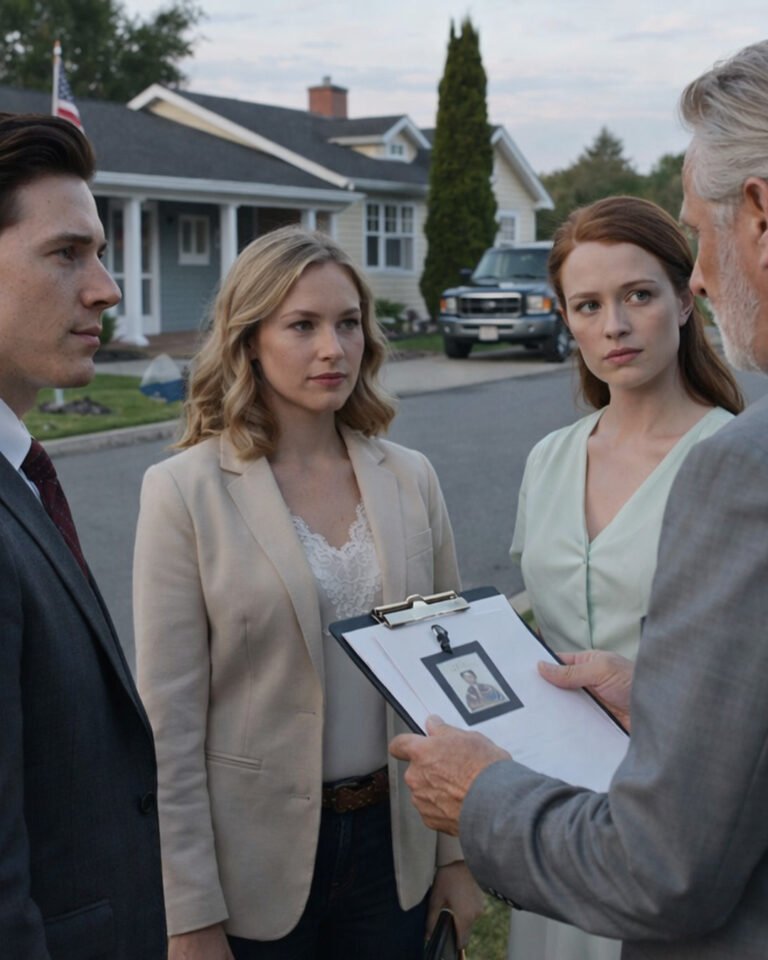
But two days later, his doorbell rang. Standing on his porch was Carol Jennings, clipboard in hand, wearing the kind of stern expression that suggested she took rule enforcement very seriously.
“Mr. Whitaker,” she began without preamble, “your boat needs to be removed from the dock immediately. Several residents have complained that it’s unsightly.”
Daniel blinked in surprise. “Unsightly? Carol, it’s a brand new boat, not some rusty old wreck.”
Her tone became sharper. “Regardless, the community bylaws are quite clear. If the boat isn’t moved, we’ll arrange to have it towed or impounded at your expense.”
That crossed a line. Daniel politely thanked her and closed the door, biting back the laugh that wanted to escape.
The moment she left, he walked to his desk and pulled out a folder he’d been keeping carefully filed. Inside were all the property documents from his purchase.
Because there was something Carol and the rest of the community association didn’t know. Something that was about to turn this entire situation on its head.
The Truth About Ownership
When Brookside Estates was originally developed, the builder sold off the residential lots but kept ownership of the water. Years later, through a private transaction, Daniel had purchased not just his house but the entire body of water as well.
The shoreline, the dock, the fishing rights—all of it belonged to him legally.
He leaned back in his chair, a slow smile crossing his face. The community association thought they had authority over this situation. They were about to receive quite an education.
Daniel wasn’t just another homeowner bound by their rules and regulations. He owned the very water they’d been treating as community property for years.
And that meant their demands had absolutely no legal standing.
A History of Assumptions
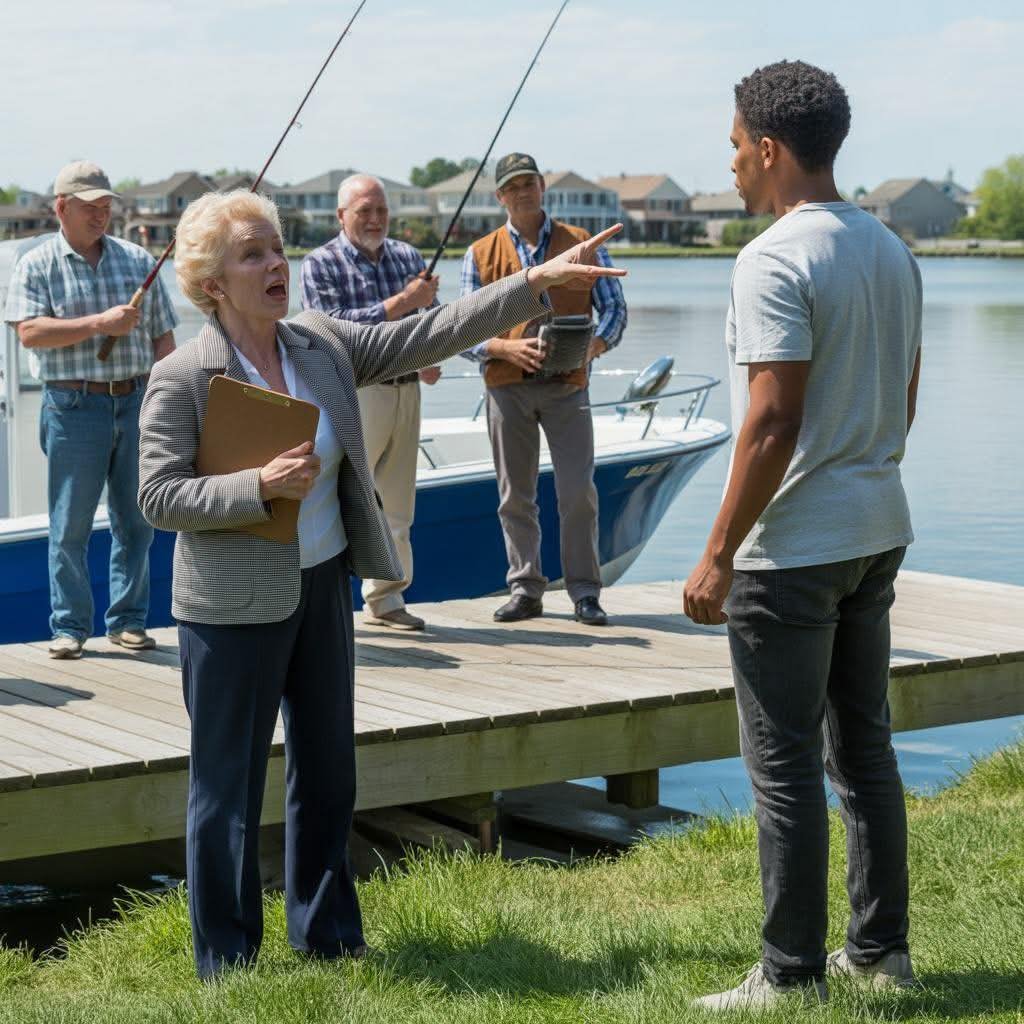
For nearly eight years, a local fishing club had been using the water as their personal recreational spot. Every Saturday morning before sunrise, about a dozen men would gather on the shoreline.
They were all either on the community association board or friends with board members. They’d set up folding chairs, bring coolers full of refreshments, and spend the day fishing and socializing.
Daniel had noticed them his first week in the neighborhood. He’d waved once, trying to be friendly. They’d stared at him like he was intruding, then turned back to their conversation without acknowledging him.
He’d let it go at the time. No point in making waves when you’re new to an area.
But now, reading through his property documents with fresh eyes, he saw the situation differently. This fishing club wasn’t just using the water. They were acting like they owned it.
And Carol’s husband, Rick, served as the club’s president.
Daniel spent an hour researching the history. The fishing club had been operating under what they called a “gentleman’s agreement” with the previous owner. That owner had allowed them access in exchange for some basic shoreline maintenance.
But when the property changed hands, that informal arrangement ended. There was nothing in writing, no legal agreement transferring with the sale.
Which meant that legally, they were all trespassing on his private property.
Daniel picked up his phone and called his attorney, Marcus Webb, who’d helped him with the original purchase.
“Marcus,” Daniel said, “I need you to draft some cease and desist letters. And they need to be absolutely airtight.”
Marcus chuckled on the other end. “What did the community association do?”
“Threatened to tow my boat off my own dock.”
“Oh, this should be interesting,” Marcus replied. “Let me put something together for you.”
Making It Official
Three days later, Daniel personally delivered envelopes to every member of the fishing club. The letters were straightforward and legally precise.
They informed recipients that the body of water was privately owned property. As of that date, all unauthorized access to the water, shoreline, docks, and surrounding land was prohibited. Continued trespassing would result in legal action.
He also posted copies on the community bulletin board and sent digital versions through the community email system.
By Saturday morning, his phone was ringing constantly.
Carol called first, her voice shrill with outrage. “This is completely absurd! You can’t just block access to a community resource!”
“It’s not a community resource, Carol,” Daniel said calmly. “It’s my private property. I own it. You can verify that with the county records if you’d like.”
“This is harassment! We’ve been using that water for years!”
“Without permission from the legal owner,” Daniel pointed out. “That’s the definition of trespassing.”
She sputtered something incoherent and hung up.
The second call came from Rick, her husband. His voice carried a threatening edge.
“Whitaker, we need to have a conversation. You’re making a serious mistake here.”
“No mistake,” Daniel replied evenly. “Just enforcing my property rights.”
“We had an understanding with the previous owner—”
“Which ended when I purchased the property. If you want access, we can discuss a lease arrangement. Otherwise, please stay off my land.”
Rick’s tone turned cold. “You’re going to regret this decision.”
Daniel smiled to himself. “We’ll see about that.”
When Things Turned Ugly
The following week, Daniel came home from work to find his boat vandalized. Someone had slashed the seats, spray-painted offensive words on the hull, and cut the mooring lines so it drifted into the reeds.
He stood on the dock, staring at the damage, his jaw clenched tight. He pulled out his phone and called the local authorities.
When the officer arrived, he took photographs and filed an official report. But his expression was sympathetic in a way that told Daniel this probably wouldn’t lead anywhere.
“Let me guess,” Daniel said quietly. “Rick is friends with the sheriff.”
The officer didn’t confirm or deny it, but his silence said everything.
That evening, Daniel installed security cameras around his property. Two on the dock, two along the shoreline, and two facing the street. He also put up clear signage every fifty feet around the perimeter warning against trespassing.
If they wanted to play games, he’d simply be smarter about protecting himself.
The Community Meeting
Two weeks later, Daniel received notice of an emergency community association meeting. The topic was listed as a dispute over water access.
He showed up wearing casual clothes and carrying a leather folder. The meeting room was packed with standing room only. Carol sat at the head of the table, flanked by Rick and several other board members. The crowd murmured when Daniel walked in.
Carol banged her gavel for order. “Mr. Whitaker, thank you for attending. We’re here to address your recent actions regarding the water.”
“Happy to discuss it,” Daniel said, taking a seat in the front row.
Carol cleared her throat. “The community bylaws clearly state that all residents have equal access to shared amenities. The water has been a shared resource for nearly a decade—”
“Correction,” Daniel interrupted politely. “The water has never been a shared amenity. It’s private property. It always has been.”
Rick leaned forward, his face flushed. “We’ve been maintaining that water for years. We’ve paid for weed control, stocked it with fish, cleaned up the shoreline—”
“Without the owner’s permission,” Daniel said. “Which means you’ve been trespassing and doing unauthorized work on someone else’s property.”
Someone in the back shouted, “This is ridiculous!”
Carol banged her gavel repeatedly. “Mr. Whitaker, we’re prepared to offer a compromise. If you allow continued access for the fishing club, we’ll withdraw the complaint about your boat.”
Daniel actually laughed. “You can’t withdraw a complaint that was never valid to begin with. And no, I’m not granting free access. If you want to use my property, there will be terms and compensation.”
The room erupted in angry voices.
Carol slammed the gavel down hard. “Order! We need order!”
Daniel stood up, pulling a document from his folder. “This is the deed to the water, registered with the county. I own it. Every inch. If anyone sets foot on that property without my written permission, I’ll have them arrested for trespassing. And if my boat gets damaged again, I’ll pursue legal action against every member of this fishing club personally.”
He laid the deed on the table in front of Carol, turned, and walked out.
Behind him, the room dissolved into chaos.
Legal Threats and Responses
The next morning brought a certified letter from the community association’s attorney. They threatened legal action for interfering with community enjoyment of shared resources.
Daniel forwarded it to Marcus, who called back an hour later, clearly amused.
“They have absolutely no case,” Marcus said. “They’re trying to intimidate you.”
“So what’s my next move?”
“Let me respond officially. I’ll make it very clear that any further harassment will result in a countersuit. Trust me, they’ll back down.”
Marcus was right. Within a week, the association’s attorney withdrew the threat.
But the fishing club wasn’t finished yet.
A Public Display
The following Saturday, Daniel woke to find about twenty people gathered on the public road next to his property. They were holding signs with messages like “Save Our Water” and “Community Over Greed.”
He sipped his coffee on the deck, watching them through the window. A few were chanting. One man had brought a megaphone.
Daniel called Marcus to ask about his options.
“They’re on a public road,” Marcus explained. “That’s technically legal as long as they don’t block traffic or step onto your property.”
“So I just ignore them?”
“For now. But document everything. If they trespass even slightly, call the authorities immediately.”
The demonstration lasted about three hours. By midday, most people had gotten bored and left. But Carol and Rick stayed, glaring at his house.
Daniel waved at them cheerfully from his window.
Carol’s face turned an impressive shade of purple.
The Evidence That Changed Everything
A week later, Daniel was reviewing footage from his security cameras when he noticed something concerning. Late at night, someone had been coming onto his property to dump trash into the water.
He watched the grainy footage, his anger rising. The person wore a hooded sweatshirt, but the way they moved seemed familiar. He rewound the footage, zoomed in, and caught a clear glimpse of the face.
It was Rick.
Daniel saved the footage, copied it to multiple backup drives, and called Marcus immediately.
“I’ve got solid evidence,” Daniel said.
“Evidence of what?”
“Rick trespassing on my property and dumping garbage into the water. Vandalism, trespassing, possibly environmental violations.”
Marcus let out a low whistle. “Send me that footage right away. I’ll file an official report and request a restraining order. And Daniel? This could be grounds for a substantial civil lawsuit.”
“How substantial are we talking?”
“Depends on the extent of the damage. But if you can prove a pattern of harassment and vandalism, we’re looking at significant compensation plus legal fees.”
Daniel smiled grimly. “Do it.”
Legal Consequences
The lawsuit hit Rick like a bombshell. Daniel’s attorney filed a comprehensive complaint listing trespassing, vandalism, harassment, illegal dumping, and intentional infliction of emotional distress.
The video evidence was damning. Rick’s attorney tried to argue the footage was too dark for positive identification, but the timestamp, movement analysis, and several clear frames showing his client’s face made the case solid.
The community association board panicked. Carol resigned from her position. Two other board members followed suit. The fishing club quietly disbanded.
Rick settled out of court for thirty-five thousand dollars.
A New Approach
With the lawsuit resolved and the fishing club gone, Daniel faced an important decision. He could keep the water entirely private, or he could open it up on his own terms.
He chose the second option.
Daniel created a new access agreement. Residents who wanted to use the water could apply for an annual permit costing fifty dollars. The money would fund maintenance, fish stocking, and shoreline cleanup. There were clear rules about littering, noise, and respectful behavior.
And the former fishing club members? They were permanently banned from the property.
To his surprise, most neighbors signed up for permits. Without Carol and Rick stirring up conflict, people were actually quite reasonable. Families started bringing children to fish on weekends. The area became what it was meant to be—a peaceful shared space.
But this time, everyone understood who held the authority.
Four Years Later
Daniel still lives in Brookside Estates. His boat still sits on the dock, gleaming in the morning sunlight. The water is quieter now, more peaceful.
He’s added a second dock for community use and built a small pavilion for gatherings. He even hosted a neighborhood cookout last summer. People wave when they see him now. Some stop to chat.
Carol and Rick moved away two years ago, their reputations damaged beyond repair. The community association has new leadership—people who actually care about the neighborhood instead of controlling it.
And Daniel has learned something valuable about property ownership. It’s not just about having authority. It’s about using that authority wisely and fairly.
Every morning, he carries his coffee out to the deck, casts a fishing line, and watches the sunrise over the water. The setting remains his personal sanctuary, just as it always was.
But now it’s a sanctuary he’s willing to share with people who respect it.
Lessons About Rights and Respect
This experience taught Daniel important lessons about community relationships. Ownership isn’t simply about keeping people away. It’s about establishing boundaries that work for everyone involved.
The fishing club had operated for years under assumptions rather than actual agreements. They’d grown comfortable treating someone else’s property as their own, never bothering to verify their legal right to access.
When that access was challenged, they responded with hostility rather than seeking to understand the situation. They threatened, vandalized, and tried to intimidate rather than negotiate respectfully.
That approach cost them everything. Not just their fishing spot, but their reputations and, in Rick’s case, a significant amount of money.
Meanwhile, the neighbors who approached the situation reasonably gained something valuable. For a modest annual fee, they got legal access to a beautiful recreational area with clear rules and proper maintenance.
The Value of Clear Boundaries
One of the most important outcomes of this situation was the establishment of clear, written agreements. No more gentleman’s agreements or informal understandings that could be misinterpreted.
Everyone who wanted access now had a permit. They knew exactly what was allowed and what wasn’t. There was no ambiguity, no room for assumptions.
This clarity benefited everyone. Families could enjoy the water without worrying about crossing invisible lines. Daniel could maintain his property without constant conflict.
The written rules protected both the owner and the users.
Community Transformation
The change in community leadership made a significant difference. Without Carol and Rick pushing their aggressive agenda, the association became more collaborative and less confrontational.
New board members focused on actual community improvement rather than power struggles. They worked with residents instead of dictating to them.
The neighborhood became more pleasant for everyone. People who’d been avoiding association meetings started attending again. Neighbors who’d stopped talking to each other began rebuilding relationships.
Sometimes removing a few toxic influences can transform an entire community’s culture.
The Power of Documentation
Daniel’s decision to install security cameras proved crucial. Without that video evidence, Rick’s vandalism and illegal dumping might never have been proven.
The footage provided undeniable proof that turned a he-said situation into an open-and-shut case. It removed any ambiguity about who was in the wrong.
This highlighted an important lesson for anyone facing property disputes or harassment. Document everything. Keep records. Gather evidence. You might not need it, but if you do, it becomes invaluable.
Finding Balance
The final outcome represented a balanced solution. Daniel maintained his legal rights while allowing community access under reasonable terms.
He didn’t abuse his ownership by charging excessive fees or imposing unreasonable restrictions. The fifty-dollar annual permit was modest—enough to cover actual expenses but not designed to profit from his neighbors.
The rules he established were fair and focused on preservation and respect rather than control.
This approach turned potential enemies into cooperative neighbors. People appreciated being treated fairly and responded in kind.
Respect Earned Through Boundaries
Interestingly, Daniel gained more respect from his community after establishing firm boundaries than he’d had before. When he was just quietly enjoying his property, people ignored him.
But when he stood up for his rights and then showed fairness in how he exercised those rights, people took notice. They saw someone who wouldn’t be bullied but also wouldn’t bully others.
That combination of strength and fairness earned genuine respect rather than just resentful compliance.
The Ongoing Sanctuary
Years later, the water remains Daniel’s favorite place. Those quiet mornings with coffee and a fishing line still bring him peace and contentment.
But now there’s an added satisfaction. The area isn’t just his sanctuary anymore—it’s a well-maintained community resource that brings joy to many families.
Children learn to fish there. Couples enjoy sunset boat rides. Retirees find their own peaceful morning spots along the shore.
Daniel didn’t lose his sanctuary by sharing it. He enhanced it by creating a community that values and respects it.
When Standing Firm Pays Off
Looking back, Daniel’s decision to stand firm in those early confrontations proved absolutely right. If he’d backed down when Carol first demanded he remove his boat, the pattern of disrespect would have continued.
By asserting his rights clearly and immediately, he established from the beginning that he wouldn’t be pushed around. That firm foundation allowed everything else to develop properly.
Sometimes the kindest thing you can do for everyone involved is to establish clear boundaries from the start, even if it creates temporary conflict.
A Community Restored
The Brookside Estates of today bears little resemblance to the tense, divided neighborhood of four years ago. The change came through a combination of standing firm on principles and showing flexibility where appropriate.
The fishing club that once dominated the water is gone, but families and responsible adults have taken their place. The bullies and rule-abusers have moved on, while reasonable people remained and thrived.
The community learned that respect goes both ways. Property owners deserve respect for their rights, and community members deserve fair treatment and reasonable access.
The True Meaning of Ownership
Daniel’s journey taught him that real ownership isn’t about power or control. It’s about stewardship and responsibility.
He could have kept the water entirely private, allowing no one else to enjoy it. That was within his legal rights.
But by opening it up under fair terms, he created something more valuable than exclusivity. He built a community asset that enhances life for everyone while still protecting his own interests.
That’s the difference between owning something and truly being a good steward of it.
Every morning when Daniel sits on his deck watching the sunrise, he’s reminded of how far things have come. From that first confrontational letter to the peaceful community space that exists today.
The water is still legally his. That hasn’t changed and never will. But it belongs to the community too now, in the way that matters most—through respect, proper agreements, and shared appreciation.
And that balance, Daniel has learned, is exactly how things should be.
Sometimes you have to take something away to teach people its value. Sometimes you have to stand firm to earn respect. And sometimes the best outcome requires both strength and generosity.
The water remains his sanctuary. But now it’s a sanctuary he shares with a community that finally understands the difference between privilege and entitlement.
And that understanding makes all the difference.