“That Bank Closed in the ’80s,” My Father Scoffed. The Account Was Very Much Still There
The teller’s fingers froze mid-tap, as if the keys had suddenly turned to ice beneath her skin.
For a second she simply stared at her screen, eyes moving left to right like she was rereading the same line, hoping it would rearrange itself into something more normal. Then she looked up at me, and something in her face tightened, not quite fear, not quite disbelief, but the expression people get when the ground shifts under them and they’re trying to keep their balance without letting anyone notice.
“Sir,” she said softly, and the word sounded swallowed. “I need to get my manager.”
Before I could ask why, she stood so fast her chair squeaked against the tile. She walked quickly at first, then nearly ran toward the back of the branch, disappearing through a doorway marked EMPLOYEES ONLY.
I sat there in the waiting chair, shoulders stiff, holding my grandfather’s passbook like it might evaporate if I loosened my grip.
It was ridiculous, in a way. A grown man in work boots and a flannel sitting in a downtown bank lobby, clutching a small blue booklet that belonged in a museum. It looked out of place against the clean glass, the polished countertops, the digital screens that flashed reminders about mobile banking and fraud alerts. Everyone else seemed to carry plastic. I carried paper.
I flipped the passbook open again, even though I’d already looked at it a dozen times in my truck before walking in. The cover was worn soft from age, the corners rounded and dulled. The ink on the front had faded to a dusty ghost, but the words were still legible.
First Cleveland Savings and Loan.
Inside, the first entry stared back at me like a date on a gravestone.
March 15, 1971.
Deposit: $8,000.00.
My grandfather’s handwriting was neat and careful, each number penned like it mattered. I traced it with my thumb without thinking, feeling the slight ridge of ink pressed into paper by a hand that had once held mine steady when I learned to use a hammer.
My father had laughed at this passbook. Not a chuckle. A full, dismissive laugh like my grandfather had told a joke so embarrassing it didn’t deserve pity.
“That bank closed in the ’80s,” he’d scoffed. “This is worthless.”
My mother had agreed, lips pursed, tone gentle in a way that made the insult feel cleaner. “Declan, honey, just keep it as a sentimental thing. Don’t go embarrassing yourself with it.”
My brother Preston had been worse. He’d snatched it for a second, flipped it open with exaggerated seriousness, then burst out laughing. “There’s probably fifty cents in here,” he’d said. “If the account even exists.”
And I’d let their voices plant doubt in me. I’d let their certainty soak into my skin, because when everyone you grew up with tells you something is nothing, you start to believe them.
I had still kept the passbook.
Not because I believed it was valuable, not at first, but because I couldn’t bring myself to throw away something my grandfather had pressed into my hands with that quiet, deliberate care that made every object feel like a promise. It had sat in my nightstand drawer for five years, wrapped in the same envelope he’d tucked it into, as if paper could keep time from touching it.
Now it lay open on my lap under the bright lights of National Ohio Bank, and the teller was gone, and my heartbeat had shifted into something sharper, faster, the way it did before an electrical panel popped when you didn’t expect it.
A few minutes later, the door in the back opened again.
A woman stepped out first, mid-forties maybe, hair pulled into a smooth bun, gray suit crisp and unwrinkled. Her name tag caught the light.
Patricia Holloway, Branch Manager.
Behind her was a man who looked like he belonged in a corporate brochure. Taller. Older. Suit darker and more expensive. A watch that gleamed when he moved his wrist. He walked with the calm of someone used to people making space for him without being asked.
Patricia approached my chair carefully, as if she wasn’t sure whether I might stand up and bolt.
“Mr. Mercer?” she asked.
“Yes,” I said, throat tight.
“I’m Patricia Holloway,” she said, offering a hand. “Branch manager. And this is David Chun, our regional director. He happened to be visiting today.”
David held out his hand too. His grip was firm and cool, his smile polite but guarded, like he was about to deliver information that could go in any direction.
“Is there a problem?” I asked. I heard the strain in my voice and hated it. My hands tightened around the passbook until the cover bowed slightly.
David pulled up a chair and sat across from me. Patricia hovered beside him, eyes flicking between his face and mine.
“There’s no problem,” David said. He paused, as if tasting the words. “Quite the opposite.”
He nodded toward the passbook. “That account has been active since 1971.”
The lobby noise dulled around me. I heard my own breath more loudly than the murmur of other customers. “Active,” I repeated, like the word belonged to another language.
David nodded. “It was opened at First Cleveland Savings and Loan. That institution was acquired by Ohio National in 1987, then by United Midwest in 2003, then by us in 2015. Through all those acquisitions, the account remained intact.”
My mind snagged on my father’s voice. That bank closed in the ’80s. Worthless. Museum piece. A joke.
“How could it still be open?” I asked.
“Dormant accounts are typically closed after a certain period of inactivity,” David said. “But this account was never dormant.”
He looked at me with something that might have been admiration or caution. “Mr. Mercer, your grandfather made a deposit every single month for fifty-two years. Two hundred dollars a month, without fail.”
The words didn’t land right. They floated above me, too clean, too precise.
“That can’t be right,” I said, and my voice cracked like a bad wire. “He didn’t have money. He was… he was broke.”
Patricia’s expression shifted, almost pained.
David didn’t argue. He simply said, “We should move somewhere private.”
He stood, and Patricia gestured toward a hallway. My legs felt strange as I followed them, like my body hadn’t gotten the memo that I was walking through a bank and not stepping into some other version of my life.
We passed framed photos of smiling families holding keys to new homes. We passed posters about retirement planning. Wealth management. Future security.
All of it felt like it belonged to other people. People like Preston. People like my father.
Not a steel mill worker who drank instant coffee and drove a truck that rattled when it turned.
They brought me into a glass-walled office with a view of downtown Cleveland. Cars slid along the streets below like toys. The room smelled faintly of printer toner and that polished-office scent that always made me think of closed doors and decisions made without you.
David sat behind the desk. Patricia stood to the side, hands clasped.
David typed something into his computer, eyes reflecting blue light.
“The initial deposit in March 1971 was eight thousand dollars,” he said, reading. “A significant sum for that time.”
My tongue felt heavy. I tried to speak anyway. “He told me once he won a lawsuit,” I said. The memory rose without invitation. Grandpa’s porch. Lemonade sweating in a glass. His voice calm as he talked about the steel mill accident like it was weather. “He said it was fifteen thousand.”
David nodded once, as if the detail fit perfectly into the file in front of him. “That aligns with our records. He then established an automatic transfer of two hundred dollars per month from a checking account. That transfer continued uninterrupted for fifty-two years.”
I stared at the computer screen, not really seeing it. “Two hundred a month,” I muttered. “Fifty-two years.”
My brain did the math automatically, because numbers were a kind of comfort, a place where things behaved. “That’s… around one hundred twenty-five thousand in deposits.”
“Yes,” David said. “And the account earned compound interest. It was a high-yield savings product at the time.”
He clicked to another tab. “In 1985, your grandfather converted a portion of funds into certificates of deposit. Those were rolled over repeatedly at favorable rates.”
Patricia made a small sound, like she was holding her own breath.
“In 1992,” David continued, “he also purchased dividend-reinvesting shares in several blue-chip stocks through our investment arm.”
He turned the monitor toward me.
Numbers filled the screen. Lines of transactions, dates, balances, accruals. It looked like a language my grandfather had been speaking in secret while the rest of us spoke in judgments.
David cleared his throat gently, as if bracing me.
“The current balance of the account,” he said, “including all associated investment holdings, is three million, four hundred twelve thousand, six hundred forty-seven dollars and thirty-one cents.”
For a second, the room tilted.
It wasn’t dramatic like in movies, where you swoon and someone rushes to catch you. It was quieter than that. It was the sensation of your body realizing something before your mind can label it. My hands gripped the arms of the chair so hard my fingers ached.
“That’s not possible,” I said. The words came out thin, like they belonged to someone else. “My grandfather was… he was poor.”
I saw him instantly, as clear as if he were sitting across from me. His small house on the east side, paint peeling along the porch rail. His flannel shirts with elbows worn shiny. The way he’d patch tears with careful stitches instead of buying new. The old truck that coughed to life every morning like it was protesting the effort.
Everyone knew he had nothing. That was the story, repeated so often it became truth by force.
David’s voice softened. “I can’t speak to his lifestyle choices, Mr. Mercer. Only the account.”
He clicked again, and my name appeared.
“And according to the beneficiary designation,” he said, “updated as recently as 2019… the account belongs to you.”
The words should have felt like a win.
Instead they felt like a door swinging open to reveal a room I didn’t know existed, filled with questions that made my chest hurt.
“Why would he hide it?” I whispered.
Patricia finally spoke, her tone gentle. “Many people who grow up with nothing feel safer living simply, even when they have more. Sometimes it’s not about hiding. Sometimes it’s about choosing.”
Choosing.
I thought of my father. Gordon Mercer, who wore achievement like cologne. Who measured worth in titles and houses and neighbors who mattered. Who had spent his whole life running from the tiny house on the east side as if it were shame itself.
My grandfather had stayed. Had lived in that house, mowed that lawn, made lemonade, waited for someone to show up.
I wasn’t sure whether to laugh or cry.
I left the bank with a folder of official printouts and a new debit card that felt too small to represent what it meant. The sun outside was bright, almost rude in its normalcy. People walked by with coffee cups and briefcases as if the world hadn’t just split open in my hands.
I don’t remember the drive home. I only remember sitting in my truck in my driveway, the engine off, the silence heavy, the paperwork spread across the passenger seat like evidence in a case I hadn’t known I was building.
Three million.
My grandfather, the man my family dismissed as poor, as outdated, as irrelevant, had quietly built a fortune and left it to me.
And maybe I should have seen it coming, because he had been leaving clues for twelve years. Not about money, not directly. About character. About what matters. About the difference between people who show up and people who only arrive when there’s something to take.
My grandfather’s life, in hindsight, had been full of quiet tests. I’d just thought we were drinking lemonade and talking about nothing.
But he’d been watching. Listening. Learning who would sit beside him when there was no reward.
And now I was holding the result of that long, patient judgment in my hands, wondering how quickly love could turn into greed once the numbers were real.
Because I knew my family.
I knew how my father’s eyes sharpened when he smelled opportunity. I knew Preston’s talent for turning every situation into an advantage. I knew my mother’s way of calling selfishness “fairness” when it served her.
I sat there until the light shifted, and in the changing shadows I heard my grandfather’s voice as clearly as if he were in the passenger seat.
Take care of it. Not the money. The lesson.
I didn’t know yet that the money would become less important than what it would reveal.
But I could already feel it coming, like distant thunder moving toward the house.
I sat in the truck until my coffee went cold in the cup holder and the folder edges started to curl from the heat of my palms.
Every so often my eyes drifted to the numbers again, as if they might rearrange into something smaller, something reasonable. Three million. A balance with commas and cents, the kind of figure you see on lottery billboards or in articles about other people’s lives. The kind of money my father’s friends talked about in vague terms at backyard parties while holding craft beers and pretending they didn’t care about money.
I tried to fit it into my grandfather’s world. Tried to picture him walking into a bank every month with two hundred dollars set aside. Tried to picture him making investment decisions, rolling CDs, buying shares, selecting dividend reinvestments with steady patience. The grandfather I knew had kept his tools organized by habit, not by aesthetics. He had fixed his own gutters. He had patched a tear in a jacket with dental floss one winter because he didn’t want to “waste a good thread” on something temporary.
And yet the paperwork didn’t flinch. It sat there, printed on clean white paper with the bank’s logo in the corner like a seal. It didn’t care what my father believed. It didn’t care what my mother said about embarrassment. It didn’t care what Preston laughed at. It was indifferent truth.
My hands were still trembling when Naomi opened the front door and stepped onto the porch.
She had our son Theo on her hip, his cheeks flushed from a nap. Naomi’s hair was pulled up in a messy bun, and there was flour on her T-shirt from the bread she’d been making that morning. She looked like home, like real life, like the only person who could pull me back toward oxygen.
“You were gone longer than you said,” she called gently, then stopped when she saw my face. “Declan?”
I climbed out of the truck and walked toward her like my body had forgotten how to move normally. When she shifted Theo to her other hip, her eyes narrowed with concern.
“What happened?” she asked quietly. “Are you okay?”
I opened my mouth. Closed it. Tried again.
“It wasn’t closed,” I finally managed.
“What wasn’t closed?”
“The bank. Grandpa’s bank.”
Naomi’s gaze flicked to the folder in my hand. “You went?”
I nodded, and the motion made my throat tighten. “I went.”
Theo reached a sticky hand toward me. “Daddy,” he said, and the sound cut through my fog. I took his hand, kissed his knuckles, and felt my chest constrict with gratitude that something in my world still made sense.
Naomi stepped closer and lowered her voice. “Declan, tell me.”
I handed her the first page.
She scanned it. Her eyes moved down the numbers, slowed, then stopped entirely. The color drained slightly from her face, not in a dramatic way, just the subtle shifting of blood when the brain reroutes everything to focus.
She looked up at me. “This is… is this real?”
I nodded. “It’s real.”
She looked down again, reading as if she could find a line that explained it. Then she whispered, “Three million.”
I watched her swallow. Watched her mouth open like she was trying to say something comforting, something practical, and couldn’t.
Theo squirmed, impatient with our silence. Naomi adjusted her grip on him, then looked at me with a steadiness that was one of the reasons I married her.
“Okay,” she said slowly. “Okay. Come inside. Sit down. You look like you’re going to fall over.”
Inside, the house smelled like yeast and laundry detergent and Theo’s apple snacks. The normal smells hit me hard, like I’d been away for weeks instead of hours. Naomi set Theo on the floor with a toy truck and guided me to the kitchen table.
She sat across from me and laid the paperwork out flat, smoothing the edges with her palm.
“Tell me everything,” she said.
So I did.
I told her about the teller’s face going pale. The manager. The regional director. The acquisitions. The monthly deposits. The investments. The beneficiary designation with my name.
Naomi listened without interrupting. Every so often she made a small sound, like she was absorbing each piece and placing it carefully in a row.
When I finished, silence filled the kitchen.
Theo made truck noises on the tile, blissfully unaware.
Naomi stared at the paperwork, then looked up. “Your family is going to find out.”
The statement wasn’t fear, exactly. It was fact.
I rubbed my face with both hands. “I know.”
“How soon?”
I stared at the table grain as if it could give me an answer. “I don’t know. I haven’t told anyone.”
Naomi’s eyebrows lifted slightly. “You’re not going to?”
“I don’t want to,” I said, and the honesty surprised me with its simplicity. “I don’t want this to become a circus.”
Naomi nodded slowly, as if she’d expected that answer too. “It will anyway.”
I blew out a breath I didn’t realize I’d been holding. “It’s like he knew.”
“Your grandpa?”
I nodded. “He knew exactly how they were.”
Naomi’s gaze softened. “He loved you.”
The words landed gently, almost like an apology for how sharp the rest of the world could be.
I looked at Theo, at the way he lined up his trucks and made them kiss bumpers like it was a greeting. “He loved us,” I said. “He talked about Theo before Theo was even born. Said he wanted him to have security.”
Naomi reached across the table and covered my hand with hers. Her palm was warm, flour still dusting her fingertips. “Then we honor that,” she said. “We do it the way he would’ve wanted.”
I nodded, but my mind was already drifting backward, pulled by the weight of memory, by the knowledge that this moment didn’t start today in a bank office. It started years ago on a porch with lemonade and quiet conversation. It started with a man everyone dismissed, and a grandson who kept showing up.
My grandfather’s name was Chester Raymond Mercer. He was born in 1940 outside Cleveland, the kind of childhood that carved thrift into bones. He’d told me stories about it in pieces, never for pity, always as if he was describing the weather.
“Your great-grandma stretched a chicken so far it could’ve fed the whole street,” he’d said once, laughing softly. “We thought we were living high when we had an orange at Christmas.”
He went to work at the steel mill at seventeen. He learned early that money came hard and went fast, and that you didn’t waste what you could save. He met my grandmother Rose at a church picnic when he was twenty-two. He told the story with a fondness that never dimmed, even after she was gone.
“She wore a yellow dress,” he’d say, eyes narrowing slightly, like he could still see it. “Bright as the sun. I thought, well, that’s it. That’s the girl who’s going to ruin my ability to think straight.”
They got married six months later. Bought a tiny house on the east side. Lived a life so ordinary it became invisible to people like my father, who grew up inside it resentful, embarrassed, determined to build something shinier.
My father Gordon spent his life sprinting away from that house like it had chased him. College. Corporate ladder. Suburbs. A wife who spoke in polished sentences and measured success by what your neighbors thought.
My brother Preston, the golden child, followed the script perfectly. He became a financial consultant, which my father treated like a crown. Married wealth. Learned to smile like he was doing you a favor by speaking.
My sister Bridget tried to keep up in her own way, always performing, always comparing, always desperate to be seen as impressive.
Then there was me, the youngest. The electrician. The one who never learned how to talk like a brochure. The one who didn’t believe I was better than anyone because of where I lived or what I drove.
I became the disappointment by default.
Maybe that’s why Grandpa Chester made sense to me. He didn’t speak in performance. He spoke in truth you could hold.
My visits started when I was twenty-one. I’d finished my apprenticeship, still getting used to having money that was mine, still getting used to the ache in my hands after a day running wire and crawling through crawlspaces. I drove past his neighborhood one Sunday almost by accident. His street looked the same as it always had, quiet, a little worn, not trying to impress anyone.
I remember pulling over, thinking, Why not?
He answered the door like he’d been waiting. Not surprised. Not suspicious. Just pleased.
“Well, look at you,” he’d said, eyes bright. “Come in.”
We sat on the porch for three hours. Drank lemonade in sweating glasses. Talked about nothing at first. Weather. Neighbors. The way Cleveland winters always seemed to take it personally.
Then he asked me about my work. Not in the way people asked out of obligation, nodding while their eyes drifted. He asked like he actually wanted to know.
“What’re you fixing these days?” he’d asked.
“Not fixing,” I’d said. “Installing. Remodeling jobs. Commercial work sometimes.”
He’d nodded slowly, then said, “So you make things work. That’s real.”
When I tried to brush it off, he shook his head. “Don’t ever let anyone tell you that doesn’t matter.”
That was the first visit. The next Sunday I brought donuts from the bakery on Fifth Street, the one he always talked about from when he was young. He made lemonade again. When I left, he grabbed my hand, held it tighter than necessary.
“You come back anytime, Declan,” he said. “This old man gets lonely.”
So I came back. Then I came back again. And somewhere along the way, it became a ritual. Sundays belonged to Grandpa. No matter what else was going on.
Those visits taught me things my parents never did. Not because my parents were monsters, exactly, but because they were obsessed with appearing successful and Grandpa didn’t care about appearance at all. He cared about substance. About whether you showed up. About whether you could sit in silence without needing to fill it with achievement.
He told stories about the mill, about beams and heat and danger, and how every day you went home grateful to still have your body intact.
“You learn something in a place like that,” he told me once, stirring sugar into his lemonade with a spoon that clinked against glass. “You learn that people chase things that don’t matter. Money, status, fancy cars. None of it helps when a furnace explodes. What matters is who waits for you at home. What matters is who you are when no one’s watching.”
When Grandma Rose died, it was like watching the sun go out inside him. I was the only one who stayed after the funeral. The only one who didn’t rush to the parking lot to talk about lunch plans.
I sat on the porch with him while evening fell and the neighborhood got quiet. He held my hand like he was afraid of drifting away.
“She was my whole world,” he whispered. “I don’t know how to live without her.”
He cried, and I did too. Not because I was trying to be noble, but because grief is contagious when you’re close enough. My father had disappeared into his car long before that moment. My mother had complained about the cheap flowers. Preston had checked his phone the entire service.
After Rose, I visited even more faithfully. If Sundays had belonged to Grandpa before, now they were sometimes the only thing keeping him tethered to the week.
One afternoon, about a year after Rose died, he told me about the lawsuit. The steel mill injury in 1971. The moment that could’ve ended him.
“Beam slipped,” he said, tapping his knee. “Crushed my leg. Doctor told me I was lucky to keep it.”
He said it like he was discussing a flat tire.
“They offered me some little settlement,” he continued. “Tried to make me sign quick, like I wouldn’t know better. Rose said no. Rose said, ‘If they hurt you, they pay for it.’”
I’d smiled. “Grandma sounds scary.”
He chuckled. “She was. Not loud. Just firm.”
He told me he’d won fifteen thousand dollars. A fortune, then. And what they did with it.
“Everyone thought we were crazy,” he said. “Thought we should go buy a new car, take a trip, get fancy furniture. Rose looked at me and said, ‘We don’t need fancy. We need safe.’ So we put it in the bank.”
That was it. He didn’t mention investments. He didn’t mention monthly transfers. He didn’t mention the slow patient building of something that would outlive him.
He only said, “We wanted security, not stuff.”
Back then, I thought it was just an old man’s story about being responsible. I didn’t realize it was the foundation under everything I would later discover.
The day of my wedding, five years ago, I’d insisted he sit in the front row. My mother had tried to stop me.
“He’ll be out of place,” she’d said. “He doesn’t have anything appropriate to wear.”
“He belongs there,” I’d replied.
He arrived in his old truck, the engine rattling like it always did, and I saw disapproving looks flicker across my father’s colleagues’ faces. Grandpa didn’t notice. Or he did and didn’t care. He wore an old navy suit, a little outdated but clean and pressed. Naomi later told me she’d seen a photo of him wearing that same suit at my parents’ wedding decades earlier.
The reception was awkward. My father’s coworkers clumped together in one corner, polished and loud. My mother’s friends in another, comparing handbags. Preston and Bridget treated the whole thing like networking, floating around with bright smiles that didn’t reach their eyes.
Grandpa sat mostly alone at the family table, watching with calm interest, as if he were observing a world he didn’t need to belong to.
Near the end of the night, he found me and pulled me aside.
“I have something for you,” he said.
He reached into his jacket and pulled out the passbook.
“Grandpa,” I’d said, confused. “What is this?”
“Your wedding gift,” he replied, squeezing my hands. “For your future. For Naomi. For the children you’re going to have.”
I remember the weight of it in my palm, the way it looked like a relic, the way I felt touched and bewildered at the same time.
He leaned closer. “Not now,” he said quietly. “When you’re ready. When you need it. And don’t tell anyone. Keep it safe.”
Then my father appeared, like he’d been watching.
He grabbed the passbook from my hands, flipping it open with a scoff. “What’s this? Chester, this bank doesn’t exist anymore. It closed decades ago.”
“It was acquired,” Grandpa said calmly. “The account is still active.”
My father laughed, waving it like a joke. “This is worthless, Chester. The account was probably closed years ago. Even if it exists, there’s nothing in it.”
My mother sighed. “Could you not have just given him a check like a normal person?”
Preston, of course, joined in. “Face it, Grandpa. You’ve got nothing to give. You’ve never had anything.”
The room spun with embarrassment and anger, hot and immediate. I remember my face burning.
“Give it back,” I’d said, my voice sharper than I’d ever used with my father.
He’d looked genuinely surprised, then shrugged and tossed it at me like it was a napkin. “Keep your worthless souvenir,” he said. “Just don’t say I didn’t warn you when you walk into some bank and they laugh you out of the building.”
Grandpa had met my eyes and winked.
Not playful. Not silly. Confident.
“Take care of that passbook,” he said, loud enough for everyone to hear. “It’s more valuable than any of them know.”
I kept it. In my nightstand. For five years.
I told myself I would go to the bank someday. I told myself I didn’t have time. I told myself it was sentimental, not practical. And underneath all of that, I was afraid.
Afraid my father would be right. Afraid the bank would laugh. Afraid I’d walk out with nothing but humiliation and the painful knowledge that my grandfather’s gift was just a confused old man’s wish.
Then Grandpa died on a Tuesday morning in February, peacefully in his sleep.
I was the one who got the call. I was the one who went to the house. The one who stood in that small quiet living room and felt the air change forever. The one who identified him, who called the funeral home, who sat at the kitchen table staring at the indentation his coffee mug had left in the wood.
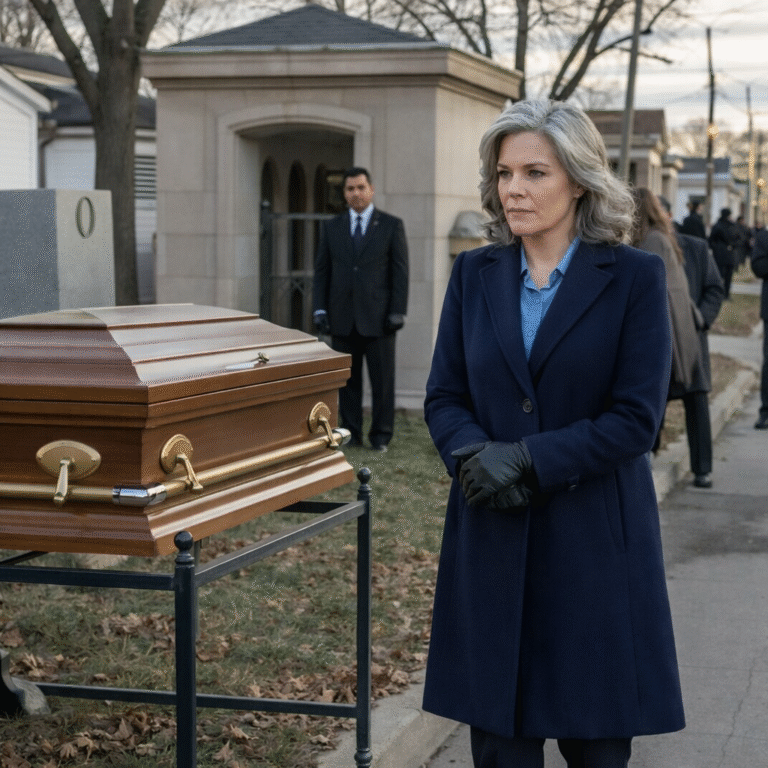
At the funeral, my father complained about the cheap casket. My mother left early for a hair appointment. Preston stayed on his phone. Bridget brought her own hand sanitizer like grief was contagious.
I gave the eulogy because no one else would.
“My grandfather wasn’t a rich man,” I’d said, and at the time I believed it. “He didn’t have a big house or a fancy car. But he had everything that matters.”
I’d spoken about Rose. About the warmth of his home. About patience. About the way he showed up.
My father’s face had been politely blank, like he was waiting for it to end.
The reading of the will happened two days later. House to my father. Savings account split between Preston and Bridget. Truck and toolbox to me.
My father laughed out loud. “A thirty-seven-year-old truck and a rusty toolbox,” he said. “That sounds about right.”
And then they left, already talking about selling the house.
The next morning, I opened my nightstand drawer, pulled out the passbook, and felt something in me harden into resolve.
Maybe it was Preston’s smirk. Maybe it was my father’s laugh. Maybe it was the simple fact that Grandpa’s wink had haunted me for five years.
Whatever it was, it pushed me through the bank doors at nine o’clock, passbook in hand, into the moment where the teller went pale and my family’s laughter finally started to rot.
Now, sitting at my kitchen table with Naomi’s hand over mine and Theo driving toy trucks across the floor, I understood something with aching clarity.
My grandfather hadn’t just left me money.
He’d left me a mirror.
And sooner or later, my father and siblings were going to look into it and see exactly who they were.
A week later, they did.
The call came on a Monday evening, my father’s voice clipped and furious.
“We need to talk,” he said.
Not hello. Not how are you. Just demand.
“About what?” I asked, though my stomach already knew.
“Don’t play dumb, Declan,” he snapped. “About the account. About what you stole.”
I felt Naomi’s eyes on me across the room. Theo was stacking blocks now, humming to himself.
“I didn’t steal anything,” I said quietly.
My father’s breath hissed through the line. “Be at my house tomorrow. Seven. And don’t bring your wife. This is Mercer business.”
I stared at the phone after he hung up, the screen dark, my reflection faintly visible in it.
Naomi came up behind me and slid her arms around my shoulders, resting her cheek against my back.
“They know,” she whispered.
“Yeah,” I said. “They know.”
And I could already picture it. My father pacing. My mother with her arms crossed. Preston smiling like a shark. Bridget sitting stiffly, looking disgusted at the whole thing while still wanting her cut.
I turned in Naomi’s arms, and for a moment I just held her, breathed her in, reminded myself what mattered.
Then I said, “Tomorrow they’re going to ask me to hand it over.”
Naomi’s grip tightened. “And what are you going to do?”
I thought of Grandpa’s porch. Lemonade. His hand on mine during grief. His voice telling me not to let anyone make me feel small for honest work. His wink at my wedding, daring me to believe in him.
I lifted my head. “I’m going to tell them no.”
And even as I said it, I knew the word wouldn’t land softly in that house. It would hit like a hammer. It would crack the polished surface my father had built his life on.
Because for the first time, I wasn’t the disappointment.
I was the obstacle.
And my family did not handle obstacles with grace.
The house looked exactly the way it always had.
Same trimmed hedges. Same glossy black front door. Same subtle scent of lemon cleaner and expensive candles the moment I stepped inside. My father’s house had never felt like a home to me. It felt like a showroom, a place designed to impress people who didn’t really know you and didn’t intend to.
I arrived at seven on the dot. Not early. Not late. Right on time, the way my father liked. Naomi stayed home with Theo, just like he’d demanded, and the fact that he’d tried to exclude her only hardened something in my chest.
They were already assembled in the living room like a tribunal.
My father stood near the fireplace, jacket off, sleeves rolled up, pacing with restless, angry energy. My mother sat stiffly on the couch, arms crossed, lips pressed into a thin line of practiced disapproval. Preston leaned against the wall with his arms folded, wearing the faint, superior smile he always wore when he thought he was about to win something. Bridget sat perched on the edge of an armchair, legs crossed, face arranged into something that looked like moral outrage.
No one offered me a seat.
“So,” my father said, the word sharp enough to cut. “Three point four million dollars.”
I didn’t answer.
“You want to explain how my father had three point four million dollars hidden away and somehow forgot to tell his own son?” Gordon continued. “You want to explain why that money went to you instead of staying in the family?”
“It did stay in the family,” I said calmly. “It went to me.”
Preston laughed under his breath. “You know what he means. This is inheritance fraud. Grandpa clearly wasn’t competent. This will never stand up.”
I met his eyes. “The bank has fifty-two years of records. Monthly deposits. Investment changes made in person. Beneficiary updates as recent as four years ago. Grandpa was sharper than any of you gave him credit for.”
My mother finally spoke, her voice tight. “Declan, this isn’t about credit. It’s about fairness.”
I nodded slowly. “You’re right. It is.”
My father stopped pacing and planted himself in front of me. “Then do the fair thing. Split it. The house was worth nothing. The savings account was nothing. This”—he gestured wildly—“this was everything. It belongs to all of us.”
“No,” I said. One word. Solid. Unmovable.
Silence fell, thick and stunned.
“No?” Preston repeated, incredulous. “You think you can just say no?”
“Yes.”
My father’s face darkened. “I am his son.”
“And yet you visited him twice in nine years,” I said evenly. “You called him senile. You laughed at his gift. You suggested putting him in a home. You only cared when you found out he had money.”
“That’s not—” my mother began.
“When was the last time you went to his house just to sit with him?” I asked. “Not for holidays. Not for appearances. Just to talk.”
No one answered.
“When was the last time you called him to ask how his day was?” I continued. “When was the last time you brought him groceries, or fixed something around his house, or listened to him talk about Grandma Rose?”
Bridget shifted uncomfortably. Preston’s smile had vanished.
“You didn’t,” I said. “Any of you. You treated him like an embarrassment. Like something to outgrow.”
My father’s voice rose. “That money should go to people who understand how to manage it.”
I almost laughed. “Grandpa managed it just fine for fifty-two years.”
Preston stepped forward. “You’re an electrician. You don’t even know what to do with that kind of money.”
“I know exactly what to do with it,” I said. “The same thing Grandpa did. Use it wisely. Quietly. Without needing to impress anyone.”
My mother’s voice sharpened. “You’re tearing this family apart.”
I shook my head. “No. This family tore itself apart years ago. I’m just not pretending anymore.”
My father stared at me like he didn’t recognize the man standing in front of him. Maybe he didn’t. For the first time in my life, I wasn’t trying to earn his approval.
“This isn’t over,” he said finally. “We’ll contest the will.”
“You can try,” I said. “But you’ll lose.”
I turned toward the door.
“Declan,” my mother called, something brittle cracking through her tone. “If you walk out now, don’t expect things to be the same.”
I paused, hand on the doorknob. “They already aren’t.”
I left without looking back.
The fallout came fast.
Lawyers’ letters. Threats disguised as negotiations. Preston sent me articles about contested estates. Bridget sent me messages dripping with guilt and righteousness. My father left voicemails that swung wildly between fury and wounded entitlement.
I didn’t engage.
I hired an attorney recommended by the bank, someone who read the file once and said, “Your grandfather knew exactly what he was doing.”
That sentence felt like vindication and grief all at once.
Six months passed.
The money settled into its new shape, invested conservatively, growing slowly the way Grandpa would have liked. Naomi and I paid off our modest house, not to upgrade, not to move, but to breathe easier. We paid off our cars. We set up a trust for Theo’s education. Naomi enrolled in nursing school, something she’d put on hold for years without complaint.
We gave some away too. To the food bank Grandpa volunteered at. To his church. To a scholarship fund for kids learning trades. Quiet gifts, no plaques, no announcements.
I kept working.
I still woke up early, pulled on my boots, and spent my days crawling through attics and running conduit and solving problems with my hands. Naomi teased me sometimes.
“You could retire.”
“I don’t want to,” I said. “I like knowing I earned the tired.”
And I meant it.
My father called once more, two months after the meeting.
“We could come to an arrangement,” he said carefully. “Something that keeps this… civilized.”
“I’ve already made an arrangement,” I replied. “With Grandpa.”
Silence.
“Goodbye, Dad,” I said, and ended the call.
I visit Grandpa’s grave every Sunday now.
Sometimes Naomi comes. Sometimes Theo, who pats the headstone gently and asks if great-grandpa liked trucks and dinosaurs. I bring lemonade and sit on the grass and talk like he’s just inside the house, waiting for me to finish my story.
I tell him about Theo’s first day of school. About Naomi’s exams. About how quiet life feels when you stop chasing things that were never yours.
There was a letter in the safe deposit box, written in Grandpa’s careful hand.
He explained everything. The lawsuit. The saving. The decision to live simply. The reason he chose me.
“You were the only one who loved me when you thought I had nothing,” he wrote. “That’s how I knew you deserved everything.”
I keep that letter folded in my wallet, worn soft at the creases.
I still drive his old 1987 Ford pickup. It rattles. It drinks gas like it’s still the eighties. Every time I turn the key, I hear his voice and remember what real wealth sounds like.
It sounds like laughter on a porch.
It sounds like showing up.
It sounds like love without a ledger.
My family thought Grandpa Chester had nothing.
They were wrong.
And now I carry what he left behind, not just in an account balance, but in the way I live, the way I love, and the way I teach my son what actually matters.
That inheritance can never be contested.