My Grandmother Left Me A $1.36 Million Mountain Lodge
At twenty-eight, I thought I’d finally built a life that had nothing to do with the man who threw me out with a suitcase and a trash bag when I was eighteen.
It had taken a decade to scrape together a version of myself that didn’t flinch when someone raised their voice. A decade to stop bracing for the moment kindness turned sharp. A decade to learn that peace isn’t something you find. It’s something you build, plank by plank, even when your hands are shaking.
Denver had become my refuge. I had a job that paid my bills and a small apartment that I’d filled slowly, on purpose. Plants lined the windowsill, their leaves reaching toward the light like they expected good things. I had a couch I bought secondhand, its fabric slightly worn, and I loved it because no one had “given” it to me. Friends who knew the worst parts of my story and still chose to stay. A savings account that no longer made my stomach flip when I checked it.
I had peace.
Then the letter came, formal and heavy in my mailbox, and the inked words pulled me backward in time.
Reading of the will.
My grandmother Dorothy had died weeks earlier, and the grief still lived in me like a bruise you keep pressing by accident. She had been the one person in my family who made love feel like something you didn’t have to earn. She owned a mountain lodge on Willow Creek Mountain, the place we all called the lodge like it was just a cabin with a view, not a property appraised at more than a million dollars.
I knew she had something to leave behind.
I didn’t know it would be worth $1.36 million.
And I didn’t know my father would show up like he’d never once slammed a door in my face.
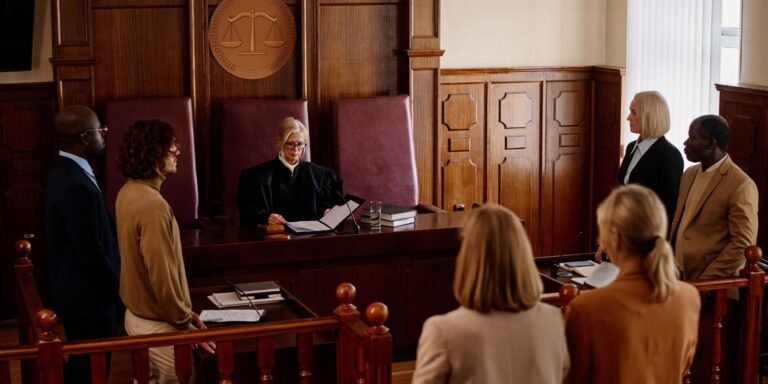
The conference room smelled like polished wood and old coffee. The kind of space built for contracts, not mourning. Harsh lighting, a long table, chairs that were technically comfortable but still felt like they were designed to keep you alert and on edge. A judge sat at the head, papers stacked with obsessive neatness, pen aligned like a ruler.
And there he was.
James Anderson, sitting with the ease of a man who believed the world always circled back to him. He wore a dark suit that fit too well, his hair groomed, his posture relaxed. He smiled when he saw me, the same grin he used when he wanted something.
It made my skin tighten.
“This is good, kiddo,” he said softly as I took my seat. His voice was lowered, private, meant for my ear only. “Grandma’s lodge is worth at least 1.36 million. We’ll turn it into a real family business together.”
Together.
The word hit me like a hand closing around my throat. As if time had never passed. As if he hadn’t watched me struggle and stayed away. As if he hadn’t chosen silence for ten years and now expected partnership because money was involved.
He hadn’t paid a cent when I was sleeping on a friend’s couch at nineteen, working double shifts and studying with aching eyes. He hadn’t called when I had the flu and still went to work because missing one day meant missing rent. He hadn’t shown up the night I cried into my pillow because it finally sank in that his love was always conditional, and I’d failed the conditions.
The only reason I was in that room was Dorothy.
My grandmother who taught me how to scrub floors with pride, not shame. Who showed me how to fold a rag into clean squares, how to polish wood until it glowed, how to make something beautiful out of what other people overlooked. The woman who used to slip cash into an envelope and call it emergency cookie money when she knew my account had hit zero. The woman who looked me dead in the eye and said, “If he throws you away, I’ll keep you.”
The first time, I thought it was comfort.
The second time, I realized it was a promise.
The judge cleared his throat. The sound snapped the room into place. Mr. Thompson, my grandmother’s longtime attorney, sat near me. He adjusted his glasses and gave me a small, steady nod. Not reassurance exactly. More like warning.
This will hurt, but it will matter.
“We are here to formalize the last will and testament of Dorothy Anderson,” the judge announced. “All parties present?”
My father answered before anyone else could. “Yes, Your Honor,” he said smoothly, as if he were the spokesperson for an intact family. “We’re eager to honor my mother’s legacy as a united family.”
I felt the urge to laugh rise hot in my throat.
United.
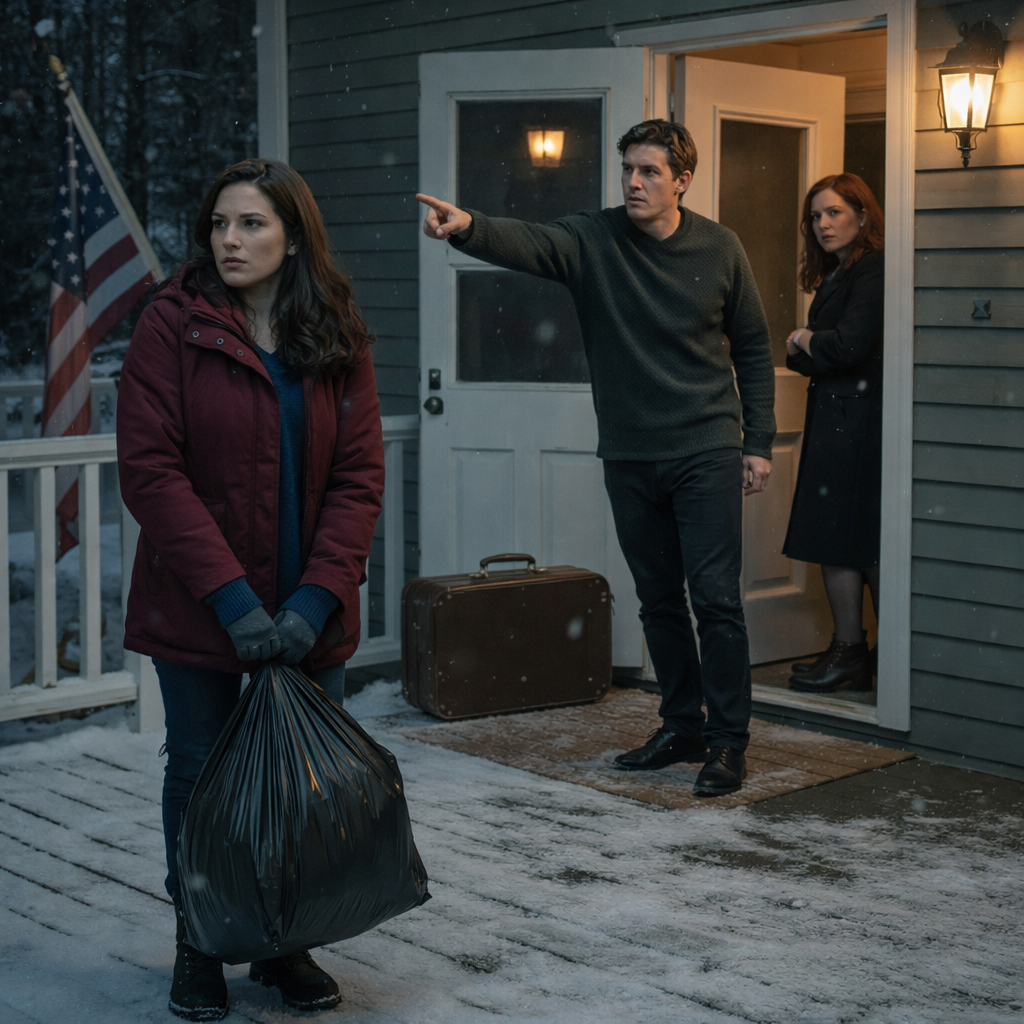
The last time I saw him before Dorothy’s funeral, he’d been in the doorway of his house shouting at me to get out. Accusing me of being ungrateful because I wouldn’t drop college and work full time for him. He’d thrown my suitcase onto the porch like it was trash. Then he’d shoved a black garbage bag into my arms, stuffed with whatever he could grab fast enough to make his point.
“If you walk out, don’t come back,” he’d said.
I’d walked out.
Not because I didn’t love him, but because I finally understood he didn’t love me the way a father should.
My mother sat beside him now, rigid, hands folded tight. She didn’t look at me. Her gaze was fixed on some invisible spot on the wall, as if eye contact might shatter whatever fragile peace she’d built inside herself. My mother had always been present in the same way wallpaper is present. Always there. Never intervening. A woman who learned early that storms weren’t survived by speaking up.
Hannah sat on his other side. My sister looked flawless, her hair smooth, her clothes expensive in a way that said she never had to choose between groceries and gas. She leaned back in her chair like this was a meeting she’d been dragged to but would still benefit from. Her eyes slid over me with mild interest and something sharper underneath.
Hannah had never been thrown out.
Hannah had never been told she was too stubborn, too much, too costly.
Hannah had always been worth the effort.
The judge nodded toward Mr. Thompson. “You may proceed.”
Mr. Thompson cleared his throat, and his voice filled the room with that practiced legal calm that can make even grief sound procedural.
“Dorothy Anderson, being of sound mind and body at the time of signing, hereby declares this her final will and testament.”
Sound mind.
I saw the tiny twitch in my father’s jaw, like the phrase had scraped something raw. He leaned toward Hannah and whispered, “We’ll make sure that phrase doesn’t stand.”
My stomach knotted hard.
They’d come prepared. Play grieving family. Praise Dorothy. Then quietly suggest she’d been confused, influenced, manipulated. They weren’t here to grieve. They were here to win.
Mr. Thompson read through smaller bequests first. Donations to charities. Sentimental items to distant cousins. Antique cookware to a neighbor who’d checked on Dorothy in winter. Each line felt like a breadcrumb trail through my grandmother’s heart, proof of who she’d loved and what she’d valued.
My father’s impatience grew visible. His fingers tapped the table. Hannah checked her phone under the edge. My mother flinched whenever either of them shifted.
I kept my face blank and repeated one thought like a prayer.
She knew them. She knew me. She didn’t sign anything by accident.
Then Mr. Thompson’s voice changed, almost imperceptibly. The room felt like it tightened.
“Now we come to the disposition of the primary asset,” he said. “The Mountain Lodge on Willow Creek Mountain, currently appraised at approximately $1,360,000.”
The number landed with a dull thud.
Hannah sat upright. My father stopped tapping. My mother’s eyes finally moved, and for the first time that day, she looked at me.
Mr. Thompson continued. “‘This lodge is my life’s work, my refuge, and my apology to my granddaughter.’”
Apology.
My throat tightened. Dorothy had never needed to apologize to me. But she had always known someone else should have.
“I bequeath full operational control and beneficial interest of the lodge,” he read, “to my granddaughter Sophie Anderson under the following conditions.”
My father exhaled as if he’d been holding his breath. His smile flashed bright, and he placed a hand over his heart like this was a moment of sacred family unity.
“That’s wonderful,” he said, already turning toward me. “See? She wants you to have it. We’ll help you run it, sweetheart.”
Mr. Thompson didn’t even look up when he cut in. “I’m not finished.”
The judge raised a hand, and my father’s smile froze.
“Condition one,” Mr. Thompson read, “for a minimum period of five years from the date of execution, the lodge shall not be sold, leased, mortgaged, or otherwise transferred without the explicit written consent of Sophie Anderson.”
A muscle jumped in my father’s cheek. Hannah’s lips parted, surprised.
“Condition two,” Mr. Thompson continued, “no family member, including but not limited to my son James Anderson, my daughter-in-law Linda Anderson, or my granddaughter Hannah Anderson shall exercise managerial authority, hold controlling interest, or issue binding decisions on lodge operations without the express written approval of Sophie Anderson.”
The air went still. It felt like even the building had stopped breathing.
My father let out a short, bitter laugh. “She’s joking,” he muttered. “She has to be joking.”
Mr. Thompson lifted his eyes, calm and unreadable, and kept going.
“Condition three,” he said, and his voice turned even flatter, almost ceremonial. “Should any family member attempt to contest this will, challenge Sophie Anderson’s authority, or undermine the operational independence granted herein, the lodge shall be immediately transferred in its entirety to the charity Haven for Youth. No member of the Anderson family shall receive ownership, profits, or rights related to the property.”
Hannah made a sharp sound, hand flying to her mouth. My mother closed her eyes like she’d been hit. My father went very still, the confident mask slipping just enough for me to see what lived underneath.
Fear.
“That’s insane,” he snapped. “My mother loved this family. She wouldn’t threaten to hand it over to strangers because of some childish clause.”
Mr. Thompson slid a document forward with measured calm. “She drafted this herself, James. In my presence. We reviewed it multiple times. She was lucid every time.”
I stared at the page. Dorothy’s signature looped at the bottom, firm and unmistakable. The clause read like a trap door engineered specifically for one man. If he lunged for the lodge, he would lose it. If he tried to crush me, he’d hand everything to charity.
And she had trusted me to hold the line.
My father’s voice sharpened. “Or she was manipulated. Old people get confused. She was talking nonsense at the end. I heard it myself.”
“You visited twice in three years,” I said quietly.
Every head turned.
“You heard whatever was convenient for you to hear.”
His eyes locked on mine, and the history between us pressed down like a weight. The doorway. The suitcase. The trash bag. Ten years of silence.
And suddenly I understood.
The clause wasn’t only protection.
It was a test.
Would I defend what Dorothy left me, even if defending it meant burning whatever illusion of family they were trying to sell?
The formal reading ended, but the air stayed charged. Papers shuffled. Chairs scraped. The judge’s voice closed the meeting, and the room began to empty.
My father rose with stiff purpose, already moving as if the corridor outside belonged to him too.
And I followed, knowing whatever waited past that door would not be polite.
The hallway outside the conference room was too bright, lit by fluorescent panels that made everyone look harsher, more exposed. The air smelled faintly of carpet cleaner and printer ink. Somewhere down the corridor a phone rang, and the sound felt out of place, like the building didn’t understand what kind of meeting had just happened inside it.
Hannah stormed ahead first, heels snapping against the tile with the sharpness of a tantrum disguised as confidence. My mother trailed behind her, clutching her purse tight against her ribs, shoulders drawn inward like she was trying to make herself smaller.
My father stopped directly in my path.
He didn’t touch me, but he didn’t need to. His presence was enough, a wall built from years of intimidation. He stood close, angled so his body blocked the view from anyone passing, as if he could keep this conversation private and therefore controlled.
“We need to talk,” he said, voice low. “About reality.”
I folded my arms and held his gaze. I could feel my pulse in my throat, but I kept my face calm. I had learned long ago that fear was oxygen to him.
“Reality is a signed will,” I said, “and a judge who just heard it.”
His mouth stretched into a tight smile, not warm, not friendly. A warning dressed up as patience.
“Reality is you don’t know what you’re doing,” he said. “A lodge like that isn’t a hobby. Staff, marketing, maintenance, taxes, bookings. You have no idea how to run a multi-million dollar property.” He tilted his head slightly, like he was trying to sound concerned instead of contemptuous. “You’ll drown, Sophie.”
A familiar heat rose behind my eyes, the old shame trying to crawl back into my bones. I could almost hear the version of me at eighteen, the one who still believed his approval was a form of survival.
I let that version pass through me and go.
“Good thing I learned to swim,” I said, “when you threw me out.”
His eyes flashed, and for a second the charm cracked. “Don’t start with that,” he snapped. Then he recalibrated, smoothing the tone again as if he’d caught himself in front of witnesses. “You were rebellious. You refused to work in the family business. You chose to leave.”
The hallway felt colder all at once.
“I didn’t choose to leave,” I said steadily. “You disowned me. You told me I wasn’t your daughter anymore.”
His jaw tightened. “Words said in anger.” He lifted one hand as if brushing off the past. “Family says things. We move on. This is bigger than old arguments. This is generational wealth.”
The phrase landed like a hook. He wanted to pull me back into the role he understood. Not daughter. Not person. Asset.
He leaned a fraction closer, voice softening into something almost gentle, which was always the moment right before it turned cruel.
“Look,” he said, “your grandmother wanted all of us to benefit. She was confused. Manipulated. Whatever. We can fix this. You be the public face. We handle the real work. You get the credit, we all win.”
“All,” I repeated. “Or you.”
Before he could answer, Hannah spun back toward us, cheeks flushed with righteous fury. Up close, I could see how controlled her perfection was, how carefully constructed. Even her outrage looked styled.
“This isn’t complicated,” she snapped. “You sign papers, give Dad and me equal say, and we turn the lodge into a luxury retreat. We already have interest. Investors. You’re sitting on a gold mine and acting like it’s a scrapbook.”
“My memories with Grandma built that lodge,” I shot back. My voice stayed level, but I felt it shake at the edges. “While you were ignoring her calls, I was there. I know every creaking floorboard, every guest story, every thing she fixed with her own hands because she didn’t trust anyone to do it right.”
Hannah’s lip curled. “You’re being dramatic.”
I almost laughed, and the sound that came out was sharp. “You want marble countertops and a logo. She wanted a place that felt like home.”
My father took advantage of Hannah’s outburst to press again. He angled his body so he was the one in my line of sight, as if he could reclaim the position of authority.
“Listen carefully,” he said, the softness in his voice turning into threat. “You go at this alone, you will fail. Bookings will dry up. Repairs will bankrupt you. And when you crawl back, you’ll find the door closed. You will have lost your chance to be part of this family again.”
The old fear twitched. Not because I believed him, but because my body remembered what it felt like to be thrown out. The slam of a door. The silence afterward. The panic that comes when you realize no one is coming to soften the landing.
Then I remembered Dorothy’s hands, rough from work, steady as she taught me how to polish wood. I remembered her voice, firm and affectionate.
If he throws you away, I’ll keep you.
“I already lost this family,” I said. “You made that choice ten years ago.” I held his eyes. “Grandma didn’t give me the lodge so I could crawl back. She gave it to me so I could finally build something that belongs to me.”
His face hardened. The careful warmth evaporated.
“You think that charity clause scares me?” he said. “You think I won’t fight?”
My heartbeat steadied instead of spiking. That surprised me. Maybe I was finally growing into the spine Dorothy believed I had.
“I think,” I said, “that’s exactly what she expected.”
We stared at each other for a beat, the hallway humming around us, fluorescent lights buzzing faintly overhead. My father leaned closer until his voice was barely above a whisper.
“If you turn this into a war,” he said, “don’t cry when you lose everything. Not just the lodge. Your reputation. Your future. All of it.”
Then he stepped back and turned away, already sure the threat would echo in me for days. Hannah followed him, her shoulders stiff, her mouth set, both of them walking down the corridor like they owned the air.
My mother lingered.
She stood a few feet away, eyes wet, lips trembling like she wanted to speak but didn’t know how to form the words. Her gaze flicked to my father’s retreating back, then to me, and for a moment I saw the conflict inside her as clearly as if it were written on her skin.
I waited. I didn’t plead. I didn’t soften.
If she wanted to say something true, she would have to do it on her own.
“I’m sorry,” she started, but the word died in her throat. Her shoulders sagged. She shook her head once, like she was disappointed in herself, then turned and hurried after them.
I stood alone in that sterile hallway, my pulse loud in my ears, my father’s warning looping through my mind. It would have haunted me once.
Now it felt like confirmation.
I walked out of the building and into cold air that smelled like approaching snow. My hands were shaking when I reached my car. Not because I was afraid he would win, but because I finally understood the shape of what was coming.
He wasn’t going to accept Dorothy’s boundaries.
He was going to test them.
That evening, I drove up to Willow Creek Mountain.
The road curled higher and higher, the city thinning into trees. Pine scent grew stronger with every mile. My tires crunched over gravel as I took the last bend, and then the lodge appeared, rising out of the forest like something that had always been waiting for me.
It looked the way it always had. Weathered wood siding. A porch that sagged slightly at one corner. Windows that caught the fading light and held it. The valley beyond stretched wide and quiet, making everything human seem smaller and less permanent.
I parked and sat for a moment with both hands on the steering wheel, breathing.
Dorothy had built this place with stubborn devotion. Not for profit, not for status, but because she believed people needed somewhere to breathe. When I was younger, I used to think she built it to escape the family. Now I understood it more clearly.
She built it to survive them.
I carried boxes in from my car and unlocked the front door with a key that felt heavier in my hand than a piece of metal should. The lock clicked, and the sound sent a strange thrill through me. Ownership. Not in the greedy sense my father meant, but in the quiet, grounded way Dorothy had taught me.
Inside, the air smelled like pine cleaner and old coffee. It smelled like her.
The lodge wasn’t glamorous. It wasn’t the glossy version Hannah wanted. It had knots in the wood and scuffed floors and a fireplace Dorothy insisted on cleaning herself. It had a guestbook filled with handwriting from people who came here to celebrate anniversaries, patch up marriages, scatter ashes, or just sit in silence and remember they were still alive.
I walked through each room slowly, fingertips brushing the back of a chair, the edge of a mantle, the worn brass bell Dorothy rang when guests arrived so they’d know someone was home.
I didn’t start with numbers.
I started with a corkboard.
I pinned up old photos. Families laughing by the fire pit. Kids tearing across the lawn. Couples standing close on the balcony at sunset. Underneath, on blank note cards, I wrote Dorothy’s words from memory, the ones that used to comfort me when I felt like I didn’t belong anywhere.
People don’t come here for perfection. They come here to remember they’re still alive.
Then I began sketching plans. Themed weekends for families. Small corporate retreats focused on reconnection instead of ego. Off-season packages so the place wouldn’t sleep half the year. Repairs that mattered, updates that didn’t erase the lodge’s soul.
I was deep in it when Mark arrived.
He opened the door without knocking, like he always had, and leaned against the frame with a grin that was half relief and half challenge. Mark had been my friend since college. The one who once paid my phone bill with his own grocery money because he was tired of my number getting disconnected. The one who never looked away from the ugliest parts of my story.
He took in the corkboard, the scattered papers, the photos pinned like a heartbeat.
“So,” he said, “this is the war room.”
“It’s a vision board,” I replied, though my voice softened without meaning to.
He stepped closer, eyes scanning the notes and pictures. “It’s very you,” he said. “Organized chaos, plus inspirational quotes that feel slightly passive-aggressive.”
I laughed, and the sound startled me. It had been a day of threats and legal language and old wounds reopening, and yet here it was, a laugh that sounded like mine.
Then my chest tightened again, because laughter didn’t erase reality.
“My father is coming,” I said quietly. “He’s already planning.”
Mark’s grin faded into something steadier. “Then we make this place so solid that when he hits it, he breaks his own momentum.”
We got to work.
The next days blurred into motion. Calls to local contractors. Inspections. Lists. Roof repairs that needed attention before winter. Plumbing updates that could be done without stripping the place of its character. Fresh paint where it mattered, not where it would turn the lodge into a showroom.
I turned a storage room into a small library with board games and children’s books, the kind Dorothy used to keep in a basket near the fireplace. Mark set up a barebones website, then insisted we film a video tour on my phone.
“It doesn’t need to be perfect,” he said when I hesitated. “It needs to be real.”
So I stood on the porch with the mountains behind me and talked about Dorothy. About the lodge. About what it meant to me. My voice cracked twice. I didn’t redo it. Mark didn’t let me.
Within weeks, bookings trickled in. An anniversary couple looking for quiet. A family reunion that wanted space to breathe. Old friends escaping the city. Guests wrote in the comment book about how peaceful the place felt, how it reminded them of childhood without being cheesy. Each good review felt like a brick laid between my father and the thing he wanted to claim.
And still, the tension didn’t disappear.
It just changed shape.
Whispers started in town. I heard them in the grocery store aisle, caught between the cereal and the canned soup.
“James is just trying to protect what’s rightfully his.”
“That girl barely knows how to run her own life.”
“He says Dorothy wasn’t well at the end.”
I pretended not to hear, but later, sitting on the porch after the last guest car disappeared down the mountain road, the doubt hit like a delayed bruise.
“What if he’s right?” I said softly. “What if I crash this place and prove him right about me?”
Mark didn’t look at me immediately. He stared out into the valley, where the sky was turning dark and bruised with evening.
“He disowned you because you wouldn’t be his employee,” he said. “Now he’s mad because you won’t be his subordinate here either.” He finally turned. “Failure would prove him right. Success will drive him insane.”
I swallowed, tasting something metallic, like fear.
“Which do you prefer?” he asked.
I thought of Dorothy’s signature. The clause like a trap door. Her faith in me written in legal language.
“Success,” I said.
“Good,” Mark replied. “Then every time you doubt yourself, ask this: are you going to let the man who threw you out decide what you’re capable of?”
I stared out at the mountains, and something inside me settled, slow and firm.
The answer came quietly.
No.
And a week later, my phone buzzed with an unfamiliar number, and a voice introduced itself as my father’s attorney.
That was when I knew the real attack had finally begun.
The voice on the phone was crisp and polished, the kind of tone meant to sound reasonable while delivering something sharp.
“Miss Anderson, this is Attorney Collins. I represent James and Hannah Anderson.”
I didn’t sit down, but I probably should have. My free hand tightened around the edge of the desk in the lodge’s small office.
“Go on,” I said.
“Your father and sister have serious concerns regarding the circumstances under which your grandmother’s will was executed. They believe she lacked full mental capacity and was unduly influenced. We are filing a petition to contest the will and requesting an emergency hearing concerning the lodge.”
When the call ended, my hands were shaking. Not with shock. With confirmation.
I called Mark. He arrived within the hour, jacket half-zipped, laptop already under his arm.
“We knew this was coming,” he said as he set his things down. “We just didn’t know when.”
“Then we prepare,” I replied. And for the first time, I didn’t hear my father’s voice in my head when I said it.
From that point on, my days split cleanly in two.
In one version of my life, I was a lodge owner. I greeted guests, fixed leaky faucets, taste-tested breakfast recipes, and answered emails from families asking if the trails were safe for kids or if the fireplace worked in early spring. I learned the rhythm of the place the way Grandma had known it, by listening.
In the other version, I became something sharper.
I met with Mr. Thompson late into the evenings, combed through medical records, gathered written statements from Grandma’s doctor, her accountant, longtime guests who’d spent time with her in her final year. Every document told the same story. Dorothy had been stubborn, lucid, and absolutely certain.
“She anticipated this,” Mr. Thompson said one night, sliding a flash drive across his desk. “That’s why she insisted on recording the final signing.”
On the screen, my grandmother appeared, thinner than I remembered but unmistakably herself. Her eyes were sharp, amused.
“If my son ever claims I didn’t know what I was doing,” she said calmly, “tell him I’ve known exactly who he is since he learned to lie without blinking.”
I laughed through tears.
In town, my father told a different story. He went to church events, business lunches, anywhere people would listen. He spoke softly about heartbreak and confusion, about a granddaughter who had been “misguided,” about a mother who had been “taken advantage of.”
Some people believed him. Others watched quietly. I learned who mattered by who kept booking stays and who suddenly stopped returning my greetings.
The night before the hearing, my mother came to the lodge.
I found her sitting at the kitchen table in the dark, hands folded, shoulders slumped.
“He’s borrowed money,” she said quietly. “He promised investors access to the lodge once the will was corrected.”
I understood immediately. If he lost, it wouldn’t just be pride. It would be collapse.
“He chose that,” I said.
She nodded slowly. “Dorothy knew he would.”
I poured us water and asked the question that had been building for weeks. “Do you believe she knew what she was doing when she wrote the will?”
My mother didn’t answer right away. Then she nodded. “Yes.”
“Would you say that under oath?”
Her eyes filled. She stood, grabbed her coat, and left without answering. The door closing behind her sounded different than it used to. Final, but not explosive.
The morning of the hearing was gray and cold. I wore a simple black dress and the silver necklace Grandma had given me at sixteen. Mark drove. Mr. Thompson walked beside me into the courtroom.
My father sat confidently at the plaintiff’s table, Hannah beside him, their lawyer arranging folders with rehearsed precision. My mother sat behind them, eyes down.
Their attorney painted Grandma as confused, me as emotional, the will as manipulation. My father took the stand and performed grief with practiced skill. He dabbed his eyes. He spoke of betrayal.
When it was my turn, I told the truth.
I spoke about the lodge, about Dorothy’s clarity, about her fear of what my father would do if given control. I repeated her words exactly as she’d said them to me.
“If he wants the lodge,” I told the court, “he’ll have to want me first.”
When the defense called their final witness, my mother stood.
Her voice shook, but it didn’t stop.
“Dorothy was clear,” she said. “She knew what she wanted. She didn’t trust James with the lodge. She trusted Sophie.”
My father whispered her name like a threat. The microphone caught it.
The judge’s decision came quietly.
The will stood. The challenge was denied. Costs and fees assigned to my father and sister.
Hannah stared at him, pale. “Dad,” she whispered. “We don’t have—”
I didn’t wait to hear the rest.
Outside the courthouse, my mother approached me. “I’m sorry,” she said. “For a lot of things.”
“Thank you for telling the truth,” I replied. “That was yours to give.”
She nodded and walked away alone.
In the months that followed, my father’s empire unraveled. Loans collapsed. Assets were sold. The lodge remained untouched.
He sent one letter, slipped under the lodge door.
You can’t run this forever. When you fail, you’ll come back.
I read it once, then threw it into the fireplace.
Instead of shrinking, I expanded.
I partnered with local businesses. Hosted community nights. Created a small scholarship in Dorothy’s name. I invited a journalist to write about the lodge’s history, not the lawsuit. A framed photo of Grandma went up in the lobby, beneath her favorite line:
Being kind doesn’t mean being a doormat.
One evening, a guest lingered at the desk and said softly, “This place feels safe.”
I nodded. I understood.
Later, standing on the balcony with a mug of tea, watching the mountains bruise purple at dusk, I spoke into the quiet.
“You didn’t leave me money,” I said. “You left me a spine.”
And for the first time since I was eighteen, I didn’t wonder if it would hold.
Because when you stop living for someone else’s approval, you finally have room to build.
And that, more than any inheritance, is the real legacy.