Widow’s Secret Escape: The Spain Home My Son Didn’t Know About
The house was loud in the way quiet places become loud after someone dies.
Not with voices. With absence.
The refrigerator clicked on and off like it had a job to do even though nothing else made sense. The grandfather clock in the hallway kept insisting on time. Floorboards creaked in rooms no one had entered. In the evenings, the heat kicked on with a hollow whoosh that sounded like the house sighing in its sleep.
Russell had been gone three weeks, and every sound felt like it was happening to mock me.
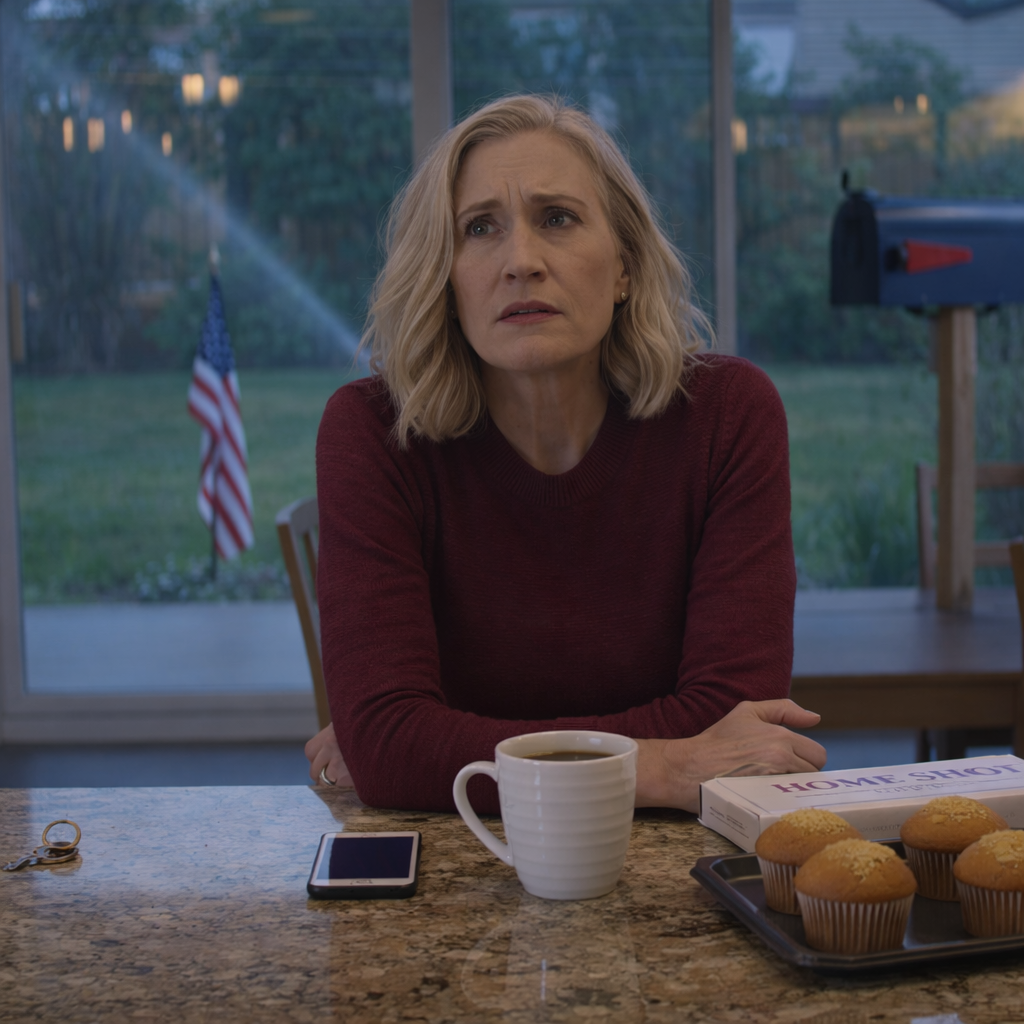
That gray Tuesday morning, I stood in the kitchen holding a mug I couldn’t bring myself to drink from. A white ceramic cup with a faded red heart and the words World’s Best Grandma, a Christmas gift from my granddaughter Kathleen when she was still small enough to think grandmothers were immortal.
Steam curled off the coffee and vanished before it could warm me.
The phone rang again.
I didn’t even need to look at the screen.
Donald had been calling at predictable intervals, like he’d set reminders. Not because he missed me. Not because he was checking on me. Because in his mind, my grief had a deadline. After a certain number of days, I was supposed to pivot from widow to paperwork.
I finally answered on the fourth ring.
“Mom,” Donald said, skipping any greeting, “we need to talk about the house.”
His voice had that same tight impatience he used as a teenager when he wanted money for gas, concert tickets, a new phone. Only now, at thirty-two, he didn’t ask. He directed.
I set the mug down on the kitchen island and looked out the window over the sink. Our cul-de-sac sat in its usual quiet order, lawns trimmed, cars parked neatly in driveways. Across the street, the neighbor’s American flag stirred lazily on the porch. Russell used to joke it was more punctual than any alarm clock on the Fourth of July.
“Good morning to you too, Donald,” I said.
“Don’t start,” he snapped. “Lisa and I have been talking about your situation, and it’s not sustainable. That house is way too big for you alone. The mortgage payments, the upkeep, your meds…”
“There is no mortgage,” I said.
The words came out flat, factual, almost boring.
On the line, there was a pause. Not surprise, exactly. More like his brain recalculating.
Then he let out a short laugh, sharp and dismissive. Russell used to laugh like that when someone tried to sell him something he didn’t need. Donald used it like a slap.
“Mom, please,” he said. “Dad’s pension barely covers your medications. We all know the strain you’re under.”
The strain you’re under.
As if he knew anything about my accounts. As if he’d ever asked.
My eyes drifted toward the garden beyond the window. The roses Russell and I had tended for years were beginning to go wild at the edges. Basil and thyme had tangled together in the herb patch like they’d given up on being orderly. These had once been our weekend rituals, our quiet teamwork. Now they looked like a reminder that I was the only one left to pull weeds.
“Your concern is touching,” I said.
“Don’t be dramatic,” Donald replied. “Darlene agrees with me. We think you should consider moving in with one of us.”
“Darlene agrees,” I repeated.
My daughter hadn’t called me once since the funeral. She hadn’t answered when I called her. Yet here she was, apparently voting on my life at a dinner I hadn’t been invited to.
“And when exactly did Darlene share this opinion?” I asked.
Another pause. I pictured Donald running a hand through his thinning hair the way Russell used to when he was thinking.
“We had dinner last night,” he said. “As a family. To discuss your options.”
Your options.
Not Mom’s future. Not how we can support her. My options, like I was a broken appliance they were deciding whether to repair or replace.
“I see,” I said, opening the refrigerator out of habit and staring at the casserole dishes stacked inside. Lasagna, chicken and rice, baked ziti. Neighbor kindness in aluminum trays. I hadn’t touched any of it. Grief had turned my appetite into something remote, like hunger belonged to another person.
“And these options,” I asked, “include selling my home?”
“It makes financial sense,” Donald said. “You could help Lisa and me with our down payment. We’ve been looking at that colonial on Maple Street. And Darlene could use help with Kathleen’s college fund. It’s a win-win.”
A win-win.
I closed the refrigerator door, a little harder than necessary.
“A win-win situation,” I repeated.
“Mom, you know I didn’t mean it like that.”
But he did. Donald had never been subtle about wanting. He just learned to dress it up in responsibility as he got older.
“What did you tell your sister about my finances?” I asked.
“Just the truth,” he said. “That Dad’s pension isn’t enough. That the house is too big. That you’re probably struggling more than you admit.”
The truth.
As if he’d ever seen my bank statements. As if he knew about the quiet decisions Russell had made long before his heart stopped.
I thought of Russell’s desk drawer. The one I hadn’t told anyone about.
I had found the folder two days after the funeral, when the house was still crowded with sympathy. Darlene had been in the living room that day, accepting casseroles and hugs like she was hosting an event. Donald had been in Russell’s study “helping” me sort papers, which mostly meant opening drawers he had no business opening and glancing too long at anything that looked official.
I waited until they left. Then I went back into the study alone.
Russell’s desk was oak, worn slightly at the edge where his wrist had rested for decades. I opened the bottom drawer and found a folder tucked under old tax returns.
Inside were things that made my hands go cold.
Not because they were frightening.
Because they were so… Russell.
Methodical. Quiet. Protective.
A trust document. Investment accounts. A deed.
And a photograph stapled to the inside of an envelope: whitewashed walls, blue shutters, bougainvillea spilling over a stone wall like purple fire. A terrace overlooking a strip of bright, impossible ocean.
Marbella.
A house in Spain.
He had bought it as a surprise for our retirement, and he had kept it so carefully wrapped in quiet that even I hadn’t known until after he died.
Six months before his heart attack, he’d shown me pictures on his tablet one evening while we sat in bed, his reading glasses perched low on his nose.
“A place where we can watch sunsets and drink wine without anyone asking us for anything,” he’d said, smiling that small smile he saved for when he was pleased with himself.
I had laughed and told him he was ridiculous.
He’d kissed my forehead and said, “Let me be ridiculous while I still can.”
I didn’t know he’d already put the legal pieces in place like a man building a lifeboat before the storm hit.
And I hadn’t told my children.
Not about the trust.
Not about the paid-off house.
Not about Spain.
At the time, it hadn’t felt like secrecy. It felt like survival. Like I needed space to breathe before my grief was turned into a negotiation.
Now, listening to Donald talk about selling my home like it was already decided, I realized how right I’d been to keep quiet.
“I’ll think about it,” I said.
“Mom, we’re not asking you to think,” he replied. “We’re telling you what needs to happen. Lisa’s cousin Gregory is in real estate. He already has a buyer lined up. Cash offer. Quick closing. We could get this done in a month. Start packing.”
My hand tightened around the phone.
“You found a buyer for my house,” I said slowly.
“We’re trying to help you,” he insisted. “The sooner you accept this is best for everyone, the easier the transition will be.”
Transition.
As if grief were a corporate restructuring.
“And where am I supposed to live during this ‘transition’?” I asked.
Darlene’s basement, he explained with too much enthusiasm. Separate entrance. Bathroom. “You could help with Kathleen when she’s home,” he said, as if my presence was useful only if it came with labor.
I pictured that basement clearly. Damp in spring. Smelling faintly of storage bins and old carpet. The place I’d been sent last Thanksgiving while “the adults” ate upstairs.
“How generous,” I said.
“Mom, don’t do this,” Donald warned. “Don’t get stubborn. We’re offering you a solution.”
A solution. A box. A place where I could be stored.
“I said I need to think,” I replied.
His breath went sharp. “Fine. But don’t take too long. Good opportunities don’t wait forever.”
The line went dead.
I stood there with the phone in my hand, staring at my own kitchen as if it belonged to someone else. Outside, a car door slammed. Somewhere down the street, a dog barked. Life continued with its casual cruelty.
I walked down the hallway into Russell’s study and closed the door behind me.
The air smelled faintly of his aftershave and old paper. His reading chair sat angled toward the window like he might come back and sit in it any second. I opened the desk drawer and took out the folder again.
The trust paperwork was crisp. The language was formal, cold, precise.
But the message behind it was warm.
Russell had built walls around me when he realized I’d always been the one trying to keep everyone happy. He had quietly made it impossible for our children to bulldoze me into decisions.
A letter sat in the folder, sealed in an envelope with my name written in his hand.
Michelle.
Seeing my name in his handwriting made my throat close.
I opened it carefully.
My dearest Michelle,
If you’re reading this, it means I’m gone and you’re handling the aftermath. I know our children. Love them, yes. But I suspect they will come quickly, convinced they know what’s best for you. They don’t.
You are not a burden. You are not a problem to be solved. You get to choose what happens next.
Everything is yours. The house. The investments. The property in Spain. Keep them. Sell them. Give them away. But choose based on what you want, not what they demand.
You’ve sacrificed your dreams for decades. Now it’s time to put yourself first. Go to Spain. Travel. Write. Rest. Let them survive without your constant sacrifice. They might even grow stronger for it.
With all my love and faith in your strength,
Russell
P.S. The key to the Spain house is behind our Venice photo in the desk drawer. Mrs. Rodríguez next door has been watching the garden. She speaks excellent English.
I read it twice, then a third time, because it felt like the only voice in the world that still spoke to me with certainty.
Behind the Venice photo.
I opened the drawer and found the key exactly where he said it would be, small brass, attached to a keychain with a tiny Spanish flag. It sat in my palm like a secret door.
My phone buzzed.
A text from Darlene.
Mom, Donald told me about the house. I know this is hard, but it’s really for the best. Kathleen is excited about having Grandma closer. Can’t wait to discuss details. Love you.
I stared at the word love and felt nothing but a dull ache.
Kathleen.
My granddaughter who used to call me every week her first semester of college, crying about roommates and exams and boys. The girl who baked cookies with me in this kitchen and planted tomatoes in Russell’s garden.
When was the last time she’d called?
I scrolled. Nothing since Christmas. A group text. A thank-you for gifts.
No How are you, Grandma?
No I miss Grandpa.
No Are you okay?
My chest tightened with a quiet, brutal clarity.
They had already moved on. Russell’s death was an inconvenience to be managed. And I was the remaining inconvenience.
I set the phone down.
Then I opened my closet and pulled out a suitcase.
It was time to start packing, yes.
But not the way Donald imagined.
I didn’t pack my grief into boxes for Darlene’s basement. I didn’t pack my life into a smaller shape to make it easier for them to control me.
I packed for Spain.
Only the essentials. Clothes that felt like me. The book Russell had been reading when he died, the bookmark still tucked in the middle. The Venice photo. A small velvet pouch holding my wedding ring.
And as I folded each item, I felt something steady rise under the sadness.
Not rage.
Resolve.
A week later, my son would send the text he thought would break me.
But by then, I would already be gone.
And what I was taking with me would not fit into any box they could label.
The day after I pulled that suitcase from the closet, I moved through the house like a woman living inside two timelines at once.
In one, I was the widow everyone expected: quiet, pale, adrift, grateful for any scrap of attention my children tossed toward me.
In the other, I was someone Russell had apparently always believed I could be: clear-eyed, prepared, and done asking for permission to live my own life.
I let the first timeline show on the outside.
I answered Donald’s texts with short, neutral replies. I didn’t argue. I didn’t protest. I didn’t correct his assumptions. I let him talk himself into certainty.
Because certainty makes people careless.
“Gregory’s client wants an answer,” Donald texted. “We’re moving fast.”
I typed back: I’m thinking. Please give me a few days.
It was enough to keep him from storming into my house immediately, but not enough to calm him. I could feel his impatience through the screen like heat.
I spent those days doing things he would never have expected.
Not dramatic things. Quiet things.
I called the estate attorney, Connie West, and made an appointment without telling anyone. I drove there alone, passing familiar strip malls and winter-bare trees, my hands steady on the steering wheel even as my heart ached.
Connie’s office smelled of leather and old paper. A framed print of the Manhattan skyline at dusk hung behind reception, an odd reminder that even in our quiet Midwestern town, people still dreamed in big-city silhouettes.
Connie West was sharp-featured with silver-streaked hair, the kind of woman who could make a room go silent with one raised eyebrow. She greeted me with professional warmth and led me into her office, where a mahogany desk gleamed under soft lamps.
“Mrs. Lawson,” she said, spreading documents across the desk, “your husband was very specific. I can’t say I’m surprised by the structure of his planning, but I am surprised you haven’t called sooner.”
“I needed to breathe first,” I replied.
Connie’s eyes softened for a fraction of a second. “That’s reasonable.”
She walked me through everything. The revocable trust. The assets. The language Russell had crafted like armor.
“You are the sole beneficiary of the trust,” she said, tapping the page lightly with a manicured finger. “Your children have no claim to the house, the investments, or the Spanish property. They were never listed as beneficiaries for real estate. Only the life insurance policy.”
“And they don’t know about Spain,” I said.
Connie nodded. “Russell asked that information remain private for thirty days after his death. He anticipated pressure.”
Pressure. Such a polite word for what Donald was doing.
“There’s more,” Connie said, sliding a cream envelope toward me. “Russell asked me to give you this exactly one month after his death. Today is that date.”
My hands trembled as I opened it, because his handwriting still undid me. It felt like a ghost reaching through paper.
The letter was short, but every line carried Russell’s voice. Calm. Direct. Protective.
He told me I was capable. He told me not to let our children turn me into a problem to solve. He reminded me the choice was mine.
And then the postscript.
The key to Spain is behind the Venice photo.
I swallowed hard. Connie watched my face with quiet understanding, letting me have my moment.
“You’re the first widow I’ve seen who looks steadier after reading her husband’s letter,” she said gently.
“Because he saw me more clearly than I ever saw myself,” I replied.
Connie slid a bank card toward me next.
“Russell also asked me to give you this,” she said. “An account he opened last year. He called it your independence fund.”
“How much?” I asked, almost afraid of the answer.
“Fifty thousand,” Connie said. “He deposited into it monthly.”
Fifty thousand dollars I’d never known existed. A private cushion built not for emergency, but for escape.
When I left Connie’s office, the winter air felt sharper, cleaner. My grief didn’t disappear, but it no longer felt like fog. It felt like something I carried with intention.
On the drive home, my phone rang.
Darlene.
I almost let it go to voicemail. Then I answered, because I wanted to hear what she thought she was entitled to say.
“Mom,” she began brightly, too bright, “I’m so glad I caught you. Donald told me you’re still hesitating about the house, but listen, we’ve got a plan. Lisa knows a contractor who can renovate the basement, put in a kitchenette. You’d have your own little apartment. It’ll be perfect.”
Perfect. Like she was designing a storage unit.
“How thoughtful,” I said.
“And don’t worry about the cost,” she continued. “We’ll deduct it from the house sale proceeds. It’s an investment in your comfort.”
My comfort. Not my independence. Not my happiness.
“Darlene,” I asked quietly, “when was the last time you called me just to ask how I was doing?”
A pause.
“What do you mean?”
“I mean a call where you didn’t want something,” I said. “Where you asked about my grief. About my sleep. About whether I’m eating. About whether I miss my husband.”
Her voice tightened. “Mom, you’re being unfair. You know how busy I am.”
“Kathleen’s school expenses?” I asked.
“Yes,” she said quickly, grateful for the new direction. “Tuition, room and board, books, her sorority—”
“I’ve been sending Kathleen five hundred dollars a month,” I said. “For two years.”
Silence.
“Twelve thousand dollars,” I continued. “Does Kathleen know it comes from me?”
“Of course she knows you help,” Darlene said carefully.
“Does she know the amount?” I asked.
“I don’t see why those details matter.”
They mattered because truth mattered. Because invisibility was the tool they used to keep taking without accountability.
“She doesn’t know,” I said softly. “And you’re fine with that.”
My daughter’s voice sharpened. “Mom, why are you doing this? Why are you suddenly keeping score?”
“I’m not keeping score,” I replied. “I’m finally looking at the pattern.”
She exhaled hard. “You’re emotional. That’s normal. But don’t make decisions you’ll regret.”
I smiled, even though she couldn’t see it. “I’m making a decision I should’ve made years ago.”
I hung up.
At home, I moved quickly, quietly.
Not in panic. In precision.
I took the key from behind the Venice photo and slipped it into my purse. I printed the property management contact details for Marbella. I emailed Pilar Rodríguez, introducing myself, asking if the house was ready, asking what I needed to do to settle in.
Her reply came within hours, warm and immediate. She told me the garden was thriving, that she checked the house weekly, that Russell spoke of me often.
It made me cry, standing at my kitchen counter, because a woman in Spain who barely knew me spoke of Russell with more tenderness than my own children had spoken of him since he died.
Then I did something I hadn’t expected to do.
I packed my children’s things.
Not my own.
Donald’s childhood trophies. His school papers. The baseball glove Russell bought him when he was ten. Darlene’s cheerleading medals. Her piano books. Her framed graduation photo.
I labeled boxes neatly with their names. Not out of spite. Out of clarity.
This house was full of their memories, but they had treated it like a bank account. If they wanted the money, they could have the weight of their own history too.
On the fourth morning, I hired movers.
It wasn’t cheap, but the independence fund made it feel almost satisfying. Russell had known I’d need money that didn’t require permission.
The lead mover asked, “Where are these going, ma’am?”
I handed him two addresses.
“One set to Donald Draper,” I said. “One to Darlene.”
He glanced at the labels, then at my face, then nodded without comment. He’d seen enough families to know better than to ask questions.
While the movers carried boxes down the stairs, my phone buzzed with Donald’s name.
He didn’t call. He texted, as if he could control me better through a screen.
Mom. What are you doing? Why are there movers?
I didn’t respond.
I kept packing.
Not boxes.
My life.
The day before my flight, I walked through the house one last time at dusk.
Russell’s chair sat by the fireplace. Our wedding photo hung in the hallway. The kitchen still held the faint smell of coffee and casserole. In the living room, sunlight faded across the rug where Kathleen used to sprawl with coloring books.
My grief rose sharply, a sudden ache that made me press a hand to my chest.
But beneath it, there was something else.
Relief.
Because for the first time since Russell’s death, I wasn’t waiting for someone else to tell me what happens next.
That night, I slept lightly, suitcase by the bedroom door.
At 6:12 a.m., my phone buzzed again.
A text from Donald.
Start packing. This house belongs to someone else now.
I stared at the words until my eyes stopped seeing them as letters and started seeing them as what they truly were.
A declaration of ownership.
Not of the house.
Of me.
I didn’t reply.
I just smiled.
Because I had already packed.
And what I was taking with me wasn’t in any of those boxes.
The plane lifted off just after sunrise.
I watched the runway fall away beneath us, the gray lines shrinking into something abstract and harmless, and felt a strange stillness settle over me. Not numbness. Not relief exactly. More like the quiet that comes after you’ve made a decision so final your body no longer needs to argue with it.
For the first time since Russell died, I slept.
Not the shallow, startled sleep of grief where every sound jerks you awake, but a deep, dreamless rest that left my muscles loose and my breathing slow. When I opened my eyes again, the cabin lights were dimmed and the Atlantic stretched endlessly beyond the window, blue and unbothered by human drama.
I thought about Donald’s text.
This house belongs to someone else now.
He had sent it with the confidence of a man who had never once imagined being wrong.
I wondered how long it would take before reality caught up to him.
Madrid greeted me with warmth and order. The customs officer stamped my passport, glanced up with a polite smile, and waved me through like I belonged there. No questions. No scrutiny. No suspicion that I was a woman who had just quietly dismantled the version of her life everyone else thought they owned.
On the drive south toward Marbella, the landscape changed slowly. Flat stretches gave way to rolling hills, olive groves, white villages clinging to slopes like they’d grown there naturally. Pilar talked gently as she drove, pointing out landmarks, explaining the rhythms of the area, telling me which bakeries opened early and which cafés locals avoided because they catered only to tourists.
“You will like it here,” she said. “This place has patience. It doesn’t rush people.”
When we reached the house, I stepped inside like someone crossing a threshold that had always existed, just waiting for me to notice it.
The cool tile under my feet. The lemon scent drifting through open windows. The quiet hum of cicadas in the distance. It wasn’t grand. It wasn’t flashy.
It was enough.
That first week passed gently.
I learned the village layout. Bought groceries from a woman who insisted I try three kinds of olives before choosing. Sat at the same café each morning with strong coffee and warm bread, watching people greet each other by name. I walked along the promenade in the evenings, letting the sea air tangle my hair, thinking about nothing more urgent than where to eat dinner.
My phone stayed off.
On the eighth day, curiosity nudged me. Not anxiety. Just curiosity.
I turned my phone back on.
The screen exploded.
Missed calls. Voicemails. Texts stacked on top of each other like a digital avalanche.
Donald. Darlene. Lisa. Even my sister-in-law’s number flashed among them.
I didn’t open anything right away. I set the phone face down on the terrace table and poured myself a glass of wine. Only when the sun dipped low and the sky turned soft pink did I finally listen.
Donald’s first voicemail was furious.
“What the hell do you think you’re doing? Gregory is livid. You can’t just back out of a sale like this. There are contracts in motion.”
The second was panicked.
“Mom, call me back. This is serious. The buyer wants an explanation. We need to talk now.”
The third had shifted tone.
“Mom… please. You’re embarrassing us. People are asking questions.”
By the sixth voicemail, his voice was tight and uncertain.
“Mom, the buyer’s lawyer says the house isn’t even eligible for sale without… something’s wrong with the deed. Gregory says your name is the only one on it. What does that mean?”
I smiled into my wine.
Darlene’s messages followed a similar arc.
First outrage. Then confusion. Then indignation.
Finally, fear.
“Mom, Donald says you’ve been hiding things. That there’s a trust? That Dad set something up? Why wouldn’t you tell us?”
Why wouldn’t I tell you.
The question echoed in the warm Spanish air like a joke that didn’t need answering.
I didn’t respond that night.
The next morning, I walked down to the market, bought fresh tomatoes and cheese, and made myself breakfast on the terrace. A small lizard darted across the stone wall. Somewhere, a church bell rang.
Only after I’d eaten did I call Connie West.
“I assume they’ve figured it out,” she said calmly when I explained.
“They’re spiraling,” I replied. “It’s almost impressive.”
Connie chuckled softly. “They’ve requested copies of the trust documents.”
“And?” I asked.
“I informed them all communication must go through me. They’re… unhappy.”
“Good,” I said. “What happens next?”
“Nothing,” Connie replied. “They have no legal standing. The house is yours. Always was. And the trust is airtight.”
I exhaled slowly, feeling something loosen in my chest.
“What about harassment?” I asked.
“If it continues,” she said, “we can send a cease-and-desist. But honestly, Michelle, this will burn itself out once they accept reality.”
Accept reality.
That was something my children had always struggled with when reality didn’t align with their expectations.
That afternoon, Kathleen called.
I answered immediately.
“Grandma,” she said, breathless. “I heard.”
“Heard what?” I asked gently.
“That you didn’t sell the house. That Uncle Donald lost his mind. That Mom is furious. That you’re in Spain.”
I laughed softly. “News travels fast.”
“Mom told me you were having some kind of… episode,” Kathleen said. “That grief made you irrational.”
“And what do you think?” I asked.
There was no hesitation.
“I think you finally did something for yourself,” she said. “And I think they’re angry because they can’t control you anymore.”
I closed my eyes, letting the sun warm my face.
“Kathleen,” I said, “do you remember baking cookies in my kitchen when you were little?”
“Of course,” she replied. “You let me eat more dough than cookies.”
“Do you remember how your mother used to hover in the doorway?” I asked. “Watching. Waiting.”
Kathleen sighed. “Yeah. Like she was counting how much space you were taking up.”
“That’s exactly it,” I said. “I took up space. And somewhere along the way, they decided that was unacceptable.”
She was quiet for a moment.
“I’m proud of you,” she said finally. “I know they won’t say it. But I am.”
Her words settled over me like a blessing.
Over the next few weeks, the messages slowed.
Donald sent one final text, stripped of warmth.
You’ve changed. Dad would be disappointed.
I stared at it for a long time before deleting it.
Russell would not have been disappointed.
He would have been relieved.
By the end of the month, I had fallen into a rhythm.
Morning walks. Writing at the café. Long lunches with Pilar. Spanish lessons twice a week where I mangled verb tenses and laughed at myself. I started sleeping with the windows open, letting the sound of the sea replace the hum of anxiety that had lived in my chest for years.
One evening, as I sat at the small desk in the living room, notebook open, pen hovering, I realized I was no longer writing about grief.
I was writing about myself.
Not as a wife. Not as a mother. Not as a grandmother whose value was measured in casseroles and checks.
Just as a woman.
A few days later, a letter arrived from Connie.
Inside was a copy of a document Donald and Darlene had filed: a formal challenge to the trust.
I read it once. Then twice.
Then I laughed.
Connie’s note at the bottom was brief.
They have no case. But if you’d like to make this stop permanently, we can.
I called her immediately.
“What do you suggest?” I asked.
“A declaration,” she said. “Not public. Not dramatic. Just a clear legal statement reaffirming your autonomy and intentions. It would eliminate any future claims.”
“Do it,” I said without hesitation.
Two weeks later, Donald’s challenge was dismissed.
After that, the calls stopped entirely.
No apologies came. No attempts at reconciliation.
And for the first time, I understood something clearly.
Closure doesn’t always come with remorse.
Sometimes it comes with silence.
Months passed.
I grew stronger. Lighter. More myself.
I stopped dyeing my hair. Let the gray show like a badge of survival. I wore linen dresses and flat sandals and learned which wines I liked and which sunsets were best viewed from the terrace versus the beach.
One afternoon, Pilar brought over a small framed photo she’d found while cleaning Russell’s old desk drawer in the house next door.
It was me.
Taken years ago without my knowing. Sitting at a café table, laughing, head thrown back, sunlight in my hair.
“You looked very happy,” Pilar said. “Russell kept it.”
I pressed the frame to my chest and felt tears come—not from pain, but from gratitude.
He had seen me.
Even when I had forgotten how to see myself.
On the anniversary of Russell’s death, I lit a candle on the terrace and poured two glasses of wine. One I drank. One I set beside me.
“I’m okay,” I said into the warm night. “You were right.”
The wind shifted gently, stirring the lemon tree leaves.
Back in Ohio, the house remained unsold.
Donald moved into a smaller place. Darlene stopped calling altogether. Kathleen transferred schools and came to visit me that summer, staying for six weeks, learning Spanish, helping me edit my manuscript, discovering who she was when no one was watching.
One evening, she asked me, “Do you miss them?”
I thought about it.
“I miss who I thought they were,” I said. “Not who they chose to be.”
She nodded. “That makes sense.”
Now, when I wake in the mornings, I don’t brace myself for demands.
I wake to light. To quiet. To the knowledge that my life belongs to me.
Russell left me more than money and property.
He left me permission.
And I took it.