Why the 2026 Iranian Protests Are Different: A Deepening Uprising Rooted in Survival
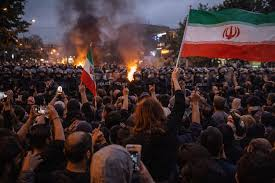
Iran is facing one of the most consequential waves of civil unrest in decades. Beginning in late December 2025, protests have spread across all 31 provinces of the country, drawing millions into the streets and challenging the very foundations of the Islamic Republic. While Iran has seen periodic unrest over the years, this latest protest movement stands out for its scale, composition and underlying causes, driven by deep economic despair and widespread frustration with a government increasingly seen as disconnected from the realities of daily life.
Experts describe the current protests as broader and more existential than the waves of dissent that preceded them. Earlier demonstrations — such as those in 2009 over disputed election results or the 2022 “Woman, Life, Freedom” movement centered on personal freedoms — were significant but tended to focus on specific issues. What is unfolding now is fundamentally different: it is a mass eruption of anger over survival itself, rooted in a collapsing economy and widespread insecurity about the future.
At the heart of the unrest is a profound economic crisis. Years of Western sanctions, renewed most recently through United Nations “snapback” measures, have crippled Iran’s economy. The national currency, the rial, has plummeted to record lows, while inflation has soared, making basic goods unaffordable for many families. Food, cooking oil and other essentials have become scarce or prohibitively expensive, leaving even middle-class households struggling to cope. What began with strikes by Tehran’s traditionally pro-regime bazaar merchants soon spread as students, workers and ordinary citizens joined the ranks of demonstrators.
Unlike past protests that were sparked by momentary grievances or symbolic issues, this movement reflects widespread desperation. For many Iranians, daily life has become untenable, and the protests reflect a collective outcry against economic mismanagement, corruption and an authoritarian system that appears incapable of addressing the basic needs of its people. This pervasive sense of hardship cuts across socioeconomic classes and regions, uniting disparate segments of society.
Another factor distinguishing the current unrest is the shifting composition of participants. Previously, segments of society such as conservative business owners, religious communities or middle-class professionals might have remained neutral or even supportive of the regime. Now, even these traditionally aligned groups have taken to the streets, closing shops and joining protests in numbers not seen before. This broad participation suggests that public discontent extends far beyond isolated urban enclaves and reflects a fundamental breakdown in the social contract between the state and its citizens.
The shadow of recent geopolitical events looms large over the protests. Iran suffered a painful blow to its military stature following a twelve-day war last year with Israel, during which key infrastructure was damaged and many senior commanders were killed. For a government that has long pursued a projection of regional power and ideological influence, this perceived humiliation has undermined its legitimacy at home. Many Iranians now view the regime’s costly foreign engagements, including its support for allied militias in neighboring countries, as misplaced priorities that have done little to improve conditions within Iran.
Protesters have also voiced explicit disillusionment with the government’s regional interventions, chanting slogans denouncing foreign entanglements while calling for dignity and justice at home. Some have even revived slogans historically used in earlier movements, while adapting them to current demands for economic relief and political change. Young people, in particular, seem less constrained by ideological loyalty and more motivated by pressing socioeconomic concerns.
The government’s response to these demonstrations has been harsh and increasingly brutal. Security forces have used live ammunition against crowds, leading to significant numbers of deaths and injuries. Despite official efforts to suppress information, human rights groups report that hundreds have been killed and thousands detained. In response to the unrest, authorities have imposed nationwide internet shutdowns and communications blackouts, making it difficult for Iranians to organize, share information or even contact loved ones. These shutdowns also obscure independent reporting on the ground, complicating efforts to gauge the full scale of the crisis.
The risk of even more severe repression looms large. State security apparatuses have a long history of responding to dissent with mass arrests, executions and intense surveillance. Analysts warn that the current crackdown could eclipse past episodes in its severity, given the regime’s fear of losing control. The increasing use of force reflects both desperation and the regime’s underlying insecurity in the face of widespread defiance.
What distinguishes this moment is not just the breadth of participation or the severity of state repression, but the depth of the grievances involved. This rebellion is not about a single policy or symbolic injustice; it is about survival in a society where the cost of living has risen beyond reach and fear has given way to collective outrage. Economic hardship has turned into political resistance, and the lines between everyday grievances and broader political demands have blurred.
Despite the regime’s extensive tools of control — from security forces to state media — and its repeated warnings of external enemies, ordinary Iranians are signaling a willingness to endure risk in pursuit of fundamental change. Calls for respect, dignity and an end to both corruption and authoritarian rule resonate across generations and regions, creating a movement that, while not yet unified under a single leadership, is unified in its scope and intensity.
As the protests evolve, the future remains uncertain. Some observers caution that the regime may weather the storm through repression, while others suggest that the depth of public discontent could catalyze a historic turning point. What is clear is that this uprising differs fundamentally from those before it: it is broader, more deeply rooted in economic distress, and driven by an unprecedented wave of popular frustration and aspiration for a more livable and just society.