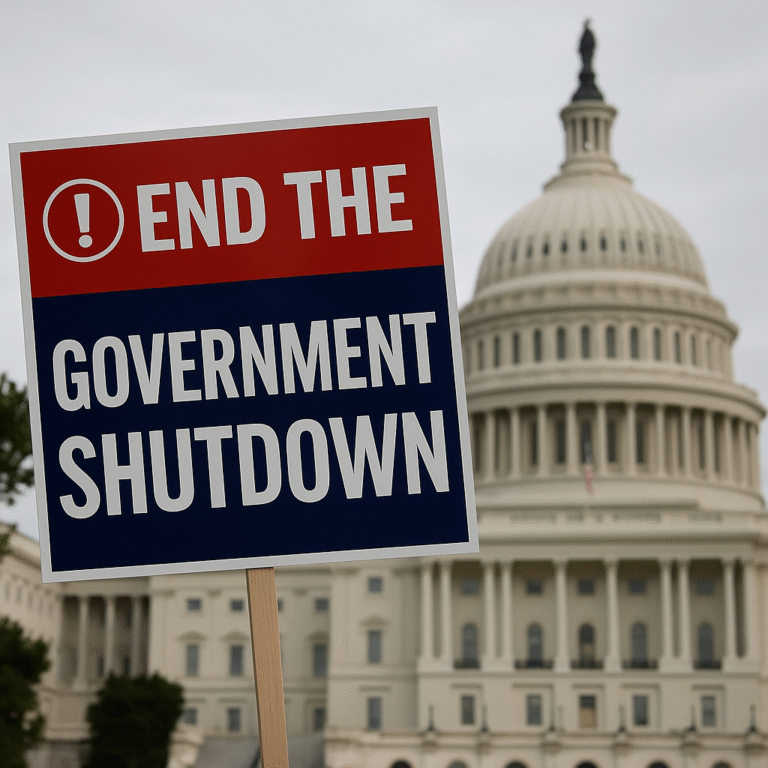
What Happens During a Government Shutdown — And Why 2025 Matters
When the federal government fails to pass required funding legislation by the start of the fiscal year (or fails to pass a continuing resolution), many agencies must stop operations. That means non-essential staff are furloughed, services paused, and the ripple effects often reach far beyond Washington.
The shutdown that began October 1, 2025 — lasting 43 days — became the longest in U.S. history.
Immediate Effects: Federal Workers, Services, and Flights
- It’s estimated that hundreds of thousands of federal workers were furloughed or required to work without pay.
- Essential services — such as air traffic control, border security, and some national defense functions — continued, but many other services were suspended or delayed: passport and visa processing, national parks and museums, permit and regulatory applications, and more.
- For agencies that produce economic data — like employment reports or inflation measurements — the shutdown triggered a pause in reporting, creating a temporary data blackout. That complicates economic forecasting and decision-making for businesses, markets, and policy institutions.
Broader Economic Consequences: Lost Output, Delayed Paychecks, and Market Strain
As federal operations stalled, the national economy took a hit. The independent Congressional Budget Office (CBO) projected the shutdown could shave 1.0 to 2.0 percentage points off Q4 2025 GDP growth, with $7 billion–$14 billion in losses that likely won’t be recovered.
Reduction in federal paychecks and contractor income translated quickly into reduced consumer spending — and that affects businesses, local economies, and financial stability.
Even as government services resume, some of the economic damage — like lost wages, delayed contracts, and deferred permits or loans — may linger.
Personal and Social Impacts: Individuals, Families, and Communities
Beyond statistics, the shutdown signals real disruption for people across the country:
- Federal employees faced financial stress from missed paychecks, even if they’re ultimately guaranteed retroactive pay under law.
- People relying on programs like food assistance or federal support (loans, permits, benefits, etc.) saw uncertainty and delays.
- Communities near federal employment centers (like Washington, D.C., or other cities with many federal workers) felt amplified economic pain — from vacant paychecks to lowered local consumption.
Institutional and Long-Term Risks: Confidence, Planning, and Policy Back-Ups
- Delays and disruption in data collection create a challenge for economic planning. When agencies stop reporting, businesses and investors must make decisions in the dark.
- Uncertainty around future shutdowns — since many appropriations remain unresolved — means households and markets remain on edge.
- A long-term consequence is eroded public trust. Repeated shutdowns can undermine confidence in the government’s ability to deliver basic services reliably.
Why It Matters — And What to Watch Going Forward
A government shutdown isn’t just a political fight — it’s a disruption with real world consequences. For workers, communities, and businesses, the pause isn’t just inconvenient — it can be costly in money, time, and stress. For the economy, it’s lost output, delayed growth, and uncertainty.
As we move forward, the big questions remain: will Congress pass stable funding measures in time to avoid another shutdown? And can the economy and people bounce back fully from the losses caused by this one?