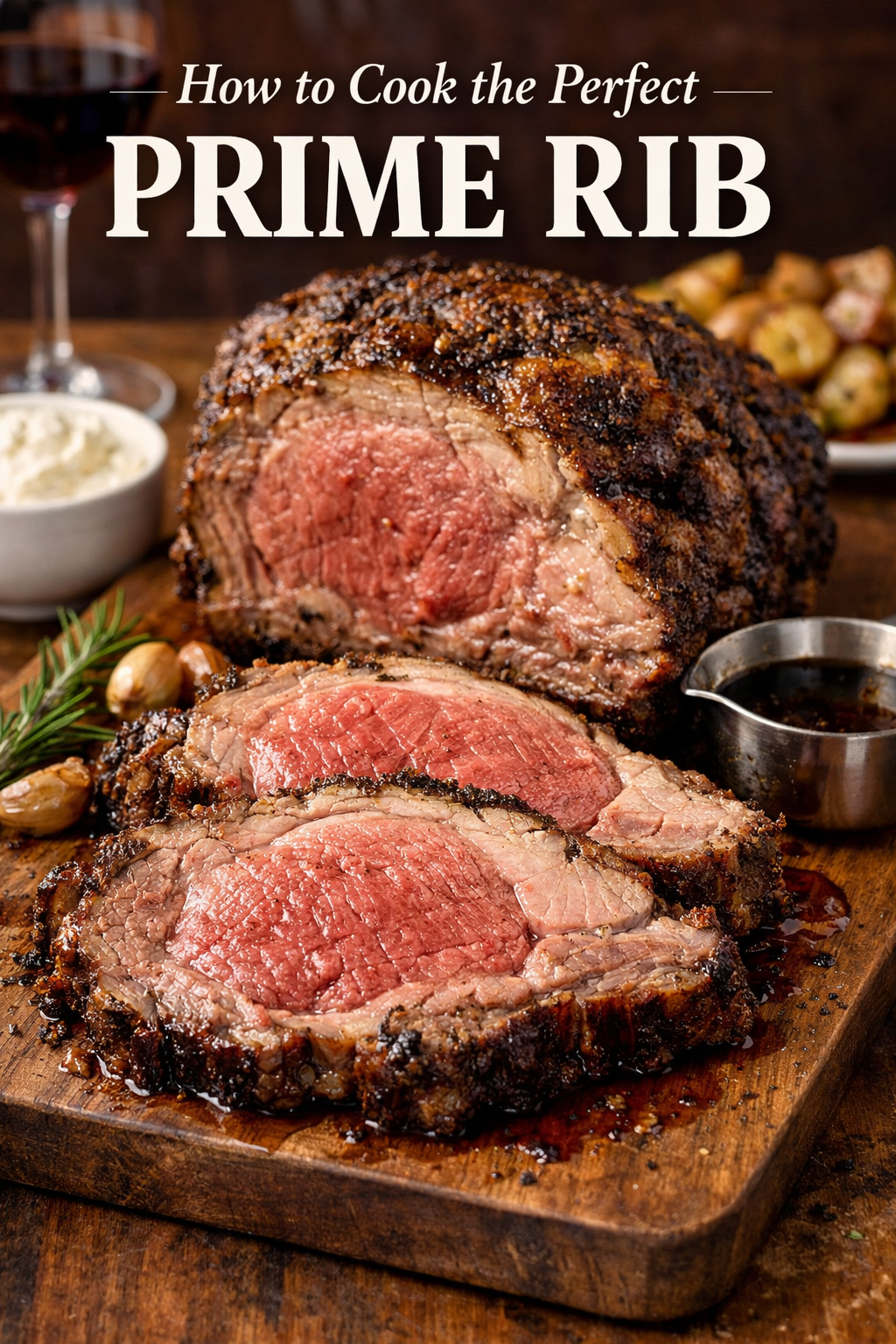
The Perfect Prime Rib
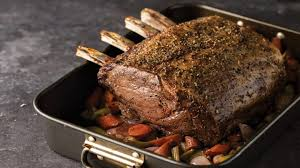
Prime rib is one of those show-stopping dishes that feels like a special occasion the moment it hits the table. It’s richly marbled, deeply beefy, and surprisingly approachable at home as long as you respect two things: temperature and time. Here’s how to make a prime rib roast that’s tender, juicy, and beautifully browned.
Choosing the Roast
Start with a well-marbled rib roast, ideally USDA Prime or Choice. Plan on about 1 pound per person (a little less if you have plenty of sides). A bone-in roast tends to cook more evenly and stay juicier, but boneless works too. If possible, ask your butcher to “chine” the roast (remove the backbone) and tie it, which makes carving easier.
Prepping for Success
The best prime rib starts the day before. Pat the roast dry and season it generously with kosher salt on all sides. Place it on a rack set over a tray and refrigerate uncovered overnight. This dry-brine seasons the meat throughout and helps create a crisp, flavorful crust.
Before cooking, take the roast out of the fridge and let it sit at room temperature for 1–2 hours. This helps it cook more evenly. While it rests, mix your seasoning paste: minced garlic, cracked black pepper, chopped rosemary and thyme, and a bit of olive oil or softened butter. Rub it all over the roast.
Roasting Method
Preheat your oven to 450°F. Place the roast fat-side up on a rack in a roasting pan. Roast at 450°F for 15–20 minutes to kickstart browning, then lower the oven to 325°F to finish cooking gently.
Use a meat thermometer—this is non-negotiable. For medium-rare, pull the roast when the thickest part reaches 120–125°F. For medium, aim for 130–135°F. Depending on size, this usually takes 15–20 minutes per pound, but temperature is far more reliable than time.
Resting and Carving
Once it reaches your target temperature, remove the roast and tent it loosely with foil. Rest for at least 25–30 minutes. During this time, the juices redistribute and the internal temperature climbs another 5–10 degrees, finishing the cook without drying it out.
To carve, slice between the bones if it’s bone-in, then cut the roast into thick slices (½ to ¾ inch is classic). Serve immediately.
Simple Au Jus
While the roast rests, pour off excess fat from the pan, leaving the browned bits behind. Add beef broth and a splash of red wine, scraping up the fond. Simmer briefly, strain, and season to taste.
Prime rib is bold, buttery, and unforgettable—perfect with horseradish cream, roasted potatoes, and a big green salad.