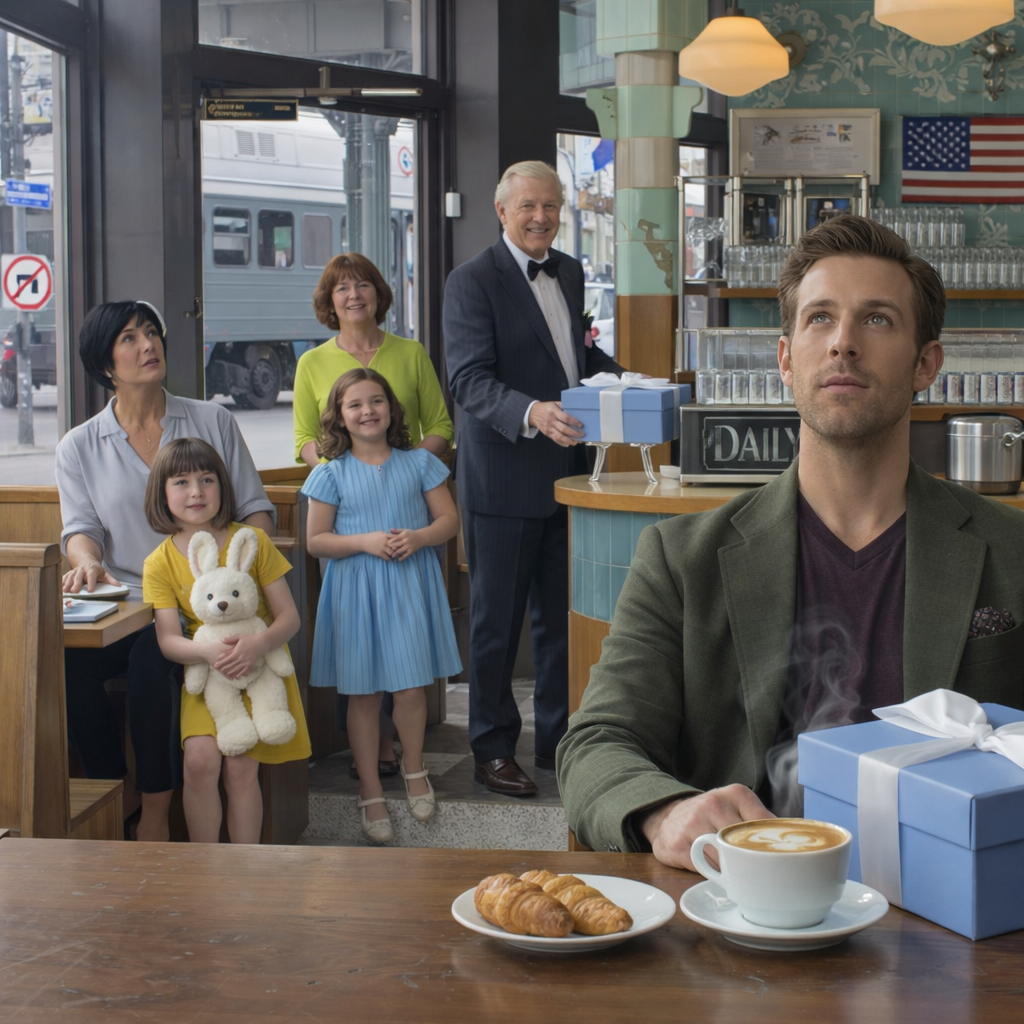
The Blue Box at the Café
The café smelled like burnt sugar and old wood, the kind of place that charged too much for everything and somehow got away with it by leaning hard into atmosphere. Exposed brick. Edison bulbs hanging low enough to feel intentional. Chairs that looked uncomfortable but weren’t, at least not at first.
I noticed the smell because I was counting.
Not money exactly, but margins. Sundays like this added up. Sarah wanted this to be our place, something regular, something that said stability. A ritual for our new little family. I was doing the quiet math in my head, the way I always did now, weighing happiness against practicality.
Three months married. Still learning how to be a husband again.
Still learning how to be a stepfather.
Sarah sat across from me, her coffee untouched, talking animatedly about a patient she’d seen that week. She had that way about her, the way her whole body leaned into conversation like she wanted the world to meet her halfway. Her laugh came easily, bright and unguarded, the sound that had pulled me toward her two years ago at a hospital fundraiser when I was still raw from my divorce and not looking for anything at all.
Emma sat beside her, legs swinging under the table, clutching the stuffed rabbit she insisted was not a baby toy even though it was missing one eye and smelled faintly of laundry detergent and comfort. She was seven, serious in the way kids get when they’re deciding who they are going to be, and she called me David instead of Dad. I told myself that was fine. It was enough that she trusted me.
Sarah glanced toward the back of the café. “I’m going to run to the restroom,” she said, brushing her hand over my shoulder as she stood. The casual intimacy of it still caught me off guard, still made my chest tighten in a good way.
Emma hopped down a moment later. “I have to go too,” she announced, already halfway out of her chair. Her patent leather shoes clicked loudly against the hardwood floor as she followed Sarah, her small hand disappearing into Sarah’s larger one as they turned the corner.
I watched them go and felt that swell of almost-too-much happiness. The kind that doesn’t sit still in your chest. The kind that makes you nervous, like the universe might notice and decide you’ve had enough.
I should have trusted that instinct.
I was scrolling through my phone, pretending to check work emails while really looking at photos from our honeymoon in Sedona, when a shadow fell across the table.
At first, I thought it was the waiter coming to drop the check. I looked up, ready with a polite smile.
It wasn’t the waiter.
The man standing there was older, late fifties or early sixties, with silver hair cut short in a way that suggested habit more than fashion. His eyes were pale blue, almost gray, the color of lake water in winter when the surface looks calm but you know the cold goes deep. He wore an inexpensive suit that somehow worked with an expensive watch, the kind of mismatch that made you notice.
He didn’t greet me.
He didn’t apologize for interrupting.
He simply placed a small blue box on the table between my coffee cup and Sarah’s half-eaten scone.
It was about the size of a thin shoebox, wrapped in paper the color of a robin’s egg and tied with a white ribbon that looked like someone had taken their time with it.
“You’ll need this tonight,” he said.
His voice was quiet, but it carried. Not loud. Certain. Like a statement rather than a suggestion.
I stared at the box, then back up at him.
“I think you’ve got the wrong table,” I said.
Something flickered in his eyes. Not surprise. Not doubt.
“I don’t,” he replied.
He turned away before I could say anything else, already walking toward the door with a deliberate stride, the kind of walk that didn’t expect to be followed.
“Wait,” I said, pushing my chair back.
By the time I stood, he was gone. Out the door. Around the corner. Vanished with unsettling efficiency.
I looked around the café.
The couple by the window was sharing a piece of cake, oblivious. The man with the laptop near the door hadn’t looked up once. The barista wiped down the espresso machine with bored concentration. An American flag sticker clung to the glass by the register, a meaningless detail that suddenly felt surreal in its normalcy.
No one had noticed.
No one cared.
I sat back down slowly, my heart beating a little harder than it should have. The box sat there, harmless-looking and suddenly heavy with implication.
I pulled it closer. The paper was thick. Expensive. The ribbon was silk. There was no card. No tag. Nothing to explain why it existed or why it had been given to me.
I ran my finger along the edge, felt the sharp corners beneath the wrapping, and something in my gut twisted. Not fear exactly. Not anticipation either.
Something older.
Like the feeling you get when you hear footsteps behind you in a parking garage at night.
I heard Sarah’s laugh before I saw her, bright and familiar. “Emma, slow down,” she called.
They reappeared a moment later, Emma racing ahead, her rabbit dangling from one arm.
“Did you order dessert?” Emma asked, her eyes immediately locking onto the box with the sharp intuition of a child who understood that mysterious packages sometimes meant cookies.
“No,” I said quickly, smiling as I slid the box off the table and into my laptop bag in one smooth motion. “Just some work stuff someone dropped off.”
Sarah sat down and raised an eyebrow. “On a Sunday? Your boss is getting bold.”
“Tell me about it,” I said, the lie coming out easier than I liked.
I hated how natural it felt. Three months married and already keeping secrets.
But what was I supposed to say?
A stranger just handed me a box and said I’d need it tonight.
That sounded unhinged.
We finished our coffee. Paid the check. Too much money for caffeine and pastries, but Sarah looked happy and Emma had hot chocolate with extra whipped cream, and that seemed like a fair trade.
Outside, the autumn sun slanted through the trees, painting the street in gold and amber. We walked to the car holding hands, Sarah in the middle, Emma on her right, me on her left. A small human chain trying very hard to be a family.
“Can we come back next week?” Emma asked as I buckled her into her car seat.
“We’ll see,” Sarah said, which we both knew meant yes.
The drive home was quiet and comfortable. Emma hummed off-key in the back seat. Sarah dozed against the window, her hand resting on my thigh. I drove carefully, consciously, the way I did everything now.
Second marriage. Second chance.
I wasn’t going to mess this up the way I’d messed up the first one.
The blue box sat in the trunk, tucked inside my bag. I tried not to think about it.
I failed.
We pulled into our driveway just as the sun began to dip, our little Craftsman bungalow glowing in soft orange light. Two bedrooms. One bathroom. Old appliances. Paid for. Safe.
Emma ran inside. Sarah headed for the kitchen, already planning dinner.
“I’m going to change,” I said, kissing her cheek.
In the bedroom, I closed the door and sat on the edge of the bed we shared, the one with the comforter Sarah had picked out and the photo from our wedding on the nightstand.
I pulled the box out of my bag.
You’ll need this tonight.
Why tonight?
I untied the ribbon. The paper fell away to reveal a plain white box. Inside, wrapped in tissue, was a tablet. Older model. Charged. Waiting.
Beneath it was an envelope, cream-colored, my name written across the front in careful, elegant script.
David.
My hands shook as I opened it.
What you’re about to discover will hurt, but you deserve the truth.
Your wife doesn’t know you found this. Not yet.
But she will, because tonight at exactly eight o’clock, she’s going to tell you anyway.
The tablet contains everything you need to know.
I sat there, the words burning into me, Sarah’s voice drifting down the hall as she called that dinner was almost ready.
I powered on the tablet.
Three folders appeared.
Videos.
Messages.
Financial.
A countdown timer ticked in the corner of the screen.
Less than three hours.
I closed the box, shoved it under the bed, stood up, and caught my reflection in the mirror. I looked the same. A man about to eat dinner with his family.
I walked back into the kitchen, wrapped my arms around Sarah from behind, kissed her neck.
“Smells great,” I said.
She smiled at me, warm and unsuspecting.
“We have all evening,” she said. “Just us. Just family.”
And underneath our bed, the clock kept counting down.
Dinner stretched in a way I couldn’t explain.
It might have lasted the usual half hour, but time stopped behaving normally once the countdown began living in my head. Every bite of food felt deliberate. Every laugh felt staged, even when it wasn’t. I kept glancing at the clock on the microwave, at the small digital numbers inching forward with quiet cruelty.
Emma ate with determination, pushing broccoli aside and negotiating bites in exchange for the promise of ice cream later. Sarah talked about her shift at the hospital, about a child who’d refused medication and a mother who’d cried in the hallway. She spoke with compassion, with the ease of someone who truly cared.
I watched her mouth move and wondered how many versions of herself existed. How many faces she wore depending on who was watching.
“You’re quiet tonight,” she said, reaching across the table to touch my hand.
Her fingers were warm. Familiar.
“Just tired,” I said. “Long week.”
Another lie. It slid out without friction.
Emma asked to be excused, and Sarah nodded. Our daughter ran off to the living room, already narrating an elaborate story to her stuffed rabbit in a voice filled with authority and imagination.
“She’s really bonding with you,” Sarah said softly as she began clearing the table. “I worried she’d resist. But you’ve been so patient.”
“I love her,” I said.
That part was true.
We cleaned up together, moving around each other in the small kitchen with practiced ease. She washed. I dried. Our rhythm was smooth, domestic, earned. The kind of thing people point to when they say marriage is about the little moments.
“I’m going to give Emma her bath,” Sarah said. “Will you read her a story after?”
“Of course.”
The sound of running water followed them down the hall. Emma’s laughter echoed back a moment later, loud and unguarded. I stood at the sink holding a plate, suddenly unsure whether to put it away or throw it against the wall.
I looked at the clock again.
Less than an hour.
I couldn’t wait.
“I’m going to take a quick work call,” I called down the hall. “Might be a few minutes.”
“Okay,” Sarah replied. “Don’t let them stress you out.”
I closed the bedroom door behind me and locked it, something I never did. My hands moved quickly now, almost urgently, as I pulled the box out from under the bed and retrieved the tablet.
The countdown timer blinked in the corner.
I opened the folder labeled Videos.
There were twelve files, each named with a date.
The earliest one was from three years ago. Before I had ever met Sarah.
The most recent was from two days ago. Friday night. The night she told me she was working late.
My finger hovered over the first video.
Once I pressed play, there would be no undoing it.
I tapped the screen.
The image opened on a restaurant. Upscale. Dim. The camera angle was elevated, distant, as if someone had set a phone down and walked away.
Sarah sat at a small table wearing the blue dress she’d worn to a friend’s birthday party. I remembered that night. I’d had the flu. She’d gone alone. Come home late and kissed my forehead, careful not to wake me too much.
She wasn’t alone in the video.
A man sat across from her. Younger than me. Dark-haired. Confident in a way that came from comfort, not effort. He leaned in close as they spoke, his hand reaching across the table to touch hers.
She didn’t pull away.
The video had no sound, but I didn’t need it. I could read the intimacy in the way she laughed, in the way she tilted her head when she listened.
The timestamp sat quietly in the corner.
I felt my stomach drop.
The video ended with him helping her into her coat, his hand resting on her lower back as they left together.
I stared at the frozen image, searching my memory for clues. Had she smelled different when she came home that night. Had she seemed distracted. Guilty.
I couldn’t remember.
I opened the second video.
A coffee shop. Daylight. Sarah in her scrubs. The same man sat across from her, close enough that their shoulders brushed. She reached out and straightened his collar, an intimate gesture done without thought.
Third video.
An apartment. Clean. Modern. Sarah barefoot on a couch, curled into the corner like she belonged there. He brought her a glass of wine.
The date was a Tuesday afternoon.
I checked my calendar.
That day I’d been at a conference in Phoenix.
That night I’d called her from my hotel room and told her I missed her.
She’d said she missed me too.
Fourth video.
Fifth.
Different locations. Same pattern.
Public when necessary. Private when possible.
By the seventh video, the dates overlapped with our engagement. Two months before I’d proposed at the beach, nervous and hopeful, nearly dropping the ring in the sand.
In the video, she was in bed with him.
I stopped breathing for a moment.
I don’t know how long I stared at the screen before moving again. Long enough for my hands to go numb.
I should have stopped watching.
I didn’t.
The eighth video showed our engagement party. I saw myself in the background, laughing with her father, unaware. Sarah slipped out onto a terrace with him, kissed him quickly, carefully, where she thought no one could see.
Someone had seen.
The ninth video was from four months ago.
The tenth from a week before our wedding.
The eleventh from six weeks ago, when everything was supposed to be new and honest and uncomplicated.
The twelfth video was from Friday night.
Her supposed late shift.
She was at his apartment again.
This time, there was audio.
I turned up the volume.
“I can’t keep doing this,” the man said. His voice was smooth, controlled. “You said six months.”
“I know,” Sarah replied. She sounded tired. “I just need more time.”
“Time for what. You married him.”
“He has what I need right now,” she said. “Stability. A home. Security for Emma.”
“And after that.”
A pause.
“I need to get pregnant first.”
My vision blurred. I pressed pause, gasping, my chest tight.
We’d been trying.
Tracking cycles. Vitamins. Planning.
I pressed play again.
“Once I’m pregnant, I have leverage,” Sarah continued calmly. “I stay married long enough that he bonds. Then I divorce. Take half. Child support for two kids.”
The man laughed softly.
“Cold.”
“I learned from the best,” she said, and kissed him.
The video ended.
I sat there shaking, my hands barely able to hold the tablet.
I opened the second folder.
Messages.
Thousands of them. Years of planning spelled out in casual language and emojis.
He doesn’t suspect a thing.
Think of it as work.
Close your eyes and think of the payout.
I barely made it to the bathroom before I vomited.
When I came back out, wiping my mouth with shaking hands, the countdown timer blinked.
Minutes left.
Sarah was about to tell me.
I shoved the tablet back into the box and slid it under the bed just as I heard footsteps.
“David,” she called softly from the hallway. “Emma’s asleep. Can we talk.”
She stepped into the room looking nervous, her hands twisting together.
“There’s something I need to tell you,” she said.
I sat on the bed, my heart pounding, and looked at her with the same face I’d worn all evening.
“What’s wrong.”
She took my hand. It trembled.
“I’m pregnant.”
I wrapped my arms around her and smiled.
And waited.
For a moment, the room went quiet in a way that felt staged.
Not peaceful. Suspended.
Sarah watched my face the way an actor watches an audience, searching for cues. Her hand rested in mine, warm, familiar, and I was suddenly aware of how well I knew the geography of her fingers. The small scar near her thumb. The faint indentation where her wedding ring sat.
“I took three tests,” she said softly. “All positive. I was going to wait, but I couldn’t keep it from you anymore.”
The old version of me, the one who existed before the café and the blue box and the ticking clock, would have laughed in disbelief. Would have pulled her close, overwhelmed. Would have started talking about names and timelines and cribs.
That man was gone.
Instead, I did what the moment required.
I smiled.
I pulled her into my arms and held her while she cried against my chest. Her tears soaked through my shirt, hot and real. That surprised me. Whatever else this was, her emotion in that moment did not feel rehearsed.
“We’re having a baby,” I said quietly, as if I were convincing myself. “We’re really doing this.”
She nodded into my shoulder. “I was so scared you’d be upset. It’s fast. I know it’s fast.”
“I’m not upset,” I said. “I’m happy.”
The lie did not choke me the way it should have. It slid into place easily, settling among the others I had told that evening.
She pulled back to look at me, eyes red, searching my face for confirmation.
“You really mean that.”
“I do,” I said. “This is what we wanted. A family. All of us.”
Her shoulders relaxed. Relief crossed her face, followed by something else. Satisfaction, maybe. Or simply the easing of tension after a performance delivered successfully.
She laughed softly through her tears. “I didn’t know how to tell you. I kept replaying it in my head all day.”
“I’m glad you told me,” I said. “I’m glad you didn’t keep it to yourself.”
If she heard the double meaning in that sentence, she did not show it.
She leaned back against the pillows, one hand drifting to her stomach, already protective. The gesture looked instinctive. Natural. And that unsettled me more than anything else had so far.
“When should we tell Emma,” she asked.
“Soon,” I said. “After you’ve seen a doctor. Make sure everything’s okay.”
“That makes sense.” She smiled again. “You’re going to be such a good father.”
The word landed wrong. Not painful. Just hollow.
I kissed her forehead, stood, and told her to rest. She had a big day, I said. Emotional. Important.
As I left the room, she looked at me with the kind of trust that once would have undone me.
I went to the kitchen and poured a drink even though I rarely drank. The amber liquid caught the light, steady and unremarkable. I stared out the window at the quiet street, at porch lights glowing and televisions flickering behind curtains.
Normal lives. Normal evenings.
Under our bed, the tablet waited.
I finished the drink and went back to the bedroom once I was sure Sarah was asleep. Her breathing had settled into a slow, even rhythm. One hand still rested on her stomach.
I pulled the box out again.
The third folder was labeled Financial.
What I found there reframed everything.
Bank statements. Transfers. Withdrawals. Small amounts at first. Then larger. Always careful. Always just below the threshold that would trigger alerts. Joint accounts drained slowly, deliberately, like blood drawn a little at a time so the body would not notice until it was weak.
Credit card applications in my name. Addresses I did not recognize. Balances I had never authorized.
The timestamps told a story I did not want to read.
The first transfer happened on our wedding night.
While I slept beside her, believing I had crossed into something sacred, she had already begun dismantling my life.
I sat on the bathroom floor with the tablet in my lap until my legs went numb. This was not impulsive betrayal. This was design.
When I looked again at the home screen, I noticed a folder I had missed earlier.
Read Me.
Inside was a letter.
The stranger explained himself. Not fully, but enough.
He had been where I was. Trusted the wrong person. Lost everything. He had made it his purpose to find people like Sarah and warn their next victims before it was too late.
You are not her first, he wrote. There were two before you.
I believed him without hesitation.
I did not sleep that night.
Instead, I made lists. What I knew. What I needed to confirm. What I had to protect.
By morning, I had made a decision that surprised me with its clarity.
I was not going to confront her.
Not yet.
I was going to plan.
The next weeks were an exercise in restraint.
I became the husband she expected. Attentive. Supportive. Excited. I went to doctor’s appointments. Held her hand. Smiled at ultrasound screens. I learned the cadence of my new role and played it convincingly.
Privately, I called lawyers. Froze my credit. Changed passwords. Documented everything.
A paternity test confirmed what I already suspected.
I was not the father.
That knowledge did not shatter me the way I expected. It clarified things. Removed the last thread tying me to her story.
When the papers were finally served, Sarah did not react the way she had practiced.
There was no careful sadness. No composed anger.
There was panic.
Texts flooded in. Calls unanswered. Accusations, then bargaining, then fear. She admitted more in those messages than she ever would have aloud.
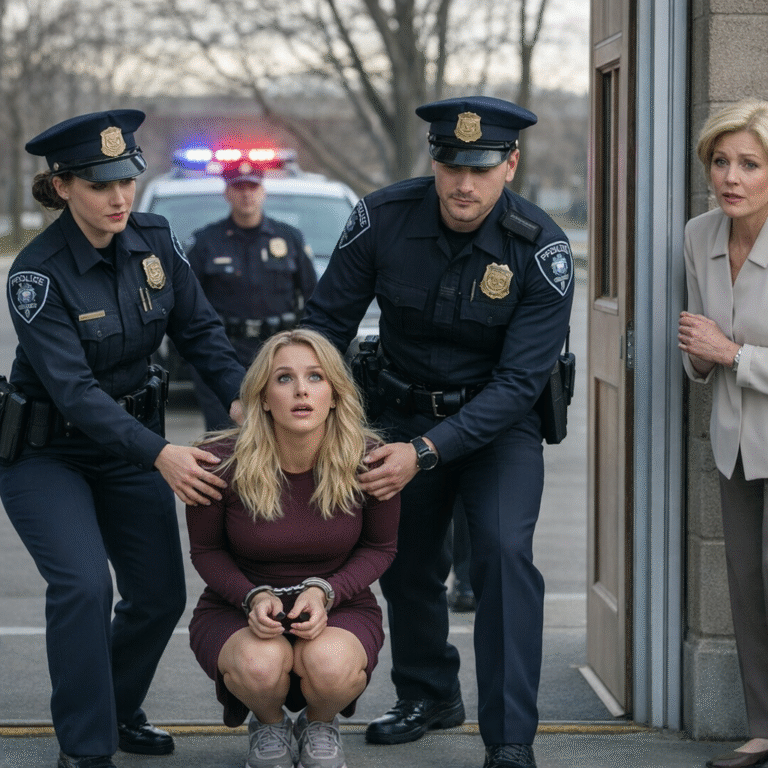
The police came next.
The investigation moved faster than I thought it would. Evidence has a way of speaking for itself.
The divorce followed. Fraud charges. Restitution. A plea deal.
Sarah told her version of the story to anyone who would listen. A stressed young mother. An unfeeling husband. A misunderstanding that spiraled.
Some people believed her.
I stopped caring.
What hurt was Emma.
There was no legal claim I could make that mattered. No biological tie. No adoption papers. The law did not recognize love.
I lost her without goodbye.
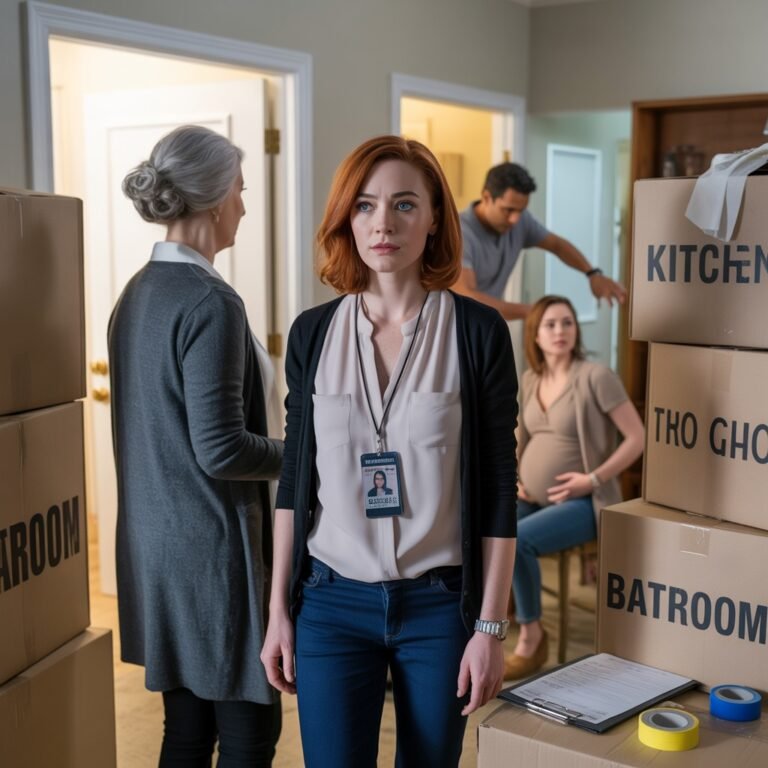
Months later, I stood in the empty house waiting for the movers to finish. Rain streaked the windows. The rooms echoed.
I felt nothing.
Not relief. Not grief.
Just the quiet understanding that this chapter was over.
The blue box surfaced again when I unpacked. Inside, the tablet held one final letter.
The stranger told me his name. His story. Why he did what he did.
He asked me to pay it forward.
Not out of revenge.
Out of responsibility.
Two years later, an email arrived from a man I had never met.
He was scared. Confused. Losing money he could not explain.
Someone had given him my name.
I stared at the message for a long time.
Then I picked up my phone and made a call.
The cycle did not end with me.
But it did break.