My Parents Called Me Over Just to Tell Me I’d Inherit Nothing While My Siblings Got Everything
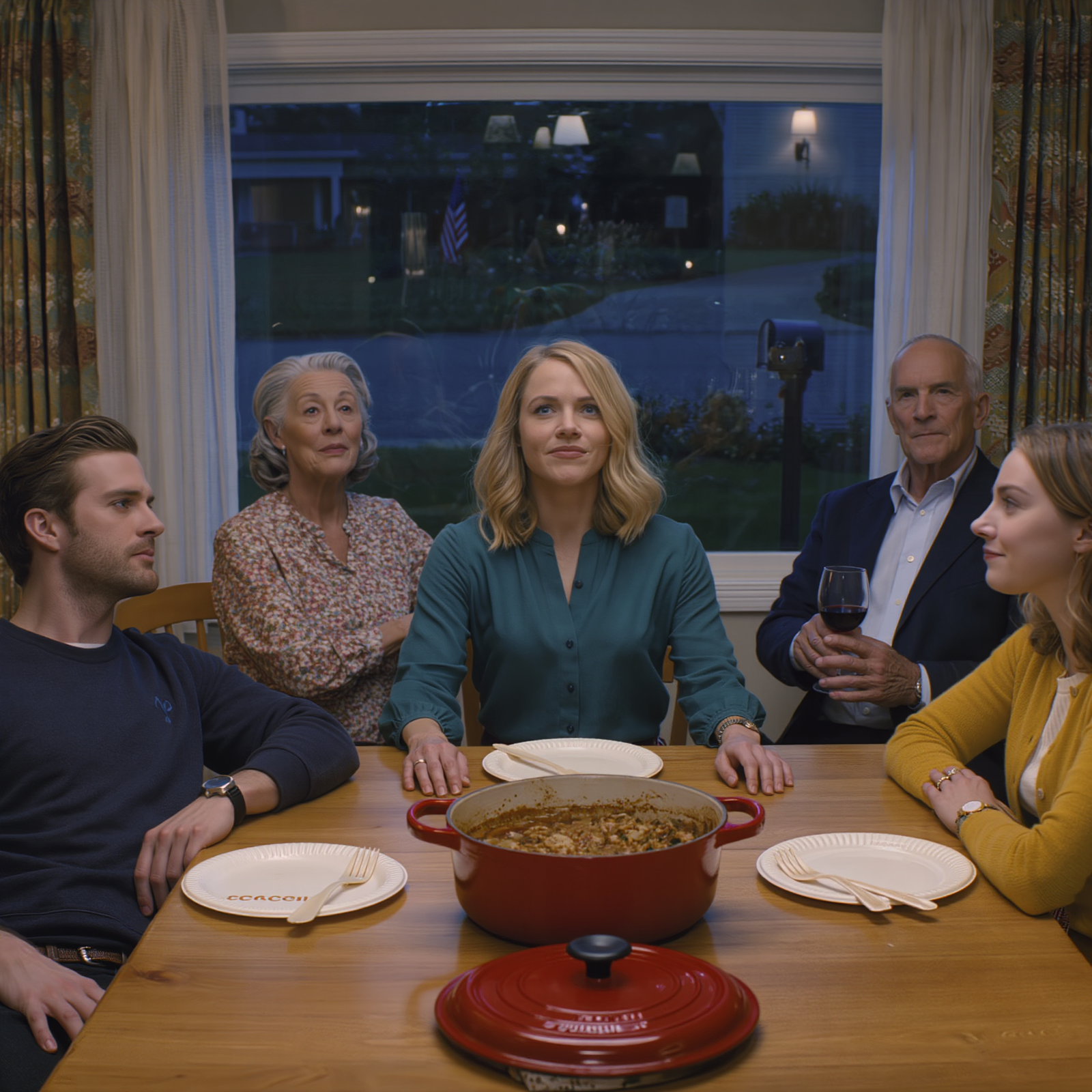
I had lived for thirty-five years without ever imagining that a family dinner could shatter everything I believed in. The flickering candles on the dining table, the soft glow from the vintage chandelier my parents had bought at an antique shop in Old Sacramento, and the rich aroma of beef stew filling the air—on the surface, it looked like the kind of cozy, all-American evening you’d see in a Hallmark movie. In reality, it was a perfectly orchestrated trap, and I walked straight into it without a shred of suspicion.
Two weeks earlier, my mother had called while I was between meetings in downtown San Francisco. I’d been staring at Market Street traffic through the floor-to-ceiling windows of my office when her name lit up my phone.
“Sophia, you should come home for dinner,” she’d said, her voice sweeter than usual, dripping with honey. “It’s been so long since the family gathered together.”
I hesitated. For more than a decade, I’d grown used to my parents’ conditional affection. They only reached out when they needed something—a bill covered, a repair handled, a “short-term” loan that somehow never came back. But some stupid, soft part of me still wanted to believe that maybe, just maybe, this time would be different. That maybe they really did miss me.
So that Friday, I left my packed schedule, my color-coded Google calendar, and my intense back-to-back meetings behind, got in my car, and drove the two hours from San Francisco to my childhood home in Sacramento along the I-80, watching the Bay Bridge and the city skyline fade in my rearview mirror.
I arrived with hope. But minutes after sitting down at that table, that hope shattered like a wineglass slipping from someone’s hand and crashing onto the hardwood floor.
“To avoid any misunderstandings later, Mom and Dad want you to know now.” Parker, my younger brother, spoke smoothly, like he’d rehearsed the words in the bathroom mirror before dinner. He leaned back in his chair, arms crossed over a faded college hoodie, his face barely concealing his satisfaction.
Next to him, Olivia, my younger sister, twirled a golden strand of hair around her finger, a smirk playing on her glossed lips as if she’d just won a bet.
I set my fork down, suddenly finding the stew my mother had so carefully prepared harder to swallow than ever.
“What?” I asked, my voice dry. I forced myself to stay calm.
My mother, the same woman who had called me with the promise of a warm evening, who now sat at the head of the farmhouse table beneath the chandelier, sighed softly.
“Your father and I have finalized our will,” she said. “This house, the lakefront villa in Tahoe, everything we own will go to Parker and Olivia.”
Her words fell into the space between us like a knife, slicing straight into my chest.
I turned to my father, hoping, praying that he’d refute this. That he’d roll his eyes and say it was some tasteless joke. But he only lowered his head, staring into his glass of red wine as if the Cabernet held all the answers he needed. He didn’t say a word.
I took a deep breath, searching for a thread of logic in the mess.
“And why?” I asked.
Parker shrugged, his voice dripping with amusement. “Because you don’t need it, right? You’ve got your own company, your own house, a stable life in San Francisco. Mom and Dad think Olivia and I need the support more.”
“Support?” I scoffed, my laughter hollow. “What exactly do you mean by support?”
I turned to my sister. “Olivia, you’re twenty-eight and haven’t held a job for more than six months. Parker,” I looked back at him, “how many times have you switched majors in college? Five? Six? And Mom and Dad have been paying for every single tuition bill.”
As I spoke, my breath quickened and my heart pounded with fury.
My mother crossed her arms, her gaze turning cold. “Sophia, there’s no need to overreact. Your father and I have thought this through. You don’t need these assets. But Parker and Olivia need a solid foundation to build their lives on.”
I laughed, but there was no humor in it. “A foundation? And what about the money I spent helping you pay off the mortgage? The times I covered the bills and repairs when the roof leaked or the air conditioning went out in the middle of a Sacramento heat wave? What about the forty thousand dollars I invested to renovate the Tahoe villa so you could ‘keep it as a family place’ instead of selling it? Does no one remember that?”
Olivia chuckled, her eyes full of mockery. “Oh, so you’re keeping tabs on every penny now? That’s disappointing, Sophia. You’re rich. Do you really need to be so stingy?”
I stared at her, stunned by the audacity.
“Stingy?” I repeated, emphasizing each word. “No, Olivia. This is called fraud. This is called exploitation.”
My mother slammed her hand on the table so hard the wineglasses nearly toppled over.
“Enough, Sophia. Stop acting like a victim. You always think about money. Always. We did this not because we don’t love you, but because we love all of our children.”
Love.
A cold rage spread through my chest.
Parker leaned back in his chair, feigning sympathy. “You’re acting like a child who just had their favorite toy taken away. Everyone here is an adult, Sophia. You should learn to accept reality.”
I said nothing. His words didn’t even infuriate me anymore. They only made one thing sickeningly clear: I had been deceived my entire life. They had never truly seen me as part of the family. I wasn’t their daughter. I was their financial provider.
Slowly, I placed my hands on the table, fingers curling around the edge of the tablecloth. I took a deep breath, letting the anger settle into something colder.
When I looked up again, my gaze was ice.
“I understand now,” I said quietly. “You don’t need me. And I don’t need you.”
For the last decade, I had believed that family was supposed to be a refuge, that no matter what happened, they would cherish me the way I cherished them. But the truth was brutal and simple: I wasn’t their daughter. I was an ATM. And now that I was no longer useful, they were ready to discard me without a second thought.
I looked at each face in front of me.
My mother, the one who called me every time a bill was due.
My father, the man who never once opposed any of her decisions, even when she treated me unfairly.
Parker, the one who had burned through an endless amount of my money on courses he never completed.
Olivia, the one who had never worked a serious day in her life yet had enough designer clothes to fill three walk-in closets.
I laughed, but not out of amusement. My voice dripped with bitterness.
“And what about the money I spent on all of you?” I asked. “Does no one think that deserves any recognition?”
My mother’s arms tightened across her chest, her gaze as sharp as a razor. “Sophia, all you ever talk about is money. No amount is ever enough for you, is it?”
My throat went dry.
“Never enough?” I echoed, almost whispering. “I’ve been paying the mortgage on this house for the past six years. I was the only one who stepped up to take on the loan when you were on the verge of bankruptcy. I also paid for the renovations on the Tahoe villa because you said you wanted to keep it as a family asset. And now I’m not even considered part of this family.”
Olivia shrugged, raising an eyebrow with mock indifference. “No one forced you, Sophia. You just like playing the hero.”
That sentence felt like a slap.
“You’re right,” I said quietly. “No one forced me.”
I met her green eyes, searching for even a trace of remorse, but finding only ridicule.
“I did it because I thought family was supposed to support each other,” I continued. “But I was wrong. I was the only one making sacrifices while the rest of you only knew how to take.”
Parker scoffed. “You’re acting just like a kid who lost their favorite toy.”
I felt the rage building in my chest again.
“A toy?” I repeated, enunciating each word as heat rushed to my face. “I’ve spent nearly half a million dollars helping this family over the past decade. I put my own dreams on hold. I passed up chances to travel, to buy a bigger home in the city, to invest in my own future—all so you wouldn’t have to struggle. And now you call me greedy just because I asked for a little fairness.”
My mother shook her head, sighing as if I were some pitiful child who just didn’t understand.
“Family is about love, Sophia, not money,” she said.
I let out a hollow laugh.
“Love?” I looked around the room at the house I’d poured so much time and money into maintaining. “If that were true, then why does love only seem to matter when it comes from me? Why am I always the one making sacrifices?”
No one answered. No one ever did.
A cold silence filled the room. I could see it in their eyes: there was no guilt. They didn’t think they’d exploited me. They were just annoyed that I’d dared to demand fairness.
A sharp pain clenched in my chest, but it was accompanied by something else—clarity.
I took a deep breath and stood.
The chair scraped against the hardwood floor, the screech cutting through the tense air.
“I’ve heard enough,” I said, my voice flat. “I’m done.”
My mother blinked. “What did you just say?”
I met her gaze, my words slow and deliberate. “I’m done. I have no more obligations to any of you.”
Parker laughed, though there was something uneasy in it. “What, you’re going to cut off the family just like that?”
I stared at him without blinking. “Yes. And you’ll soon understand exactly what that means.”
I turned on my heel, not waiting for their reaction.
“Sophia, what the hell do you think you’re doing?” my mother shouted behind me, her voice sharp and frantic. “Family is supposed to stick together. You can’t just cut us off over a little disagreement.”
I paused near the front door, a smirk curling on my lips, cold as ice.
“A little disagreement?” I repeated. I turned back, meeting her eyes. “This isn’t a little disagreement. This is betrayal.”
Then I walked out, the front door clicking shut behind me.
“If you walk out that door, don’t ever think about coming back!” my mother screamed from the dining room.
I didn’t stop. I didn’t need to go back. I had all the answers I needed.
On the drive back to San Francisco, my chest felt tight, as if a boulder were pressing down on me. My mind replayed every bitter word from dinner—the disdain in Olivia’s eyes, Parker’s smug smirk, the suffocating silence from my parents.
The glow of the freeway signs blurred past my windshield. Streetlights stretched along the interstate like hollow streaks of light. I used to call that house “home.” Now, it felt like nothing more than a black hole that had swallowed every ounce of my effort and love.
When I got back to my apartment near the Embarcadero, I tossed my bag onto the couch, poured myself a glass of wine from the bottle I kept in the fridge “for special occasions,” and sank into the sofa. A long sigh escaped my lips. I didn’t even have the energy to be angry anymore. All that remained was exhaustion and a bone-deep weariness.
Then I picked up my phone and opened my banking app.
Two thousand one hundred dollars per month.
That was how much I’d been paying for them all these years. Fifteen hundred for the mortgage. Six hundred for utilities—electricity, water, internet, maintenance—not to mention the extra expenses: Parker’s tuition, the expensive gifts my mother “suggested” during the holidays, the family vacations they invited me on, only for me to end up paying for everything.
A wave of betrayal surged through me, hot and thick in my throat. I had poured everything into this family, like a fool, while to them I was nothing more than a walking wallet.
My thumb hovered for a second, then I tapped the button to cancel recurring payments.
The screen flashed, confirming the cancellation in clean, impersonal text.
“Successfully cancelled.”
I stared at the words, and an unfamiliar sense of relief washed over me. It felt as if I had just severed an invisible chain that had been wrapped around my neck for years.
But I knew they wouldn’t let this go easily.
The first call came the next morning. My mother’s number flashed on the screen.
I ignored it.
The second call. The third. The fourth. She didn’t give up.
By the fifth, I silenced my phone and let it go straight to voicemail. I made myself a cup of coffee, sat at the small kitchen table that overlooked the city, and checked my messages.
Mom: Sophia, I can’t believe you did this. Do you have any idea how much the house is struggling?
Mom: Don’t be so selfish. Family is supposed to help each other.
Mom: Call me back.
I set my cup down, closed my eyes, and took a deep breath. I figured she’d found out by now.
A few minutes later, my phone buzzed again. This time, it was my father.
I stared at the screen, my heart sinking. In the past, I would have answered immediately. But now, I knew he wasn’t calling to defend me.
I let it go to voicemail.
A while later, I pressed play.
“Sophia,” his voice came through, tired and strained, “you need to reconsider. Your mother is very upset. You can’t just cut ties over a small misunderstanding. We’re family.”
I let out a hollow laugh when the message ended.
Family.
If I was really family, why had they never once stood by me?
In the afternoon, Olivia called.
I declined.
A second later, her texts flooded in.
Olivia: Absolutely pathetic. You’re such a petty and selfish person.
Olivia: Do you really think you’re better than us? If you didn’t want to help, you should’ve said so from the start instead of pretending to be the good one.
Olivia: You’ve destroyed this family. Congratulations.
I laughed, a dry, bitter sound. Did they truly believe I was the one in the wrong?
Then Parker called.
This time, I answered.
“What?” I said, not bothering with a greeting.
“What the hell do you think you’re doing?” he snapped. I could practically see his jaw clenching on the other end. “Cutting off Mom and Dad like that?”
“Taking back what’s mine,” I replied calmly.
“You’re disgusting, Sophia,” he spat. “You cut off support for Mom and Dad just because they didn’t leave you any inheritance. You’re nothing but a greedy leech.”
“This isn’t about money, Parker,” I said. “It’s about respect. Something I never got from any of you.”
“You’re a venomous snake,” he hissed. “You think you can abandon this family without consequences? Just wait.”
He hung up before I could say another word.
A cold shiver crept up my spine.
They weren’t going to stop.
I stared at my phone, then at my contact list—Mom, Dad, Olivia, Parker—each name glowing like a reminder of every late-night call, every “favor,” every crisis they’d dumped on me.
The people who had relied on me for years, only to turn on me the moment I stopped providing.
Not a single one of them had said, I’m sorry.
All they had to offer were anger, threats, and insults.
I gripped my phone tightly, then slowly began pressing Block number.
One by one, their names disappeared from my screen.
For the first time in years, I felt peace.
I knew they would try to come back. But at least for tonight, I could sleep without the weight of their demands and accusations pressing down on my chest.
I set my phone down, took a slow sip of wine, and, for the first time in years, I smiled.
I was free.
Three weeks passed in a dangerous kind of silence.
After blocking their numbers, I had enjoyed a rare stretch of calm. No more guilt-tripping calls. No more blame-filled messages. No more relentless demands. I focused on work, threw myself into new projects, built new routines. I walked along the Embarcadero after dinner just because I could, watched the fog roll in over the bay, and for the first time in years, I lived without the suffocating weight of obligation.
But I wasn’t naive enough to think it was over.
And I was right.
On a Friday afternoon, as I sat in a glass-walled conference room waiting to lead a client presentation, my phone buzzed violently on the table. I glanced down.
A message from my mother.
Sophia, the family is having an important meeting. You need to be there. 7:00 p.m. The old house. This is not an invitation. It’s your responsibility.
Family meeting.
I closed my eyes, irritation flaring inside me. This wasn’t a goodwill gesture. This wasn’t reconciliation. This was an ambush.
I could ignore it. I could go on with my new life.
But some stubborn, foolish part of me—some part that still stupidly believed in miracles—wanted to see what they would do next.
I typed one word and hit send.
Fine.
That evening, I pulled into the neighborhood I’d grown up in, passing the same maple trees and neatly trimmed lawns I’d once ridden my bike past every summer. Parker’s BMW and Olivia’s obnoxiously pink Mini Cooper were already parked in the driveway, polished and gleaming under the porch light.
As I stepped onto the porch, my mother opened the door almost instantly, as if she’d been standing there, waiting.
A fake smile was plastered on her face.
“Sophia,” she said warmly, “you finally decided to come home.”
I stepped inside. The once familiar house, with its framed school photos and carefully arranged throw pillows, now felt suffocating. The air was thick with something heavier than stew or candles—expectation.
My father sat in the center of the living room on the old leather sofa, his face serious. Parker and Olivia lounged on the couch opposite him, their eyes glinting with something too close to triumph.
Something was very wrong.
Slowly, I pulled out one of the dining chairs, sat down, crossed my legs, and folded my arms.
“So,” I said flatly. “What is this about?”
My father cleared his throat, his gaze sharp in a way I wasn’t used to seeing. “We need to resolve this tension,” he began.
I let out a dry chuckle. “Tension? You mean the fact that I stopped paying for all of you?”
My mother exhaled, attempting to soften her tone. “Sophia, you overreacted. Your father and I only wanted what was best for you.”
Parker scoffed. “Did you even think before cutting us off like that? Do you not see how childish and selfish that was?”
My jaw clenched so tightly it hurt.
“Childish? Selfish?” My voice was dangerously low. “I have kept this family afloat for over a decade. If anyone here is selfish, it’s all of you.”
Olivia crossed her arms, her voice soft but laced with poison. “You’re acting like a victim. But let’s be real—you’re just mad because Mom and Dad didn’t leave you an inheritance, aren’t you?”
A cold fury burned in my chest.
I slowly stood, my gaze sweeping across each of their faces.
“I came here,” I said, “because I thought maybe, for once, you’d realized what you did wrong.”
I let out a sharp, humorless laugh.
“But no. You’re still the same leeches. Selfish. Ungrateful.”
My mother shot up from her seat, her voice sharp as a blade. “If you walk out that door, don’t expect to be welcomed back.”
I stopped at the doorway, my hand closing around the knob. I turned my head, locking eyes with her.
“I never felt welcome here in the first place,” I said quietly.
Then I opened the door and walked away without looking back.
My heart pounded all the way home, beating against my ribs like it wanted out. I didn’t know what they would do next, but I knew they wouldn’t let it go.
And just as I expected, the moment I reached my apartment, I froze.
My front door was sealed shut.
A thick layer of grayish-white expanding foam covered the entire doorframe, swelling and bulging over the edges, hardened like a cheap concrete barricade. It oozed around the handle and hinges, a grotesque, lumpy mass where my doorway used to be.
Someone had deliberately sabotaged my home.
I didn’t need to ask who.
My grip tightened around my phone, fury boiling in my veins. I opened my security camera app, my pulse racing as I rewound the footage from the hallway camera that pointed straight at my door.
And there he was.
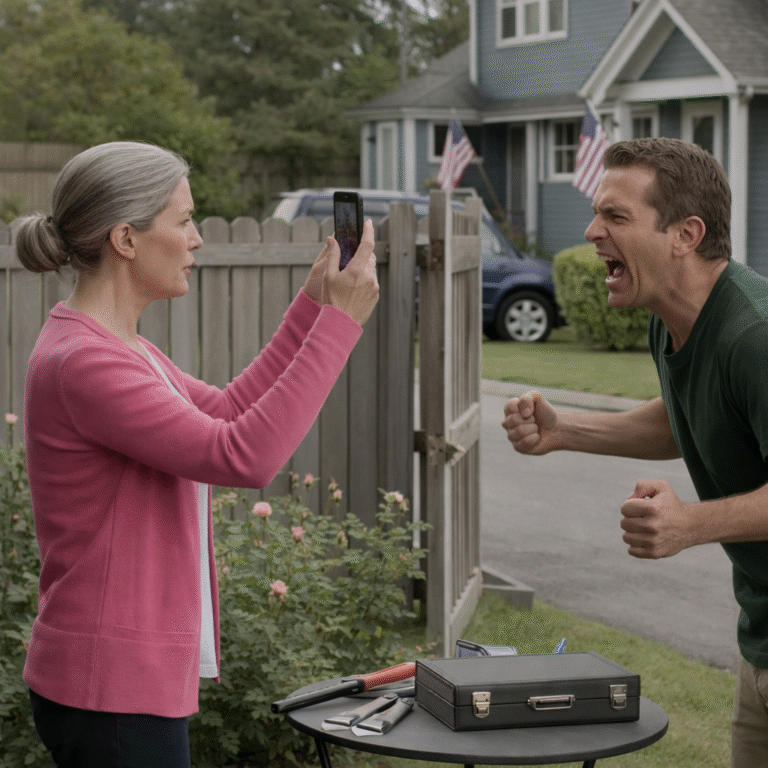
A figure in a gray hoodie and a baseball cap, grinning smugly as he held a can of expanding foam and sprayed it all over my doorframe. His cap was pulled low, but I recognized the lazy gait, the cocky tilt of his shoulders, the familiar profile.
Parker.
Every movement was an insult. He did this because he thought I wouldn’t fight back. Because he thought I’d see it as some stupid prank and slink back in shame.
He was wrong.
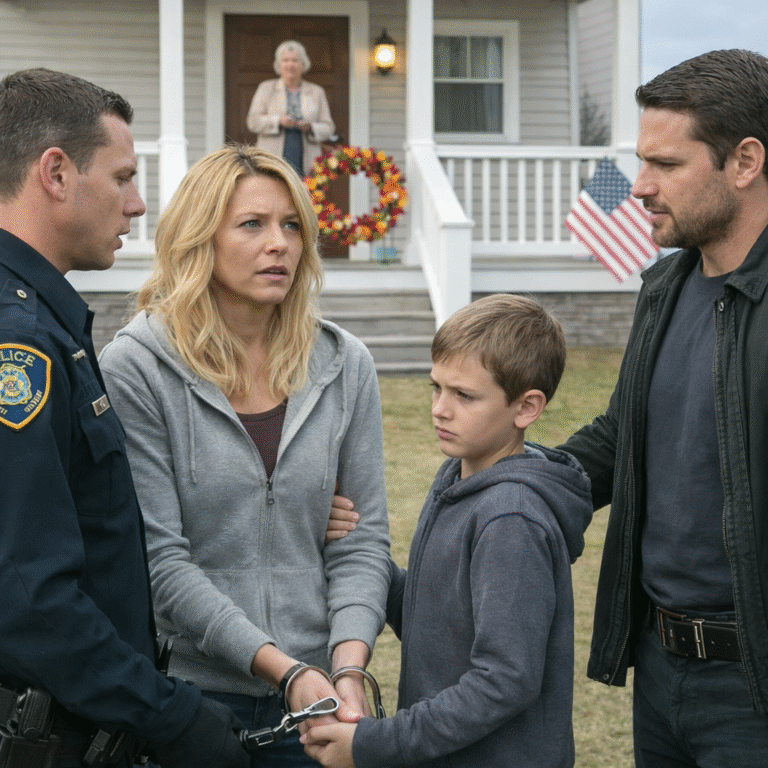
Calmly, I saved the video, took clear screenshots where his face and build were most visible, then called the police.
Thirty minutes later, a young police officer stood in front of my apartment building, his uniform crisp, his expression a mix of sympathy and professional distance. Through the open hallway window, I could hear the faint sounds of a Muni train in the distance and the hum of city traffic below.
I showed him the footage on my phone and explained the situation in crisp detail, leaving nothing out.
“Do you want to file a formal complaint?” he asked after a moment, his tone neutral but hesitant, as if he were hoping I’d say no and treat it as a harmless family spat.
I let out a cold chuckle. “I didn’t call you here for a friendly chat.”
He nodded, flipped open his notebook, and started an official report. “Parker—that’s your brother, right?”
I met his gaze, my voice ice cold.
“Not anymore.”
The next morning, my father called.
I stared at his name on the screen. Then I answered.
“Sophia, sweetheart,” he began, his voice tight, “does this really have to go this far?”
“Are you calling to ask me to drop the charges?” I asked.
“It’s not that,” he said quickly. “It’s just, you know how Parker is. He was upset. He didn’t mean any harm.”
I scoffed. “No harm? He sealed my door shut. What if I’d had an important meeting this morning and couldn’t leave? What if I had a cat inside? Or a child?”
Silence hummed on the other end of the line.
“He thought he could intimidate me,” I said. “I’ll show him he picked the wrong person.”
“Do you really want to push this that far?” my father asked quietly.
“It’s not me pushing anything,” I replied. “Parker did this. If he didn’t want consequences, he shouldn’t have acted like a reckless idiot.”
There was another pause. Then, reluctantly, he asked, “What do you want to drop the charges?”
“Thirty-three thousand dollars,” I said calmly.
“What?” he sputtered.
“Thirty-three thousand,” I repeated. “That covers the cost of repairing my door, potential legal fees if this drags out, and damages for harassment. I’d say that’s a pretty reasonable number.”
“This is extortion,” he snapped.
I chuckled coldly. “No, Dad. This is consequences.”
“Parker doesn’t have that kind of money,” he insisted.
“Then you and Mom can help him out,” I said. “You’ve been covering for him his whole life. This is just one more time.”
“You’re tearing this family apart,” he said, his voice breaking on the last word.
“This family tore itself apart a long time ago,” I replied, and hung up.
Three days later, my account showed an incoming transfer of exactly thirty-three thousand dollars from my parents’ joint account.
No message from my mother. No complaint from Parker. Even Olivia—who usually relished every opportunity to be cruel—was completely silent.
They thought sending the money would make me disappear. That I’d take the payout and fade quietly from their lives.
What they didn’t understand was this: I didn’t need them anymore.
I stood in front of my apartment door, now fully repaired, running my fingers over the smooth surface. The thirty-three thousand dollars wasn’t the important part. What mattered was that, for the first time, they had been forced to take responsibility for their actions.
They could hate me. They could call me a traitor. But for the first time in my life, they couldn’t force me to obey.
I took a sip of wine that night, staring out at the Bay Bridge lights in the distance, and smirked.
They thought they could break me.
In the end, they were the ones who lost.
I had thought that after sending the thirty-three thousand dollars, they would finally leave me alone.
I gave them too much credit.
Losing money was one thing. Losing control—that, they couldn’t handle.
When they could no longer manipulate me with their usual tricks, they played dirty.
It started with a flood of hypocritical messages from distant relatives whose faces I could barely remember—people who’d eaten at our Thanksgiving table maybe twice in my entire life.
Aunt Susan: Sophia, I’m very disappointed in you. Your parents sacrificed their whole lives for you, and this is how you repay them?
Uncle Mark: Don’t let money make you lose your humanity. Remember, family is forever.
Cousin Rachel: I can’t believe you’re heartless enough to abandon your parents like this. They’re about to lose their home. Don’t you feel any guilt?
I read each message, feeling equal parts amused and disgusted.
I knew exactly who was behind it.
My mother.
She couldn’t win against me with logic, so she used something else—the fear of social judgment. She spun an entirely new narrative for anyone who would listen: I was the ungrateful daughter abandoning her poor, aging parents, so greedy and heartless that I cut off all financial support, leaving them on the brink of losing their home.
A perfect sob story.
Except for one problem.
It wasn’t true.
I had carried their financial burdens for over a decade. I had paid their mortgage, covered their bills, funded Parker and Olivia’s lives without ever asking for anything in return. They weren’t abandoned.
They had used me.
And I was done.
I opened my laptop and logged into Facebook. I didn’t post often, but that day would be an exception. I didn’t need them to love me anymore. I just needed them to lose the ability to twist the truth.
My fingers moved swiftly across the keyboard, each word appearing on the screen, sharp and clear, leaving no room for deception.
I tried to be a good daughter, I wrote, but they never truly loved me. For over ten years, I paid hundreds of thousands of dollars for my parents—covering their mortgage, bills, and even my siblings’ tuition. I never complained because I believed family should support each other.
But when my parents wrote their will, they left everything to Parker and Olivia. When I asked why, their answer was, “Because you have a career. You don’t need it.” When I protested, they called me selfish. When I stopped financing them, they called me a traitor. And now they are spreading lies that I abandoned them, that they are about to lose their home, that I am a heartless daughter.
Here’s the truth: they are not losing their home. They are only losing the free financial support I provided for years. I’m not sharing this for sympathy. I’m sharing it for anyone else who has been exploited by their own family to know this:
You do not have to keep suffering. Setting boundaries is not ungrateful. Refusing to be used is not betrayal. And sometimes family isn’t defined by blood, but by those who truly respect and appreciate you. I have walked away from their lives. And I have no regrets.
I read it twice, then hit Post.
Within an hour, the post had hundreds of shares and thousands of comments. Notifications flooded my screen. Some were supportive:
“I’ve been in your position. Stay strong. You don’t owe them anything. You’ve done more than enough.”
“I admire your courage for speaking out. Thank you for saying what so many of us are afraid to.”
Others were critical:
“Family may be flawed, but they’re still family. Don’t air your dirty laundry like this.”
“She’s just looking for attention. Shameful to expose your own parents online.”
I didn’t care.
I had expected this.
Three hours after I posted, my mother called from a new number.
“Sophia, what the hell are you doing?” she demanded the moment I answered.
“Calmly telling the truth,” I said.
“You’re destroying this family’s reputation,” she hissed.
“No, Mom,” I replied. “You did that the moment you decided to turn me into the villain in your story.”
“You’re going to regret this,” she snapped.
“No,” I said, my voice steady. “You’re the one who will regret it.”
I hung up, feeling lighter than ever.
They couldn’t hide the truth anymore.
For the first time, I had taken back my voice.
Three months after exposing the truth, I had never felt so free.
No more guilt-tripping messages. No more heavy phone calls. No one could manipulate me with whispered accusations or veiled threats. I was finally living for myself.
At first, the emptiness was strange. Losing a family, no matter how toxic, leaves a weird, echoing void. There were moments when I’d walk past a family in a grocery store—kids arguing over cereal, parents absentmindedly pushing the cart—and feel something twist in my chest.
But then I realized it wasn’t a loss.
It was freedom.
I threw myself into my career, poured my energy into projects I actually cared about, and watched my savings grow for the first time in my adult life. With no one leeching off my income, my money was mine.
Completely mine.
I signed up for a photography class in the Mission District, something I’d never dared to make time for before. I started traveling, finally booking the trips I’d always postponed because there was always another “emergency” back home.
Three months later, I was in Paris, sipping coffee at a little café by the Seine, watching the winter light bounce off the river and the backs of passing boats.
Six months later, I stood atop Machu Picchu, the fierce wind rushing through the ancient ruins, the sky so close it felt like I could reach up and touch it.
For the first time in my life, I was responsible for no one but myself.
And it was worth more than any inheritance.
I didn’t follow my family anymore—not on social media, not through calls or texts. But news of them still found its way to me through old acquaintances, mutual contacts, and whispered comments at industry events in Sacramento.
My mother had taken a job as a waitress at a small diner off a highway exit—a former coworker of hers happened to see her there and later told me she no longer had the aura of a woman who ordered everyone around. No more spa days, no more designer clothes. She was someone who had to clock in and out like everyone else.
My father, the man who stayed silent through every injustice I endured, was now working as a laborer at a construction supply store, hauling lumber and bags of cement instead of sitting in his recliner, asking me to Venmo him to “bridge a gap” until payday. He had no one left to rely on. No one to pay his bills for him.
Parker was unemployed. He had laughed at me when I walked away, convinced the world would always bend for him. Now, with no one funding his endless failed startup ventures and half-finished certifications, he was just another man with a list of unfinished things and no one to blame.
Olivia was still clinging to her delusions, desperately trying to become a social media star. But there were no more all-inclusive vacations to curate content from, no more luxury shopping sprees for designer outfits to flaunt on Instagram. Her feed grew quieter. The glossy trips gave way to throwback posts and recycled selfies.
My entire family was struggling.
And I didn’t feel guilty.
I had given them a chance. I had given them more than a decade of chances.
They ruined it with their own greed.
A year later, I met Alex.
I hadn’t been looking for love. I wasn’t on any dating apps. I’d made peace with the idea of building a life alone, surrounded by the people I chose instead of the ones I was born to.
He came into my life like a quiet breeze, asking for nothing, expecting nothing.
We met on a hiking trip in Yosemite organized by mutual friends. At first, he blended into the group—worn boots, sun-faded baseball cap, an easy laugh. I thought he was just another passing stranger I’d make small talk with and forget about by Monday.
But then, when the others were arguing about which trail to take next and I found myself standing alone, staring at the pine trees, he walked over.
He didn’t ask invasive questions. He didn’t try to impress me. He just listened—really listened—when I talked. He didn’t flinch when I mentioned my family. He didn’t offer hollow platitudes or pressure me to reconcile.
He simply accepted me as I was.
For the first time in my life, I didn’t feel like I had to prove my worth. I didn’t have to buy love or earn my place.
I only had to be myself.
Months later, on a December evening, I stood on my apartment balcony, watching the city lights shimmer below. It was one of those California winter nights where the air was cold enough to sting your cheeks but not quite cold enough for snow, the sky a deep navy blue over San Francisco’s skyline.
No one controlled me anymore.
No one exploited me anymore.
I didn’t need my old family.
I once thought being cut out of the will was the ultimate humiliation—a final, unforgivable betrayal.
But now I realized it had been the greatest gift they’d ever given me.
Because without it, I might never have walked away.
This story isn’t just a tale of family betrayal. It’s the journey of someone who once believed that sacrifice would eventually buy love and recognition. The truth is, many people find themselves trapped in the cycle of being used by the very people who should cherish them the most.
Setting boundaries isn’t selfish. It’s self-respect.
Sometimes losing a toxic family isn’t a loss at all. It’s an opportunity to find freedom, happiness, and the people who truly value you for who you are, not for what you can give.
What do you think about this story? Have you ever experienced something similar, or known someone who has?