My Husband Forgot to Hang Up, What He Said to My Pregnant Best Friend Ended Everything
Rain stitched the windshield into a moving mosaic, streetlights blurring into amber smears as Seattle folded into itself at dusk. I had always liked driving in weather like this. The city felt quieter, wrapped in something private. The Bluetooth in my car hummed softly, a small blue icon glowing on the dash, doing what it always did. Making life easier.
That night, it did the opposite.
I called Richard out of habit more than necessity. Fifteen years of marriage had trained me into small check-ins, into sharing the dull edges of a day. I was leaving my mother’s house earlier than planned and wanted to let him know I would be home in forty minutes, maybe less if traffic loosened.
He answered quickly. Too quickly.
“Hey, babe,” he said, breathy, like he had jogged up a flight of stairs. He used that tone whenever he wanted to sound indispensable. Busy. Needed. “I’m in the middle of something. Wrapping it up. Love you. See you soon.”
I smiled without thinking. That voice had once meant ambition. Stability. A man working hard for our future.
“Love you too,” I said. “I was thinking I’d grab dinner on the way, maybe Thai or that new—”
Silence cut me off.
I assumed he had hung up. He often did, distracted, moving on to the next thing. I adjusted my grip on the steering wheel and focused on the road, on the rhythmic sweep of the wipers, on the soft percussion of rain hitting metal.
Then his voice came back.
Not the one he used with me.
“God,” he said, exhaling sharply. “She is so suffocating. I almost slipped and called her by your name again.”
My chest locked. My fingers tightened until my knuckles burned. I looked at the dashboard. The call timer was still counting upward, green numbers ticking like a quiet bomb.
He had not hung up.
For a moment, I considered speaking. Shouting. Announcing myself like a ghost stepping into a room. My mouth opened.
Then another voice answered him.
Light. Familiar. Wrapped in a laugh I had heard through coffee dates, through late-night confessions, through years of shared life.
“You’d better not,” the woman said, amused. “I don’t want my son confused about who his real family is.”
Monica.
My best friend since college. The woman who stood beside me at my wedding, fingers laced with mine as we waited for music to swell. The woman I had held three months earlier as she cried into my sweater, terrified and alone, pregnant and abandoned.
The road tilted. I drifted into the slow lane without meaning to, my heart slamming so hard it felt visible, like it might punch through my ribs and announce itself to the world.
“Relax,” Richard said, his voice smooth now, confident in a way I had not heard in years. “Laura has no idea. She lives in that bubble her father built for her. She thinks I’m killing myself at work, building our future. I’m just waiting. Counting days.”
I tasted metal. My breath came shallow, quick, like the air had thinned inside the car.
“I’m tired of waiting,” Monica said, her voice slipping into something petulant. I could see her without trying. The careful hair, the soft maternity clothes I had bought her last week, the hand always resting on her belly. “I’m six months along. I can’t keep hiding under these sweaters. It’s humiliating pretending this baby belongs to some guy who disappeared.”
“Just hold on,” Richard replied, colder now, each word placed with intention. “Next month. Her father’s trust distribution clears. Five million dollars. Once it hits, I move it offshore, file the paperwork, and we’re gone. New life. Clean slate.”
My vision blurred. Rain streaked down the windshield, bending the city into something unrecognizable.
“We’ll take the baby,” he continued. “And leave her with that big empty house and her dried-up womb.”
The words landed like a physical blow.
My hands went numb. The steering wheel felt foreign, slick under my palms.
He knew. He had always known. Every appointment. Every injection. Every silent drive home after another failed attempt. The miscarriages I had named in my head and buried in my body. The way I carried that grief like a private shame, convinced my inability had hollowed me out.
Dried-up womb.
“She’s too old to give me a son anyway,” Richard went on, almost conversational. “She’s barren. You’re not. You’re giving me what she never could. A legacy. An heir.”
A sound filled the car then, tinny but unmistakable.
Whoosh. Whoosh. Whoosh.
Amplified. Steady.
Monica laughed softly. “Hear that? That’s your son’s heartbeat. Strong. Perfect. Everything hers never was.”
I jerked the wheel slightly, tires skidding just enough to earn an angry horn from a passing truck. I pulled onto the shoulder, hazard lights flashing, my body shaking so violently I had to press my head back against the seat.
They were at a doctor’s appointment.
The one Monica had cried about yesterday. The one she had begged off attending alone because she was scared. The one I had offered to go to with her. The one I had given her two hundred dollars for because she said she could not afford the copay.
I heard them kiss. Soft. Intimate. The sound of mouths that knew each other well. Richard had not touched me like that in over a year. Stress, he had said. Pressure. Exhaustion.
“I love you,” he whispered to her, tenderness threading through his voice like a blade.
“We just have to keep pretending,” he added. “Let her pay for everything. The birth. The nursery. Let her think she’s going to be the doting aunt. And then we vanish. Her money funds the whole thing.”
“What if she fights?” Monica asked.
“She won’t,” Richard said, smug. “I’ve been documenting her. The work hours. The mood swings. Her obsession with trying to get pregnant. My lawyer says we can make her look unstable. Between that and the prenup, she’ll be lucky to keep the house.”
I stared at the rain-smeared glass, at my own reflection layered faintly over the city. The call timer crept past four minutes.
Then the line went dead.
The silence that followed felt enormous. Rain drummed on the roof, heavy and relentless. I sat there, hazard lights blinking, as the life I recognized folded in on itself.
My marriage had been a performance. My closest friendship a long con. The baby I had already learned to love was not a symbol of hope but a weapon they planned to use against me.
My phone buzzed.
Richard: Sorry babe, meeting ran late. Picking up Thai. Love you.
Another vibration.
Monica: Hey Auntie Laura! Baby’s kicking like crazy today. Can’t wait to see you tomorrow for nursery planning. Love you so much.
Something tore out of me then. A sound that did not feel human, raw and jagged, filling the car until my throat burned.
When it faded, something else took its place.
Cold. Focused. Awake.
They thought I was gentle to the point of stupidity. A wallet. A woman so desperate for family she would overlook anything. They were wrong.
I wiped my face and looked into the rearview mirror. My eyes were red, swollen, but clear.
“Okay,” I whispered. “Let’s play.”
I did not go home.
Instead, I drove downtown, parked beneath flickering lights, and sat in a coffee shop that smelled like burned beans and wet coats. I ordered a black coffee and let it cool untouched while the truth assembled itself piece by piece.
The affair had been going on at least six months. Probably longer. Monica’s pregnancy was not an accident. It was planned. The money from my father’s estate was their finish line. Every gift I had given her, every check, every act of kindness had been repurposed into their escape fund.
Scenes replayed with brutal clarity. Richard’s late nights. Monica’s conveniently timed breakdowns. The nursery we had started in our guest room. Their gentle insistence that I add Richard as a beneficiary to the trust because married people shared everything.
I had almost signed the paperwork.
Almost handed them everything.
But the documents were still unsigned. The money was still mine.
That realization steadied me.
I opened my laptop and made the first call.
Margaret Chen answered on the second ring. She had managed my father’s estate with precision and kindness, a woman who missed nothing.
I told her everything. The call. The plan. The money.
“Do not confront them,” she said immediately. “Not yet. We freeze the trust distribution. We document. You save everything. Texts. Emails. Transactions. I will bring in a private investigator. We move quietly.”
“What about the prenup?” I asked.
“If there is infidelity and fraud, it will not protect him,” she replied. “Washington law does not reward deception.”
The second call was to my mother. She listened without interruption.
“What do you need?” she asked when I finished.
“I need you to act like nothing is wrong.”
A pause. Then, “Done. And Laura? Your father would want you to fight.”
By the time I left the coffee shop, the rain had slowed to a mist. The city looked sharper, edges defined.
I had been broken open.
Now, I was paying attention.
James Rivera met me the following morning in a quiet diner just south of downtown, the kind of place where the coffee never tasted quite right and no one looked at you twice. He was early. Mid-forties, neat but not flashy, eyes that cataloged everything without seeming to. A former cop, Margaret had said. Someone who understood patience.
I slid into the booth across from him and handed over my phone without a word.
He listened to the recording through earbuds, his expression tightening incrementally as Richard’s voice filled the space between us. When it ended, he removed one earbud and set the phone carefully on the table, as if it were fragile.
“This is bad,” he said. “For them.”
“I need more than bad,” I replied. My voice surprised me. It was steady. Empty of tears.
“You’ll have it,” he said. “But you need to understand something. This only works if you stay invisible. No changes. No confrontations. No slips.”
I nodded. I was already practicing.
“How much access have they had to your money?” he asked.
I opened a folder and slid bank statements across the table. Highlighted lines marked transfers to Monica. Rent. Medical bills. Baby supplies. Emergency expenses that now looked suspiciously vague. Almost forty thousand dollars in six months.
James whistled under his breath. “They got comfortable.”
“And Richard?”
I passed him another stack. Credit card charges that did not align with the dinners he claimed were client meetings. Hotel charges from cities he had never mentioned. A car loan in both our names that I had barely driven.
James leaned back. “We’ll need three weeks. Photos. Video. Patterns. Financial tracing. I want you to act like the happiest woman in the room.”
My stomach tightened. “I don’t know if I can look at them.”
“You can,” he said quietly. “Because you are not weak. And because in three weeks, this ends.”
Three weeks.
I went home that night and kissed my husband on the cheek. He smelled like a cologne I did not recognize. He asked about my day. I answered honestly but selectively. My mother. Traffic. Rain.
I slept on my side of the bed, staring at the ceiling, counting breaths until morning.
The weeks that followed felt like living inside a glass box. Everything was visible. Everything distorted.
I smiled more. Laughed at jokes that tasted like ash. I listened to Monica talk about baby names while she folded tiny clothes I had paid for. I pretended not to notice the way Richard watched her when he thought I was not looking. The way their timing aligned. The way lies stacked neatly atop one another.
James sent updates every few days. Grainy photos at first. Then clearer ones. Richard and Monica entering restaurants together. Exiting hotels. His hand resting on her back in a way that spoke of ownership.
Margaret moved just as quietly. Paperwork filed under neutral language. Account freezes disguised as routine reviews. Legal scaffolding built while my husband slept beside me, dreaming of money he believed was already his.
I threw Monica a baby shower.
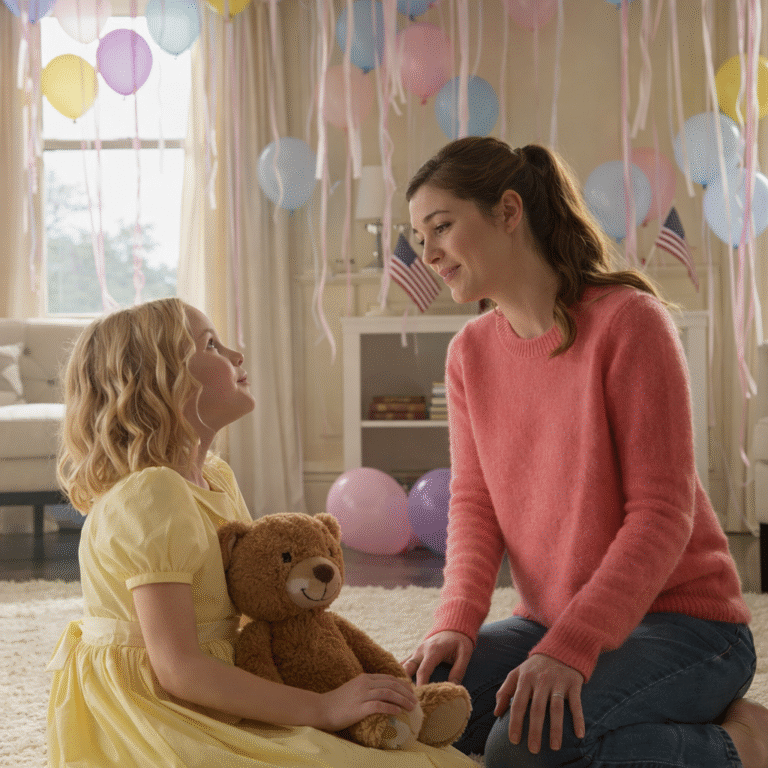
Pink and gold decorations. Finger sandwiches. Champagne flutes filled with sparkling cider. I gave a speech about friendship and resilience. About how honored I was to be part of her child’s life. She cried. So did several guests.
Richard stood in the corner, watching me with something like awe. Or relief.
James sent a message that night.
We have enough.
The night before the trust distribution, I set the final piece.
I told Richard I had signed the papers.
His reaction was immediate and unguarded. His eyes brightened. His hands shook as he pulled me into an embrace that felt rehearsed.
“This changes everything,” he said.
“Yes,” I agreed. “It does.”
That night, he touched me like a task to be completed. I stared at the ceiling and waited.
Morning came gray and slow.
Richard woke before dawn, already reaching for his laptop. I watched from the bed as anticipation gave way to confusion.
“Laura,” he said, trying to keep his voice calm. “There’s an issue.”
I sat up, wrapping the sheet around myself. “What kind of issue?”
“The account access. It says restricted.”
“Oh,” I said. “That.”
He turned toward me, panic leaking through his composure. “What do you mean, that?”
I played the recording.
His voice filled the room, ugly and exposed.
He went pale.
“You forgot to hang up,” I said. “Four minutes and seventeen seconds.”
He tried pleading. Then anger. Then disbelief. I stood still through all of it.
“I filed this morning,” I told him. “Divorce. Fraud. Attempted theft of inheritance. You have an hour to leave.”
“You can’t do this,” he said.
“I already have.”
Fifty-eight minutes later, the house was quiet.
Monica came that afternoon.
She arrived glowing, one hand on her stomach, chatting about paint samples. I let her speak. Five minutes. Then I set the photos on the table.
Her face collapsed.
She cried. Apologized. Tried to explain.
I did not raise my voice.
I told her about the lawsuit. About the money. About Richard filing for custody. About consequences.
She left shaking.
The months that followed were brutal but clean. Depositions. Filings. Silence from people who had chosen sides.
Richard lost everything he thought he was entitled to. Monica fought battles she could not afford.
The trust cleared months later. Untouched.
I stood in the empty nursery one last time before converting it into an office. Sunlight streamed through the window, dust motes floating like quiet witnesses.
I was not broken.
I was free.
The legal process stretched on for eight months, long enough for seasons to change, long enough for anger to cool into something steadier. I learned quickly that courtrooms have their own weather. Fluorescent lights that never warmed. Air that smelled faintly of paper and old coffee. The quiet rustle of suits shifting in hard chairs.
Richard tried to fight. He hired an aggressive attorney who leaned heavily on the prenup, on selective narratives, on the version of me they had planned to invent. Unstable. Obsessed. Emotionally distant. It unraveled quickly.
James’s evidence spoke without emotion. Time-stamped photographs. Financial trails. Hotel receipts matched to dates Richard claimed he was out of town for work. Emails recovered from a laptop he had left open on the kitchen counter one careless afternoon, messages outlining timelines and transfers, language that reduced me to an obstacle.
The recording did the rest.
Hearing his own words played back in court changed him. I watched it happen. The way his shoulders tightened. The way his confidence leaked out through his eyes. He stopped looking at me after that.
The judge did not hesitate. The prenup was ruled unenforceable due to infidelity and fraud. The attempt to access my inheritance was documented clearly enough that criminal charges were considered, then quietly leveraged into a settlement that stripped Richard of any remaining leverage. He walked away with personal belongings and debt. Nothing else.
Monica’s case moved separately, slower and uglier.
She gave birth to a boy three weeks before her first court date. A son, exactly as they had planned. I saw the announcement online through mutual acquaintances. Blue blanket. Tiny fist. A name Richard had once suggested casually over dinner, months earlier, as if testing it out.
Richard filed for custody not because he wanted to be a father, but because his attorney advised it would apply pressure. It worked, briefly. Monica’s savings evaporated into legal fees. She tried to settle. I declined. Every dollar I had given her under false pretenses was documented. Every transfer traced.
The judgment ordered restitution with interest.
She stopped calling me after that.
The trust distribution cleared ten months after the rainy Tuesday that had broken everything open. Five million dollars, transferred cleanly, untouched by anyone else’s hands. I stared at the number longer than I expected, not because it felt like victory, but because it felt like finality.
I moved most of it immediately. Investments. Accounts that required multiple signatures. Structures my father would have approved of. I allocated a portion to organizations supporting fertility research and counseling, places where women were allowed to grieve openly without being reduced to outcomes or statistics.
I kept enough to breathe.
The house felt different once Richard’s things were gone. Quieter. Not empty, just honest. I repainted the bedroom. Sold the car we had shared. Converted the nursery into an office with tall shelves and a wide desk near the window. I worked there in the mornings, light spilling across the floor, coffee cooling beside my laptop.
I was forty-two when the divorce finalized.
The number surprised people more than it surprised me. I had been aging under pressure for years. Without it, time felt softer.
I started dating slowly. Coffee first. Long walks. Conversations without urgency. I paid attention to how men spoke about their pasts, about money, about disappointment. I learned that skepticism did not make me bitter. It made me careful.
Some nights, loneliness visited. It always had. The difference was that now it came without betrayal attached.
I reconnected with friends I had drifted from over the years, people who never needed my generosity to justify staying close. We laughed about things that did not matter. We talked about things that did.
Once, months later, I ran into Richard downtown. He looked older. Smaller. He did not approach me. I did not acknowledge him. The city moved around us, indifferent.
I still drive the same car. The Bluetooth still lights up when calls come in. Sometimes, when rain hits the windshield just right, I think about that evening. How close I came to signing away everything. How easily trust can be used as a weapon.
Mostly, though, I think about the moment I chose not to collapse.
I did not scream in public. I did not beg. I did not unravel. I listened. I planned. I protected myself.
The recording lasted four minutes and seventeen seconds.
It was enough.