My 31st Birthday Dinner Turned Into a Public Disownment, and I Walked Out Smiling
The first thing I remember about that night is the way the candlelight made everything look softer than it really was.
It was one of those restaurants where the walls are the color of old cream, where the lighting is designed to flatter the living and forgive the guilty. The kind of place my mother loved because it made every table look like a scene from a magazine. Linen folded into crisp triangles. Glasses so thin they felt like they might disappear between your fingers. A low murmur of conversation that never rose above polite, as if volume itself were poor taste.
I’d been there before, not often. Not because I couldn’t afford it, but because I’d spent years saving my money the way you save your breath when you’re walking uphill. And because in the Dixon family, restaurants like this weren’t about enjoying food. They were about being seen.
My mother insisted we reserve the private room.
“Fifteen people,” she’d said over the phone earlier that week, her voice bright in a way that made my stomach tighten. “Family. A proper birthday dinner. People who love you.”
She said it the way she said “proper” about everything. As if anything outside her definition didn’t count.
I should have recognized the setup. I should have recognized the sweetness in her tone for what it was: not affection, but preparation. My mother rarely softened unless she was about to sharpen something.
I arrived a few minutes early anyway. That’s what I do. Years of working in hospitality trained it into my bones: arrive early, look composed, be ready to adjust to other people’s needs. Even when I told myself I was walking in as a daughter, not as staff, my body didn’t fully believe it.
The hostess at the front led me down a quiet hallway to the private room. The carpet muffled my steps. The walls held framed black-and-white photographs of Chicago at night, all gleaming streets and old glamour. For a moment, the hallway felt like a tunnel into something inevitable.
When the door opened, I saw my family already settled into their positions like they’d taken their marks.
My father sat near the head of the table. Robert Dixon, posture straight, suit flawless, expression controlled. Even his stillness looked expensive. He glanced up at me, then back down at his watch as if he were timing my arrival.
My mother sat close to him, Eleanor Dixon, her hair styled perfectly, her earrings catching the candlelight. She had that particular smile she used in public, the one that suggested kindness while communicating ownership.
And Victoria, my sister, sat at an angle that gave her a clear view of me.
She was holding her phone.
Not casually, not absentmindedly, not the way someone scrolls or checks a message. It was held with intention, camera facing outward, lens angled precisely toward the seat that had been arranged for me.
The sight of it did something to my chest. Not panic exactly. More like the quiet recognition of an old pattern.
Victoria has always loved evidence.
Not evidence of her work, or her talent, or her achievements. Evidence of other people’s vulnerability. Evidence of moments she could replay later for entertainment or leverage.
She smiled as I walked in, and that smile carried a message I understood immediately.
You’re the show.
I kept my face neutral. I kept my shoulders relaxed. I moved toward my seat as if nothing about this was strange. My heels clicked softly against the floor, measured and steady.
“Happy birthday,” my mother said, loud enough for the room to notice. As if the staff outside the door needed to hear how supportive she was.
“Thank you,” I replied.
My father didn’t stand. He didn’t hug me. He didn’t look me in the eyes long enough for warmth to land. He simply nodded once, the way a man nods when acknowledging a delivery.
Victoria adjusted her phone angle slightly.
I sat down.
The chair cushion was plush. The table was set so precisely it looked staged. My napkin lay folded on the plate, and beside it was a menu printed in elegant script. The air smelled like butter and wine and something floral that was supposed to feel romantic and instead felt like an attempt at disguise.
Extended family filled the room. An aunt in diamonds that caught every flicker of light. An uncle with a too-loud laugh. Cousins who looked more like spectators than loved ones. Fifteen people, my mother had said.
Fifteen witnesses.
I felt that clearly now, the way you feel the weight of a room when you walk into it and realize it isn’t yours.
My mother ordered champagne immediately. Not just champagne, but the kind with a price tag she made sure was audible when she spoke.
“Let’s do the crystal bottle,” she told the waiter, her voice carrying. “Nothing but the best for a special occasion.”
The waiter nodded, professionally unbothered. But I saw the brief flicker in his eyes, the one experienced staff get when they recognize a power dynamic. He looked at me for half a second, as if checking whether I was truly the guest of honor or simply the excuse.
Victoria’s phone remained steady, recording.
I smiled slightly, not because I felt joyful, but because I knew how to wear a pleasant expression like armor. I’d been trained for it in more than one place.
When the champagne arrived, my mother lifted her glass.
“To Giana’s future,” she said, and her smile widened. “May it finally begin.”
The room made approving noises. Glasses clinked. A cousin murmured something about “new chapters.”
Her words sounded like a blessing to everyone else.
To me, it sounded like a warning disguised in lace.
My father kept checking his watch. Victoria’s eyes flicked between my face and her screen. My aunt Patricia leaned in toward my mother and whispered with the excitement of someone watching theater.
I watched all of them the way I watch a dining room when there’s tension at a table.
Who leans forward.
Who avoids eye contact.
Who smiles too fast.
Who doesn’t drink.
Who drinks too quickly.
I noticed everything. It’s how I survive.
And I knew, with a certainty that settled in my stomach like a stone, that they were waiting for something. For a moment they had planned down to the second.
I could have left then. I could have stood up quietly, walked out before the first course arrived. No one could have stopped me.
But I stayed.
Not because I was afraid.
Because I wanted to see it.
I wanted to confirm that the unease I’d lived with for years wasn’t my imagination. I wanted to watch their faces when my reaction didn’t match the story they were filming.
Because there was a truth they didn’t know. Not yet.
A truth that had been sitting in my life like a sealed envelope, waiting for the right moment to be opened.
My name is Giana Dixon.
I’m thirty-one years old.
And my family thought I was still the girl who would swallow humiliation with a smile and clean up the mess afterward.
They didn’t know I’d already changed the map.
They didn’t know that while they were planning this dinner, I had already signed a contract that would shift the power in ways they couldn’t even imagine.
But I’m getting ahead of myself.
To understand why this birthday dinner mattered, you have to understand what it meant to grow up as the “wrong” Dixon.
In our family, success wasn’t just encouraged. It was required. It was the proof of belonging.
My father, Robert, built his identity in boardrooms and balance sheets. He was the kind of executive who wore calm like a uniform. He spoke in forecasts. He treated emotions like inefficiencies.
My mother, Eleanor, built hers in curated generosity. A foundation with her name on it, a calendar full of galas, committees, donor luncheons. She loved the look of compassion, the way it photographed.
And Victoria, my sister, learned to mirror them both. She took their language, their values, their posture and made it her own. She became the daughter they wanted so thoroughly that sometimes it seemed like she’d been carved for the role.
I wasn’t carved the same way.
I loved people in ways that weren’t measurable. I loved noticing what someone needed before they said it. I loved the invisible choreography of a room. The way you can change someone’s entire experience with one well-timed gesture and the right words in the right tone.
I chose hospitality because it felt like a craft. Not the shallow version people joke about, but the real art of making someone feel safe and respected. It requires intelligence, discipline, cultural fluency, emotional control. It requires reading someone’s face and deciding whether to give space or comfort. It requires translating tension into ease.
My family heard “hospitality” and saw a uniform.
They heard “hostess” and saw someone who could be replaced.
They never asked why the Meridian hired me. They never asked why executives requested me by name. They never asked what I actually did.
They didn’t want to know.
In their world, titles mattered more than talent.
The Meridian wasn’t a casual restaurant. It was Chicago’s kind of luxury, the type that doesn’t announce itself loudly because it doesn’t need to. Two Michelin stars means every detail is judged. Every misstep is noticed. Every guest is a potential headline.
I started there as a hostess because I wanted to learn every layer of the experience from the ground up. I wanted to understand the rhythm of a dining room, the pace of service, the quiet politics between kitchen and floor. I wanted to become the kind of leader who could step into any role and know what it felt like.
My father heard that and translated it into: She didn’t get a “real” job.
My mother heard that and translated it into: People will ask what she does, and I won’t know how to make it sound impressive.
Victoria heard that and translated it into: Opportunity.
She used it the way she used everything: as a lever.
The comparisons started small when I was younger, the way many families do it without acknowledging the damage. A comment at dinner. A joke at a holiday. A sigh when someone asked about me.
But it grew.
Thanksgiving the year before my thirty-first birthday was when the pattern sharpened into cruelty.
My mother asked, in front of guests, “Giana is still at that restaurant?”
Her voice dripped with disappointment as if she were describing a stain on a shirt.
“At your age,” she added, “I was already on three boards.”
My father’s business partner asked about his daughters. My father gestured to Victoria and introduced her as if she were his only child who counted. “This is Victoria. She handles negotiations. She’s exceptional.”
I stood there, smiling politely, invisible.
That night, after everyone left, I sat in my car for a long time and stared at my steering wheel until my hands stopped trembling.
Not because I was weak.
Because I was tired.
I’d been tired for years.
I’d been tired in a way that doesn’t show on the surface, a quiet fatigue that lives in the body. The kind that makes you clench your jaw without realizing it. The kind that makes your stomach twist when your phone lights up with your mother’s name.
My doctor noticed before anyone else did.
During a routine checkup, she looked at my results and frowned. “Your stress markers are very high,” she said gently. “Have you been sleeping?”
“Not well,” I admitted.
“And the headaches?”
“More often,” I said, trying to sound casual.
She leaned back in her chair and held my gaze. “Your body is telling you something,” she said. “You can’t live like this forever.”
I wanted to laugh. Forever was never the plan. I just didn’t know how to step out of the gravity of my family.
My therapist asked a question that haunted me for weeks.
“When was the last time you made a decision without factoring in your family’s reaction?”
I opened my mouth to answer.
Nothing came out.
That silence told me more than words could.
My family’s pressure didn’t stop at judgment. It extended into expectation.
My mother’s foundation asked for donations constantly, and the requests always came wrapped in the language of obligation.
“Family supports family,” she’d say.
Support, however, only flowed in one direction.
I donated thousands, often quietly, because I believed generosity mattered. Because I thought maybe if I helped enough, they’d soften.
Then I discovered my mother had been presenting my contributions as her own.
I learned about it through a board meeting I wasn’t invited to. A meeting where my name was used like a prop.
“She contributed fifty thousand this quarter,” my mother announced, as if she were speaking about her own generosity. Her voice was proud, as if my money was proof of her leadership.
I sat in my car afterward and stared at my bank app until my eyes blurred.
It wasn’t just financial. It was identity. They were using my efforts to polish their image while treating me like a stain.
The final straw wasn’t the board meeting alone. It was the way my mother texted me weeks later, as if my time belonged to her, as if I was hired help.
Need you to serve at the gala. Wear your uniform. Unpaid, obviously. It’s for charity.
When I hesitated, she followed with something that made my throat go tight.
It’s the least you can do, considering we’re still claiming you as a dependent.
Dependent.
At thirty-one.
The word sat in my chest like something rotten.
My father’s cruelty came through disappointment.
During our monthly lunch, he stared at me over his drink and said, “Thirty-one years old, Giana. When will you finally do something that makes us proud? Victoria reached partner-track by your age.”
“I’m proud of my work,” I said quietly.
He signaled for the check like my sentence bored him.
“Taking reservations isn’t a career,” he said. “It’s what college students do for spending money.”
I didn’t argue. I’d learned arguing just gave them more material to twist.
Victoria’s cruelty came wrapped in fake concern.
She forwarded a job posting for an assistant role. “This seems more your speed,” she wrote. “The CEO is single too.”
She added another line, the kind that looks harmless to outsiders and cuts like glass to someone who knows the tone.
It’s time you faced reality about your limitations.
Limitations.
As if speaking four languages fluently were a limitation. As if cultural intelligence were a party trick.
As if my calm, my discipline, my ability to carry a room were nothing.
The irony was that someone else had already seen the full picture.
It happened on an evening at the Meridian that should have been ordinary and became pivotal.
We had a high-profile reservation: a Japanese CEO and his executive team. Their arrival was timed precisely. Their table had been reserved for weeks. Everything should have been seamless.
But the system glitched. A small error that became a large disaster. Their table was given away. The private dining room they expected was occupied.
The maître d’ panicked. Staff scrambled. The air shifted, the way it does when a room senses something going wrong and guests start listening.
The CEO’s expression turned cold. His team stiffened. The energy wasn’t loud, but it was heavy with offense.
In their culture, the mistake wasn’t just inconvenience. It was disrespect.
And if they left, it wouldn’t just be one lost dinner. It would be reputation damage. Lost relationships. Lost future revenue.
I approached before anyone could make it worse.
I bowed properly. I apologized in Japanese, not in the generic way, but with the phrasing that acknowledged the depth of the failure. I kept my voice low and respectful. I let them see I understood the weight of the moment.
I offered our private space. I personally curated a menu designed around familiar flavors, comfort and honor, not novelty. I adjusted the pacing of service so it felt intentional rather than rushed. I made sure the wine pairing aligned with their preferences. I watched the CEO’s body language and responded before he had to ask.
It took hours.
By the end of the night, the anger had transformed.
Not into forgetfulness, but into respect.
He handed me his business card with both hands, which in his world carried meaning. It wasn’t casual. It was recognition.
Weeks later, his company signed a multi-million-dollar contract with us for international conferences.
David Brennan pulled me aside after the papers were finalized.
“The way you handled that situation,” he said, “was exceptional. You didn’t just save the evening. You turned it into our biggest corporate account.”
I shrugged, partly out of habit, partly because humility was safer than pride in a workplace where ego can be punished.
“It was just hospitality,” I said.
David shook his head.
“No,” he said firmly. “It was leadership. And the right people noticed.”
I didn’t understand what he meant until later that week, when I was sitting in the breakroom, eating a quick meal between shifts, and an email arrived.
The sender name didn’t immediately register. The domain did.
Grand Plaza Hotels.
The subject line read: Regarding your exceptional service.
My hands went still. The breakroom lights hummed softly. The smell of dish soap and coffee filled the space. I could hear the faint clatter of the kitchen beyond the door.
I opened it.
The email was short, clean, unmistakably written by someone who didn’t waste words.
Ms. Dixon, I believe your talents are being underutilized. Would you consider a conversation about your future?
Marcus Whitmore.
I stared at the screen until the letters blurred.
Marcus Whitmore was not a casual name in hospitality. Grand Plaza owned properties worldwide. Their brand was high-end, influential, powerful. The type of company that could reshape a career with one offer.
My heart beat hard against my ribs.
Not because I wanted revenge against my family.
Because I suddenly saw an exit.
A real one.
Not a fantasy. Not a someday.
A door.
I responded carefully, professionally, the way you do when you don’t trust luck yet.
Thank you for reaching out. I would be open to a conversation.
What followed was not a single meeting. It was a process that felt like being quietly evaluated by people who knew exactly what they were looking for.
There were interviews. Case studies. Questions about cultural intelligence, guest experience, leadership under pressure. There were scenarios designed to test whether my calm was real or rehearsed.
I poured myself into it the way I poured myself into everything I cared about.
Late nights after shifts. Research on global luxury service standards. Writing proposals with meticulous detail. Practicing how to present ideas clearly without apology.
I didn’t tell my family. Not because I wanted to surprise them, but because I didn’t trust what they would do if they knew.
My father had connections. My mother had influence. Victoria had a talent for sabotage dressed as concern.
I kept it quiet.
And then, on January 10th, I sat in an office with floor-to-ceiling windows and signed a contract.
The pen felt heavier than it should have. The paper was thick, expensive, formal.
Director of guest experience.
A salary number that made my stomach flip.
Equity. Benefits. An apartment in one of their flagship properties. A start date: March 1st.
Marcus Whitmore looked across the desk at me as if he were offering something more than a job.
“Welcome,” he said, and his voice was warm but firm. “You’ve earned this.”
I walked out of that building and stood on the sidewalk in Chicago wind, my cheeks cold, my hands gripping the folder like it might fly away.
I didn’t cry.
I just breathed, deep and steady, as if I’d been holding my breath for years and didn’t realize it.
March 1st was coming.
My life was already changing.
My family didn’t know.
And that brings me back to my birthday dinner.
Because by February 28th, the contract was signed. My resignation letter was drafted. My start date was set.
And my family had planned a private room at an elite French restaurant, fifteen witnesses, expensive champagne, and Victoria’s camera pointed at my face.
They thought they were controlling the story.
They were too late.
The verbal part began before appetizers arrived.
My mother leaned forward slightly, her smile sharp.
“Thirty-one years,” she said, voice carrying across the table. “Thirty-one years and you still have nothing to show for it.”
My cousin shifted uncomfortably. My aunt Patricia’s mouth tightened with interest. Victoria’s phone moved closer, zooming in.
My father added, “We gave you every opportunity,” as if he were listing charitable donations. “Private schools. Tuition. Connections.”
He didn’t look at me.
It felt like being spoken about rather than spoken to.
Victoria leaned in, eyes bright with anticipation.
“You embarrass us,” she said. “Every time someone asks what our sister does.”
She made the word sister sound like a joke.
“Still greeting people at the door,” she added, as if my job were a punchline.
My aunt Patricia chimed in with a sigh that was almost theatrical. “At your age,” she said, “it’s just such a shame.”
Uncle Thomas nodded as if he were agreeing with a business forecast. “Your cousins are directors, VPs, and you’re what? A hostess?”
The word hostess hung in the air like something sticky.
I listened.
I cut my food into neat, even pieces.
I chewed slowly.
Not because I wasn’t affected. My throat felt tight. My stomach churned faintly. I felt the old urge to shrink, to apologize, to promise improvement in whatever language they wanted to hear.
But another feeling sat beneath it.
A quiet calm.
Because their cruelty sounded different now. It sounded outdated. Like hearing someone mock a version of you that no longer exists.
My mother paused, waiting for my reaction.
“Nothing to say?” she pressed.
I lifted my eyes to hers.
“I’m listening,” I said simply. “Please continue.”
The room shifted.
They wanted tears. They wanted pleading. They wanted the kind of breakdown Victoria could replay later like a highlight reel.
My composure unsettled them.
Victoria’s eyebrows lifted. She adjusted her phone angle, trying to capture the crack that wasn’t coming.
My father cleared his throat, regaining his script.
“We’ve been patient,” he said. “But patience has limits.”
“So does obligation,” my mother added, and her hand moved toward her purse with deliberate slowness.
The movement had the weight of theater.
She pulled out a gold envelope.
It looked expensive. Heavy paper. Sealed neatly.
Victoria’s phone steadied, ready.
My mother slid it across the table toward me as if she were presenting a gift.
“Happy birthday, Giana,” she said, voice bright. “From all of us.”
I looked at the envelope.
My hands didn’t tremble yet. That came later, a small vibration in my fingers, the body reacting to something the mind is still processing.
I opened it.
Inside was a letter on Dixon family letterhead. The same letterhead my father used for deals and formal correspondence, as if disowning me were a business transaction.
The words were clinical.
We, the Dixon family, hereby formally disown Giana Marie Dixon, effective immediately. She is no longer recognized as a member of this family, entitled to no support, inheritance, or association with the Dixon name in any professional capacity.
Three signatures at the bottom.
Robert Dixon.
Eleanor Dixon.
Victoria Dixon.
The date: February 28th.
My birthday.
For a moment, the room felt too quiet, like sound had been sucked out. The only noise was soft jazz from somewhere beyond the door, the kind of music meant to make everything feel romantic.
The absurdity hit me first.
My family had turned my birthday into a legal performance.
They had printed their cruelty on formal paper.
They had signed it like an agreement.
And my sister was recording my face.
My fingers tightened slightly around the page, the paper crisp between them. I read it once. Then again. Not because I didn’t understand, but because I wanted to feel the full shape of it, to confirm it wasn’t a dramatic exaggeration.
It was real.
My mother watched me, eyes sharp.
Victoria watched me through her screen.
My father’s expression remained controlled, as if he were waiting for the result of an experiment.
I folded the paper slowly.
I slid it back into the envelope with the same care I would use for an important contract.
Then I placed it gently into my purse.
My mother’s smile sharpened, expecting the moment where I would break.
“Well?” she prompted.
I looked at her.
“Thank you,” I said, and my voice surprised even me with its steadiness. “This makes everything easier.”
Confusion flickered across my father’s face for the first time that night.
“Easier?” he repeated, like he’d misheard.
“You’re giving me exactly what I need,” I said calmly. “Written proof that I owe you nothing.”
My aunt Patricia inhaled sharply, the sound small but loud in the hush. A cousin’s eyes widened. Victoria’s phone wobbled slightly, catching her own surprise.
My mother’s expression tightened.
“Where are you going?” she demanded. “Sit down.”
The command landed the way her commands always did, like she believed my body belonged to her.
I stood anyway.
I placed my napkin beside my plate. My champagne sat untouched.
“My show starts tomorrow,” I said quietly, and the phrase felt strange, not because it was dramatic, but because it was the only way to translate the truth into their language.
Victoria’s phone tracked my movement, desperate to capture a breakdown that wouldn’t happen.
“And you’re not invited,” I added.
I gathered my coat. The fabric felt smooth under my fingers. I slipped my arms into it slowly, deliberately, the way you do when you refuse to be rushed.
My mother’s voice rose. “If you walk out that door, you’ll have nothing.”
I turned my head slightly, meeting her gaze.
“I already have everything I need,” I said.
Then I walked out.
The hallway outside the private room felt cooler, quieter. The restaurant noise faded behind me. Each step felt like an exhale. My heels clicked softly on the floor, steady as a metronome.
I didn’t run.
I didn’t rush.
I moved like someone who had already decided.
Outside, the cold air hit my face like clean water. Chicago winter, sharp and honest. My breath puffed white in front of me. The streetlights made the sidewalk glow faintly.
I walked to my car, hands steady on my keys.
When I sat inside, the silence wrapped around me. The interior smelled faintly of leather and a vanilla air freshener I’d forgotten to replace. The steering wheel was cold under my palms. I stared straight ahead for a moment, letting my body catch up to what had happened.
My phone buzzed.
A message from my mother, arriving fast, as if she needed to regain control immediately.
Ungrateful. After everything we’ve done.
Then my father, a voicemail, his voice clipped and furious.
You’re dead to us.
Victoria, of course, sent nothing directly at first.
She posted.
She shared the video in the family group chat with a caption that made my stomach twist even though I expected it.
The moment Giana finally got what she deserved.
Responses came quickly from relatives who had always been comfortable laughing at my expense when the room told them it was safe.
About time.
Maybe she’ll grow up now.
Pathetic reaction.
I stared at the messages without responding.
The strange part was that I didn’t feel shocked anymore.
I felt… clarified.
A clean, sharp line had been drawn.
They had made it official.
They had put their cruelty in writing.
They had signed it.
They thought they had taken something from me.
What they didn’t realize was that I’d already taken something back.
I started the car and drove.
Not home.
To the Meridian.
The restaurant’s lights were warm against the night. Through the front windows, I could see the glow of the dining room, the movement of staff, the familiar choreography of service.
When I walked inside, the smell hit me immediately: butter, wine, citrus, clean linen, and the faint smoky warmth of the kitchen. It was a smell that meant competence. Routine. A place where the rules were clear and effort mattered.
Jean-Pierre, our manager, looked up and froze when he saw my face.
He didn’t ask questions in front of staff. He simply stepped closer and lowered his voice.
“Giana,” he said gently. “Rough night?”
“My family just disowned me,” I replied, as if I were stating a weather report.
His eyes widened. The practiced calm in his expression slipped.
“My goodness,” he breathed, and his accent thickened when he was startled. “I’m so sorry.”
I surprised myself by smiling.
“Don’t be,” I said.
Jean-Pierre blinked.
“I mean it,” I added, and I felt the truth of it settle in my chest. “It’s the best gift they’ve ever given me.”
He stared at me for a beat, then shook his head slowly like he couldn’t imagine parents doing that to their child.
He poured me a glass of wine without asking, the simple generosity of someone who understood what it meant to offer comfort without conditions.
The glass was cool in my hand. The wine smelled like dark fruit, warm and grounding.
I lifted it slightly.
“To clarity,” I said.
Jean-Pierre’s mouth softened into something like a sad smile.
“To clarity,” he echoed.
That’s when David Brennan appeared, stepping out of his office with that purposeful stride he always had when something important was happening. He stopped when he saw me.
“Giana,” he said, and then his expression shifted as if he registered the tension in my posture. “Are you all right?”
“My family decided to celebrate my birthday in a… unique way,” I said carefully.
David’s brows knitted. “What do you mean?”
Before I could answer, my phone buzzed again. Another message from my mother. Another from a cousin. The screen lit up like a swarm.
I ignored it.
David’s gaze flicked to my phone, then back to my face.
And then he said the sentence that felt like the world tilting.
“Giana,” he said, voice bright with excitement, “I just got off the phone with Grand Plaza HR. They called for reference verification.”
For a second, everything else in the room blurred.
Jean-Pierre’s hand froze mid-motion with a tray.
David smiled wider. “I gave you the highest recommendation of my career,” he said. “Congratulations.”
Jean-Pierre looked like he might drop what he was holding.
“Director?” he whispered, eyes wide.
I lifted my glass again, the wine trembling slightly now, not from fear, but from the strange mixture of exhaustion and relief and the thrill of knowing that the timing was almost poetic.
“Tomorrow,” I said softly, mostly to myself.
David nodded, not understanding the full weight of that word, but sensing it mattered.
“Tomorrow,” he repeated.
My phone continued buzzing with my family’s attempts to regain control.
But in that moment, standing in the warm glow of the Meridian, wine in my hand, my resignation letter waiting, my contract already signed, my start date less than thirty-six hours away, I felt something I hadn’t felt in years.
Freedom.
Not the loud kind.
The calm kind.
The kind that arrives when someone finally hands you proof that you no longer have to beg for a place you were never going to be given.
I took a slow sip of wine, letting it settle, warm and steady, and I smiled.
Because they had no idea what I’d already done.
the moment the glass touched my lips, something inside me finally unclenched.
I didn’t stay long at the Meridian that night. I didn’t need to. The wine, David’s congratulatory smile, Jean-Pierre’s quiet solidarity, they were enough to carry me through the rest of the evening. I thanked them both, gathered my coat again, and stepped back out into the Chicago night with a steadiness I hadn’t felt in years.
In my car, I let myself sit for a few minutes without turning the engine on. The city hummed around me, distant sirens, the soft rush of traffic on wet pavement. My phone lay face-down in the cup holder, vibrating intermittently like an insect trapped under glass.
I didn’t check it.
For the first time in my life, I didn’t feel the pull to explain myself.
When I finally drove home, I slept deeply. No racing thoughts. No rehearsed arguments. Just sleep.
The next morning, February 29th, I woke before my alarm. Pale winter light crept through my apartment window, turning the ceiling a soft gray. For a few seconds, I lay still, disoriented, the events of the night before hovering at the edge of memory like a dream.
Then it all came rushing back.
The envelope.
The letter.
The signatures.
Victoria’s phone.
Instead of dread, I felt something else.
Relief.
I got out of bed, padded into the kitchen, and made coffee slowly, deliberately. I stood by the window while it brewed, watching a man walk his dog across the street, watching a woman jog past in a red jacket, watching ordinary life continue exactly as it always did.
My phone buzzed again.
This time I picked it up.
There were dozens of messages. Missed calls. Voicemails. The family group chat was a disaster zone of reactions, accusations, and frantic damage control. I skimmed without absorbing, the words blurring into familiar patterns.
Ungrateful.
Disrespectful.
After everything we did for you.
You embarrassed us.
Call your father.
This has gone too far.
Victoria had finally messaged me directly.
You think you won. You didn’t. You have no idea what you just did.
I smiled faintly and set the phone down again.
What I’d done was accept their terms.
Nothing more. Nothing less.
By noon, the first external consequence arrived.
An unfamiliar number flashed on my screen. I almost ignored it, but something told me not to.
“Giana Dixon?” a woman asked when I answered.
“Yes.”
“This is Angela Ruiz from Grand Plaza corporate communications. Marcus asked me to personally welcome you. We’re very excited to have you joining us.”
I leaned against my kitchen counter, coffee mug warm in my hand.
“Thank you,” I said. “I’m looking forward to it.”
She hesitated, then added carefully, “We’re aware there may be… personal developments happening in your life. Please know the company fully supports you. If you need anything before your start date tomorrow, don’t hesitate.”
Tomorrow.
The word landed differently now.
After we hung up, I stood there for a long moment, letting it sink in. The contrast was almost surreal. My family had officially disowned me less than twelve hours earlier. A global corporation was welcoming me as an executive.
The difference wasn’t talent.
It was perspective.
Around mid-afternoon, my parents escalated.
My father called from a blocked number. When I didn’t answer, he left a voicemail. His voice, usually so controlled, cracked with fury.
“You think this is a game?” he snapped. “You think walking out like that doesn’t have consequences? We made you who you are. And don’t forget it.”
I deleted the voicemail without finishing it.
My mother tried a different tactic. She sent a long message, emotionally dense, carefully crafted to induce guilt.
We were trying to help you. Tough love is still love. You’ve always been sensitive. We assumed you’d understand eventually. Please come over so we can talk like adults.
I didn’t respond.
Victoria, on the other hand, went nuclear.
She posted.
Not publicly at first. Strategically. A vague status about “boundaries” and “family members who refuse accountability.” Enough to invite questions. Enough to frame herself as the wounded party without naming me outright.
But the problem with narratives is that they collapse when exposed to context.
And context was coming.
March 1st arrived cold and bright.
I dressed carefully that morning, not extravagantly, but with intention. A tailored suit in a deep charcoal that felt grounding. Simple heels. Minimal jewelry. My grandmother’s pearl necklace, the one my mother once told me I “hadn’t earned yet.”
I clasped it around my neck and looked at myself in the mirror.
Not the daughter.
Not the embarrassment.
Not the hostess.
Director.
When I walked into Grand Plaza’s headquarters, the security guard smiled warmly and handed me my badge.
“Clearance level nine,” he said. “Welcome, Director Dixon.”
The words sent a quiet thrill through me.
The elevator ride to the forty-seventh floor felt like ascension in the most literal sense. Glass walls revealed the city spreading beneath me, sharp and glittering in the morning light.
My office waited at the end of a quiet corridor. Corner unit. Floor-to-ceiling windows. A desk already set up with my name engraved on a small plaque.
Gianna Dixon
Director of Guest Experience
I ran my fingers lightly over the letters, grounding myself.
Marcus Whitmore arrived a few minutes later, carrying a folder under his arm.
“How does it feel?” he asked, smiling.
“Like stepping into the right life,” I answered honestly.
He nodded, satisfied. “Your team is ready. And Giana,” he added, pausing at the door, “you don’t owe anyone access to you just because they share your last name.”
That affirmation mattered more than he probably realized.
My first assignment was ambitious and deliberate.
“March fifteenth,” Marcus said, handing me the folder. “Our Excellence in Hospitality Awards Gala. Five hundred guests. Media. Investors. Industry leaders.”
I scanned the details, then froze when I reached one line.
Committee Chair: Eleanor Dixon.
Marcus watched my face closely.
“I thought you should know,” he said gently. “We’re announcing your appointment that night. I’d like you to give the keynote.”
I let out a slow breath.
Of course it was that gala.
My mother’s crown jewel. The event she’d ruled for years. The room where she felt untouchable.
“I can do it,” I said.
Marcus’s eyes glinted. “I know you can.”
What followed was two weeks of controlled momentum.
I worked long hours, not out of fear, but out of alignment. Everything clicked. My ideas were heard. My experience respected. I designed new guest-experience frameworks rooted in cultural intelligence, empathy, and frontline empowerment.
Meanwhile, my family’s attempts to regain control grew increasingly desperate.
They tried intermediaries. Old friends. Distant relatives. Even one of my mother’s foundation donors reached out, awkwardly asking if there was “some misunderstanding.”
“There isn’t,” I replied calmly. “There’s just a boundary.”
The night of the gala arrived wrapped in spectacle.
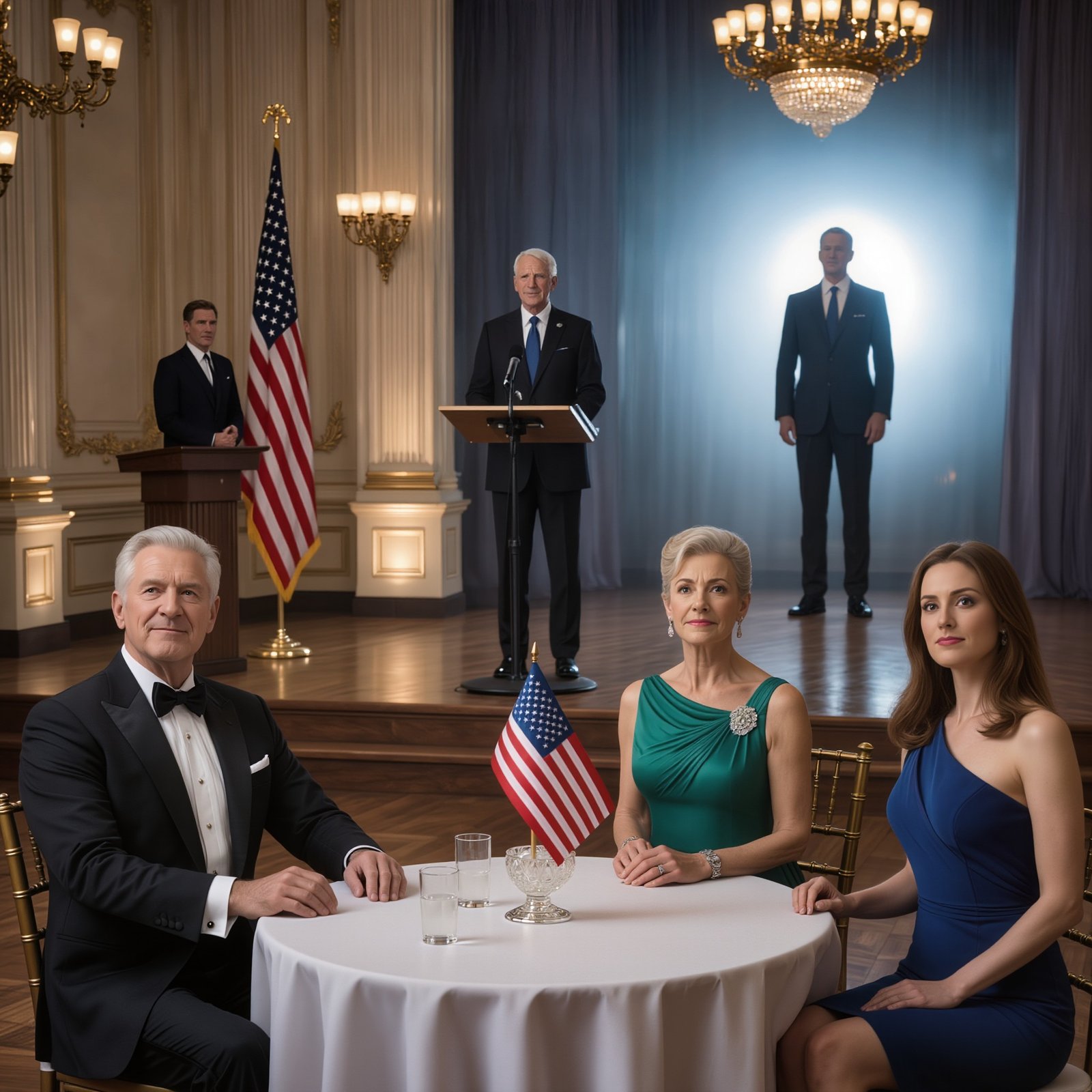
The Grand Plaza ballroom glittered under cascading chandeliers. Five hundred of the most powerful figures in hospitality, finance, and media filled the space with polished conversation and clinking glasses.
Backstage, I watched the room through a monitor.
I saw my mother arrive in her favorite designer gown, posture immaculate, smile fixed. My father beside her in a custom tuxedo. Victoria trailing behind, phone already in hand.
They took their seats at a front table, exactly where my mother believed she belonged.
I heard her voice carry through the mic feed as she greeted acquaintances.
“So proud of Victoria,” she said. “She’s everything we hoped for in a daughter.”
I didn’t feel anger.
I felt distance.
Marcus stepped onto the stage to open the evening. His voice filled the room, commanding attention effortlessly.
“Tonight,” he said, “we celebrate excellence. But more importantly, we celebrate transformation.”
He told the story of the Yamamoto incident without naming me at first. The crisis. The cultural misstep. The resolution.
Then he said the words that shifted the air.
“The person responsible was not an executive. Not a board member. She was a frontline professional who understood something many of us forget. That respect is not transactional.”
I watched my mother stiffen.
Marcus continued, “That professional is now leading one of the most critical divisions of this company.”
He turned slightly.
“Please welcome our new Director of Guest Experience, Giana Dixon.”
The spotlight hit me as I stepped onto the stage.
Applause rolled through the room, swelling, then breaking into gasps as recognition dawned.
I found my family’s table instinctively.
My mother’s glass slipped from her fingers and shattered. My father looked as though the floor had vanished beneath him. Victoria’s phone fell onto the table, still recording, forgotten.
I met their gaze once.
Then I looked away.
Marcus pinned my executive badge in place, his hand steady.
“Director Dixon,” he announced, “has already driven a fifteen percent increase in guest satisfaction metrics and secured a fifty-million-dollar international expansion partnership.”
The screens behind us displayed my name. My title. My official portrait.
When I spoke, my voice was calm.
“Thank you,” I began. “Tonight, I want to talk about service. Real service. Not as subservience, but as expertise.”
The room leaned in.
“For years, I worked in roles people dismissed. Roles they believed were temporary or lesser. But those roles taught me something vital. That the people closest to the work often see the most.”
I paused, deliberately.
“Talent does not announce itself with titles. It reveals itself in action.”
Applause broke out before I could continue.
When I left the stage, my family surged toward me.
My mother grabbed my arm. “How could you not tell us?” she hissed.
I gently removed her hand.
“You disowned me,” I said evenly. “At seven forty-three p.m., February twenty-eighth. On camera.”
My father tried to speak. “We didn’t mean—”
I opened my portfolio and pulled out the letter.
“Your signatures are very clear.”
Victoria’s face twisted. “You’re enjoying this,” she accused.
“No,” I replied softly. “I survived it.”
Security appeared at Marcus’s signal.
“These individuals are not on my approved contact list,” I said calmly.
The phrase sounded strange and powerful at the same time.
As they were escorted out, my mother’s voice cracked. “Gianna, please.”
I didn’t turn around.
The fallout was swift and public.
The gala incident made headlines. Donors withdrew from my mother’s foundation. Boards distanced themselves. My father’s company stock dipped amid concerns about leadership judgment.
Victoria’s firm reassigned her quietly.
Meanwhile, my inbox filled with congratulations, interview requests, partnership proposals.
Six months later, my life looked nothing like it once had.
I was promoted to Senior Director. I funded scholarships. I built programs that elevated frontline talent.
My family tried one last time, sending flowers to my office with a note that read, We’re proud of you.
I had them returned unopened.
Forgiveness, I learned, does not require access.
On the anniversary of my disownment, I framed the letter and hung it in my office.
Not as a wound.
As proof.
Proof that the night they tried to end me was the night I finally began.