I Once Dismissed My Wife as “Just a Stay-at-Home Mom.” What I Learned Two Weeks Later Changed Everything
For years, I thought I understood success.
In my head, it had a title that looked good on a business card.
It had a paycheck you could measure.
It had a straight line forward.
I didn’t think of that belief as shallow.
I thought it was responsible.
I thought it was what adults did.
Work hard. Provide. Move up.
Repeat.
I carried that mindset like a badge.
I brought it home with me, too.
And without meaning to, I used it as a ruler.
I measured myself with it.
Then I started measuring other people with it.
Most of all, I measured my wife.
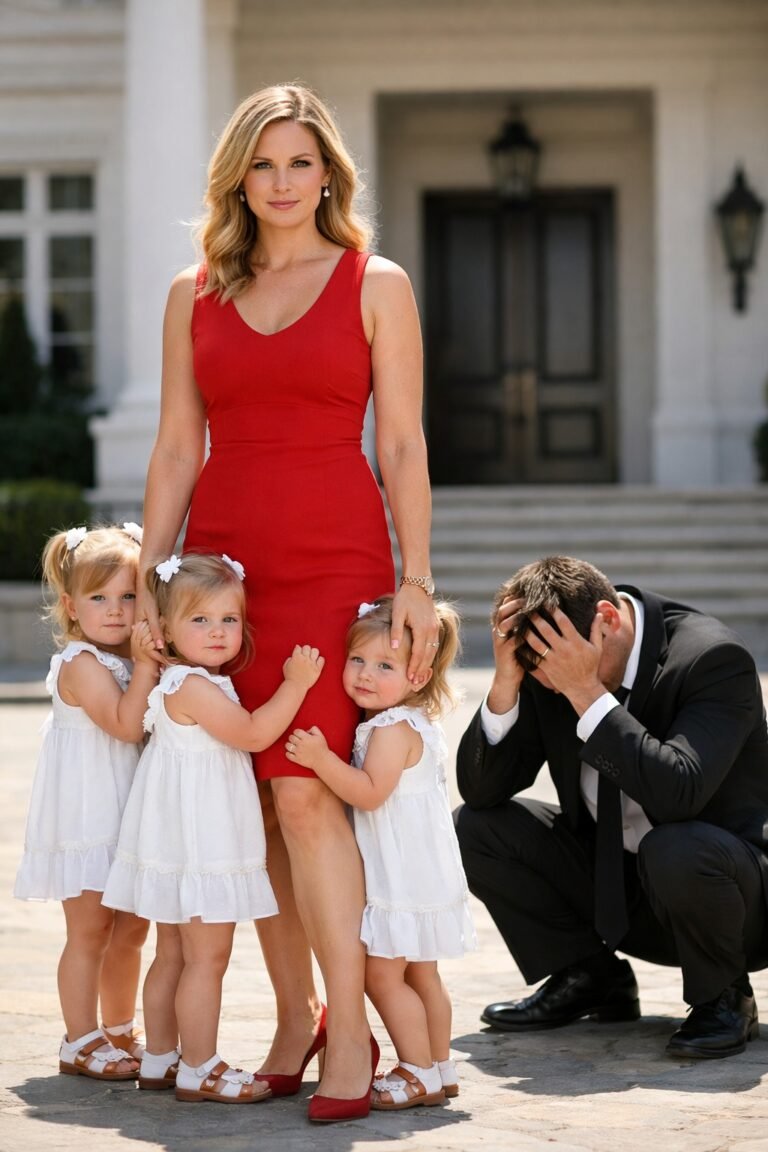
Anna had been home with our kids for years.
It wasn’t a dramatic decision we made with speeches and certainty.
It was practical, then gradual.
A temporary plan that became the shape of our life.
One child became two.
Two became three.
Schedules multiplied until the calendar looked like a puzzle.
The baby arrived and time turned into small, broken pieces.
Anna learned to live inside those pieces.
I saw the results of her work every day.
The lunches packed.
The appointments remembered.
The house held together by routines that ran even when nobody thanked her.
But I didn’t see the invisible labor.
I didn’t see the mental load, the emotional load, the constant quiet calculating.
Not clearly.
Not until I said something that changed the air in our home.
That morning started the way our mornings always did.
The kitchen was already loud.
Not joyful loud.
Real loud.
Our oldest was arguing with a sibling about a missing worksheet.
The middle one was accusing everyone of stealing a sock.
The baby fussed from the living room, demanding attention like it was urgent news.
The counters were cluttered with half-finished breakfasts.
Cups sat too close to the edge.
A cereal box leaned open like it had given up.
Outside, the light was pale and early.
Inside, everything moved too fast.
Anna stood at the counter, tying her hair back.
She did it with one hand.
The other hand kept reaching automatically for what needed doing.
A bottle.
A spoon.
A sticky spot on the floor.
She looked tired.
Not the kind of tired that collapses.
The kind of tired that becomes normal.
She cleared her throat gently.
That small sound should have told me this mattered to her.
Instead, I barely looked up from my phone.
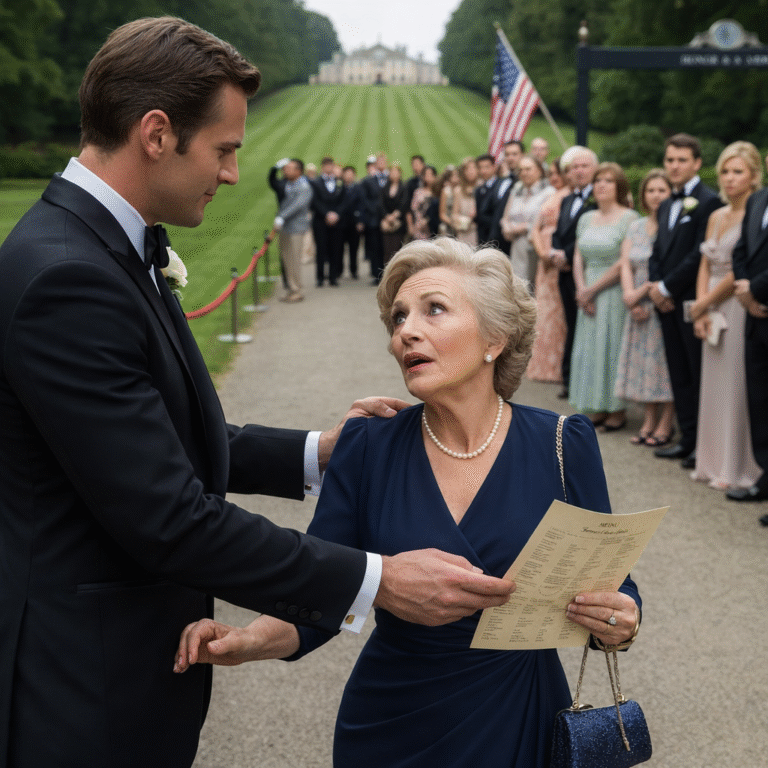
She mentioned her upcoming high school reunion.
Ten years since graduation.
She said she was thinking about going.
Her voice was careful.
Like she didn’t want to sound demanding.
Like she was asking permission without asking.
I laughed.
It came out quick and casual.
It wasn’t meant to hurt.
But it did.
I asked why she’d want to go.
I said it like a joke.
I implied there wasn’t much to share.
What would you talk about, I suggested, like it was harmless curiosity.
Carpool schedules?
Lunch packing?
The baby’s sleep habits?
I didn’t use those exact words.
I didn’t have to.
The meaning was clear enough.
Then I said the sentence that still makes my stomach tighten.
I told her she was just a stay-at-home mom.
The words dropped into the room like something heavy.
The kitchen didn’t go quiet.
The kids were still talking.
The baby was still fussing.
But Anna went still.
She didn’t gasp.
She didn’t cry.
She didn’t snap back.
She didn’t ask me what I meant.
She just paused, her hands resting on the counter.
Then she nodded once.
A small motion.
Controlled.
She gave a quiet response that sounded like she was agreeing.
Then she turned back to the sink.
Water ran.
A plate clinked softly.
She started washing like nothing had happened.
That was the moment I should have stopped everything.
That was the moment I should have apologized.
I didn’t.
I told myself it wasn’t a big deal.
I told myself I was being practical.
I told myself I was being honest.
I left for work with the house still spinning behind me.
I didn’t notice, not right away, what changed.
Or maybe I noticed and refused to name it.
Anna didn’t mention the reunion again.
She didn’t bring up my comment either.
At first, I took that as proof it hadn’t mattered.
Then the distance arrived.
Quietly.
Not with yelling.
Not with slammed doors.
With absence.
Dinner still appeared at night.
The kids still got where they needed to go.
The bills still got paid.
But the warmth was gone.
She stopped laughing in the kitchen.
She stopped making small comments that used to fill the space between us.
She stopped telling me the funny details from the kids’ days.
Our conversations became efficient.
Who needs to be picked up.
What time the appointment is.
What’s left on the grocery list.
In bed, she turned away from me.
It wasn’t dramatic.
Just enough to leave a space.
That space felt wider than it should have.
I told myself she’d move past it.
Two weeks, I thought, and she’d be back to normal.
I convinced myself a marriage doesn’t wobble over one careless sentence.
I didn’t understand that it wasn’t only the sentence.
It was what the sentence revealed.
Two weeks after that morning, a box arrived.
It sat on our porch like it had been placed there with intention.
Large.
Plain cardboard.
Addressed to Anna.
No return label.
No explanation.
Just her name.
I carried it inside and set it near the table.
Anna was upstairs with the baby.
The house was unusually quiet for a moment.
The kids were in their rooms.
The baby’s noise was muffled through the ceiling.
I told myself I’d leave the box alone.
I told myself it wasn’t mine.
Curiosity still pulled at me.
Not the harmless kind.
The kind that feels like a hand closing around your chest.
I cut the tape.
The cardboard flaps opened with a soft tear.
Inside was a framed photograph.
A class picture.
Her graduating class.
Faces I recognized from stories.
Names I’d heard over the years.
People who belonged to a life Anna rarely talked about now, not because she didn’t care, but because she didn’t have room.
The frame was wrapped carefully.
The glass was clean.
Across the matting were signatures.
Dozens of them.
Different handwriting, different ink.
Some names were bold.
Some were small and careful.
Some had little notes next to them.
A heart.
A smiley face.
A tiny inside joke.
It looked like someone had passed it around with purpose.
Like they wanted her to feel surrounded.
I turned the frame over.
A folded note was taped to the back.
My fingertips hesitated before peeling it free.
I unfolded it slowly.
The message was simple.
They missed her.
They knew she hadn’t come.
They said they understood.
They told her not to be ashamed of her life.
They told her motherhood mattered.
They told her she mattered.
They invited her to the next reunion.
They promised she’d have a place among them.
Something tightened in my chest as I reread it.
A warm pressure that didn’t feel warm at all.
Then my eyes caught a name.
Anna’s closest friend from high school.
Now a surgeon.
A person I had mentioned before, casually, like she represented “real” success.
A name I had used without thinking.
I sat at the table with that framed photo in front of me.
The kitchen light reflected faintly on the glass.
The room smelled like dish soap and leftover toast.
I stared at the smiling faces, at the signatures, at the note.
And for the first time, I saw the full picture of what I’d been blind to.
Anna had built a life that didn’t come with applause.
Anna had worked in ways no one listed on a résumé.
Anna had given our family stability with her time, her patience, her attention.
And I had dismissed it with one careless sentence.
Footsteps creaked overhead.
The baby made a soft sound.
Then I heard Anna coming down the stairs.
I didn’t move.
I didn’t hide the frame.
I just sat there, watching the doorway, the weight of that note pressing into my hands.
When she stepped into the kitchen and saw the open box, her eyes landed on the photograph.
Then they landed on me.
And the air between us changed again.
Anna stopped at the edge of the kitchen, her hand still resting on the stair rail.
For a moment, she didn’t say anything. She didn’t rush forward, didn’t ask why the box was open, didn’t react the way I half expected her to.
She just looked at the photograph.
Then she looked at me.
Her expression wasn’t angry. It wasn’t surprised either. It was tired in a deeper way than I had seen before, like something in her had already accepted this moment long before it arrived.
“I didn’t think you’d see it like this,” she said quietly.
Her voice wasn’t accusing. That somehow made it worse.
“I’m sorry,” I said immediately.
The words came out fast, almost tripping over each other, but they were real. I stood up, gesturing awkwardly toward the frame, the note, the open box like they were evidence in a case I didn’t know how to defend.
“I shouldn’t have opened it. And I shouldn’t have said what I said. I didn’t mean it the way it came out.”
She didn’t interrupt me.
She walked over slowly and sat down at the table, pulling the frame closer. Her fingers moved across the glass, tracing familiar faces, familiar names, people who had once known her in a different life.
“I know you didn’t mean to hurt me,” she said after a moment. “That doesn’t mean it didn’t.”
That landed harder than any argument would have.
She turned the frame over and gently removed the note from the back, unfolding it like she had already memorized every crease.
“They sent this because they thought I was embarrassed,” she said. “Because they thought I didn’t come since I didn’t have anything to show for my life.”
I opened my mouth to respond, then closed it again.
Because the truth was uncomfortable.
That assumption hadn’t come from nowhere.
She continued speaking, still calm, still measured, like she was explaining something fragile.
“I didn’t skip the reunion because I don’t love my life,” she said. “I skipped it because I didn’t know how to explain it without sounding small.”
My chest tightened.
She looked up at me then, her eyes steady but glossy.
“I used to be someone people asked about,” she said. “Now I feel like I disappear behind the kids. Behind schedules. Behind your job.”
I sat back down slowly, the weight of her words settling in places I hadn’t known were exposed.
“I never meant to make you feel invisible,” I said.
She gave a small smile, sad but understanding.
“I know,” she said. “But when you said I was just a stay-at-home mom, it felt like you confirmed my worst fear.”
I swallowed hard.
That fear had never crossed my mind, not once. And that realization felt like a failure I couldn’t soften.
She told me how she had watched friends move forward while her world stayed centered on home. How she didn’t regret being with our kids, not for a second, but sometimes wondered who she was outside of that role.
Not because she wanted to leave it.
Because she wanted it to count.
“I love our life,” she said. “I just needed you to see it as more than background noise.”
The silence that followed wasn’t tense.
It was heavy with understanding that came too late to feel clean.
I told her things I should have said years ago.
That I had confused income with importance. That I had taken her steadiness for granted because it never faltered. That I had assumed her strength meant she didn’t need affirmation.
She listened without interrupting, her hands folded around the note.
“I don’t need applause,” she said. “I just need respect.”
That sentence stayed with me.
We didn’t fix everything that night.
There was no sudden return to warmth, no neat resolution tied with a bow.
But something shifted.
The space between us stopped growing.
And for the first time since that morning in the kitchen, I understood that I had been measuring the wrong things all along.
That night did not end with a grand moment.
There was no dramatic embrace.
No instant forgiveness.
No sudden return to the way things had been.
Instead, it ended quietly.
Anna went upstairs to put the baby down. I stayed at the table long after the house settled, staring at that framed photograph like it might keep teaching me things if I looked long enough.
The kitchen light hummed softly above me.
The house smelled faintly of soap and warm bread.
Everything looked normal.
Nothing felt the same.
Over the next few days, I became painfully aware of how much I had tuned out over the years.
Not because I didn’t care.
Because I had assumed things were handled.
Anna woke before everyone else, not because she had to, but because it was the only quiet she ever got. I started noticing how she mentally ran through the day before her feet even hit the floor.
Who had practice.
Who had a dentist appointment.
Who needed a permission slip signed.
I noticed how often she paused mid task, lost in thought, recalculating plans when something shifted unexpectedly.
A sick child.
A late pickup.
A forgotten project.
She absorbed those disruptions without complaint.
Like they were simply part of her job.
Except no one had ever called it that.
I started coming home earlier when I could.
Not to help in a performative way.
But to observe.
To understand.
Dinner wasn’t just cooking.
It was managing preferences, allergies, moods, and timing so everyone ate before someone melted down. Bedtime wasn’t just brushing teeth and reading stories.
It was negotiating emotions.
Fears about school.
Worries they didn’t yet have words for.
Small heartbreaks they only trusted her with.
Anna carried all of it.
Quietly.
I saw how the kids instinctively went to her when something felt wrong, even when I was sitting right there. Not because they didn’t love me.
Because she was their constant.
Their safe place.
One evening, our oldest asked Anna for help with a project.
I watched as she sat at the table, explaining things patiently, even when she had already explained them twice. She didn’t rush. She didn’t sigh.
She adjusted her explanation until it landed.
That kind of patience doesn’t come from nowhere.
It comes from practice.
Years of it.
That night, after the kids were asleep, I asked her something I should have asked a long time ago.
“When was the last time you did something just for you?”
She didn’t answer right away.
She thought about it carefully, like she didn’t want to exaggerate or complain.
“I don’t know,” she said finally. “I don’t really think about it that way anymore.”
That answer stayed with me.
Over the next week, I noticed how often Anna put herself last without announcing it. She ate leftovers after everyone else finished. She stayed up folding laundry instead of sitting down.
She remembered birthdays for both sides of the family.
She remembered teachers’ names.
She remembered which kid liked which color cup.
I had been calling that background.
It wasn’t.
It was the structure everything else rested on.
One evening, I came home to find her sitting on the couch, staring at her phone.
She wasn’t scrolling. She wasn’t texting.
She was just holding it.
I sat beside her without speaking.
After a moment, she said, “One of the women from the reunion messaged me again.”
I waited.
“She asked if I ever thought about going back to school,” Anna continued. “Not because she thinks I should. Just because she remembered how much I loved learning.”
There was no bitterness in her voice.
Just uncertainty.
“I don’t even know who I’d be if I wasn’t doing this,” she said, gesturing vaguely around the room.
That was the moment I realized how much of herself she had poured into our family without ever asking for anything in return.
And how carelessly I had dismissed that.
“I see you,” I said quietly.
She looked at me then, really looked at me, like she was deciding whether to believe me.
“I know,” she said. “You’re trying now.”
Trying wasn’t enough.
I knew that.
So I started changing things in ways that mattered.
Not grand gestures.
Not announcements.
Consistency.
I took over bedtime a few nights a week, even when it meant fumbling through routines she had perfected. I learned the schedules instead of asking her to remind me.
I stopped referring to my job as the reason things worked.
I started acknowledging that my ability to focus on work existed because she handled everything else.
One Saturday, I told her to go out.
No errands.
No tasks.
Just time.
She hesitated at first, like she was waiting for conditions.
“What if something comes up?” she asked.
“I’ve got it,” I said.
She left anyway.
When she came back hours later, she looked lighter.
Not transformed.
Just a little more like herself.
That framed photograph went up in the hallway a few days later.
Right where everyone could see it.
Not hidden away.
Not framed as nostalgia.
But as recognition.
The kids asked about it.
Anna told them stories.
About friends.
About school.
About a version of herself they had never known.
They listened like it mattered.
Because it did.
A few weeks later, Anna mentioned the next reunion.
Not casually this time.
Not carefully.
She said she thought she might go.
I didn’t laugh.
I didn’t hesitate.
“I’ll handle everything here,” I said. “You should go.”
She smiled, slow and genuine.
Not relieved.
Seen.
That night, lying in bed, she turned toward me instead of away.
The space between us felt different.
Smaller.
Not because everything was fixed.
Because something had finally been understood.
I used to think success was about moving forward.
About climbing.
About visibility.
Now I know it’s also about holding.
About sustaining.
About doing the work that never makes headlines but shapes lives.
I learned that respect isn’t something you assume your partner feels.
It’s something you show.
Daily.
In language.
In attention.
In action.
Anna never stopped being capable.
I just stopped paying attention.
And realizing that changed everything.