He Planned to Leave Me With Nothing. I Planned First.
The first thing I noticed was the cold.
Not the kind that slips in through a window in January, not the sharp bite of lake air that always seems to find a way into Chicago no matter how new the building is. This cold was smaller, closer, personal. It was the chill of an empty space beside me in bed, the imprint of another body already gone.
I lay there for a moment with my eyes open, staring into the dark, listening. In our high rise, there was always sound if you paid attention: the distant hush of traffic, an elevator moving somewhere below, a faint mechanical sigh from the vents. The city never really stopped breathing. But that night, everything felt too still, as if the apartment had decided to hold its breath with me.
I turned my head. Dean’s side of the bed was smooth and cool, the sheets barely disturbed. He had been up for a while.
At first, I told myself it was nothing. A glass of water. A trip to the bathroom. One of those half-awake wanderings that happen when you drink too much tea before bed. I sat up anyway, rubbing my eyes, trying to shake off the heavy fog of sleep.
Then I heard it.
His voice.
Not loud, not casual, not the tone he used on speaker while making calls during the day. This was something else, quiet and careful, threaded with control. The sound came from the hallway, where the light was off and the darkness was broken only by a thin slice of moonlight spilling through the windows.
I swung my legs over the edge of the bed and stood. The hardwood floor met my bare feet like cold stone. I moved without thinking, following the sound the way you follow smoke when you smell something burning.
The hallway was dim, silvered by the moon. Shapes of furniture and framed photos were softened into shadows. I could see the faint outline of Dean near the end of the hall, turned slightly away, phone to his ear. His posture was relaxed, like he belonged in that moment, like there was nothing risky about speaking at that hour.
“Just a little longer,” he murmured.
I slowed, my body already tightening. I stood in the doorway between bedroom and hall, half hidden by the wall, the kind of place you find yourself in when instinct tells you not to be seen.
“She doesn’t suspect anything yet.”
The sentence landed like a weight on my chest.
For a second I could not even process it. The words hung in the air, almost gentle, like something you might say about a surprise party, about a gift tucked in a closet. But there was nothing playful in his voice. There was reassurance there, yes, but it was cold reassurance, the kind given to someone who was getting impatient.
My heart started to hammer, fast and loud, like it was trying to warn me in a language older than thought.
She doesn’t suspect anything yet.
I was she.
A sick heat spread through my stomach. The hallway felt narrower, the air thicker, like the apartment had shrunk around the secret I had just overheard. I tried to listen for more, but his voice dipped, the rest of the words swallowed by distance and caution.
I leaned in just a fraction, straining, as if hearing the next sentence would explain everything, would make the first one less sharp.
It didn’t.
All I caught was the rhythm of his speech: smooth, measured, confident. Dean had always been a man who knew how to shape a conversation, how to make people feel like everything was fine even when it wasn’t. I had watched him do it with clients, with friends, with my own mother. He could smile through anything.
But this was different. This wasn’t his public charm.
This was the sound of someone arranging pieces on a board.
A soft shift of footsteps.
He was coming back.
My lungs tightened. Panic surged up my throat. I moved quickly, silently, back into the bedroom. The covers were cool when I slipped beneath them, my body stiff with effort as I forced myself to settle, to loosen my shoulders, to slow my breathing the way you do when you are pretending to sleep.
The doorframe creaked faintly as he entered. I kept my face turned slightly away, eyes closed, lashes resting still. The bed dipped with his weight. He smelled faintly of soap and something metallic, maybe the cold air of the hallway.
He lay down like a man with no fear.
I waited. My heart refused to calm.
Minutes passed. His breathing deepened, steadying. The ease of it made anger spark in me, quick and hot. How could he slide into bed like this, into the space beside me, and let his body relax as if he had done nothing?
I turned slowly, letting my eyes open, letting the movement look like I was stirring from sleep.
“Where were you?” I asked.
My voice came out soft, slightly rough, convincingly groggy.
“In the bathroom,” he said immediately, without the smallest pause.
A lie so smooth it could have been practiced.
I blinked, letting silence stretch just enough to make it feel natural. “I thought I heard you talking.”
He shifted, almost imperceptibly, then relaxed again. “Client call. Different time zone. Had to smooth out some details.”
He didn’t look at me like he was nervous. He met my gaze the way he always did, steady and unreadable.
For a moment, the old part of me wanted to accept it. Wanted to fold the night back into normal life, into our routines and shared mornings. That part of me was tired. It had lived inside this marriage for long enough that it knew the comfort of believing.
But another part, newly awake, took note of everything.
Dean never whispered on work calls.
Dean never cared if I overheard him.
Dean never sounded like he was calming someone down about me.
I swallowed and turned away as if I was satisfied. He moved closer, draping an arm across his pillow, and within minutes his breathing fell into the deep rhythm of sleep.
I lay there staring into the dark until the ceiling began to lighten with the approach of morning.
When the first gray-blue light seeped through the windows, I finally got up.
Dean was still asleep, sprawled in a way that would have looked almost boyish if I hadn’t heard what I’d heard. His face was calm, his mouth slightly open, his hair messy against the pillow. He looked like a man without secrets.
I stepped into the kitchen, phone in hand. The counters were cool under my fingertips, the air faintly scented with last night’s clean dishes and the trace of coffee from the day before. Outside, the city was waking. Cars glided far below like dark insects. The river, just visible from our angle, looked like a strip of dull steel.
I did not usually check our finances. It had simply never been part of the shape of our marriage. We had a joint account for household expenses, and we each kept our personal finances separate. Dean always handled the joint side, and for years I didn’t question it. I was building my own work, my own stability. I liked the feeling of independence. I told myself we trusted each other.
That morning, trust felt like a thing with cracks.
I logged in.
At first, it looked ordinary enough. Familiar vendor names, the predictable rhythm of household payments. Then I saw the withdrawals.
Five hundred dollars.
Twelve hundred.
Seven hundred fifty.
Two thousand.
They weren’t huge amounts individually, but they were steady. Regular. Like someone siphoning water from a glass a little at a time so you wouldn’t notice it was empty until it was too late.
My throat tightened. I scrolled further.
There were more.
Dozens over the last three months.
Not bills. Not shared expenses. Not anything we had discussed. Not anything I recognized.
My hand trembled slightly as I held the phone. The screen felt too bright, too sharp. The numbers looked like accusations.
I heard movement behind me.
I locked the screen instantly and set the phone down as Dean appeared in the doorway, rubbing a hand over his neck. He wore the same half-awake expression he always did in the mornings, the soft slump of a man who expects the day to meet him gently.
“Morning,” he mumbled. “What’s for breakfast?”
I kept my face neutral. I had never been good at lying, but I was excellent at staying quiet when something inside me was screaming.
“I was about to ask you that,” I said.
He smirked, poured coffee, and took a long sip. The mug clinked softly against the counter when he set it down.
I watched his hands. I watched his eyes. I watched the ease of him.
“I checked our account,” I said.
There. Simple. Plain.
For half a heartbeat, his body went still.
It was so quick it could have been nothing, except my attention had sharpened into something fierce. I saw his grip tighten around the mug. I saw his jaw set, then loosen.
He let out a light chuckle. “And?”
“There are small withdrawals I don’t recognize.”
He lifted the mug again, sipped, swallowed. “Just small opportunities. Nothing to worry about.”
I leaned my hip against the counter, folding my arms. “Opportunities?”
He nodded. “Short-term. Business stuff.”
“What business stuff?” I asked, keeping my voice level, almost bored.
His eyes met mine. Calm. Practiced. “A few things. It’s fine, Sah.”
The way he said my name felt strange, like it was part of a performance.
I stared at him for a long moment. He didn’t flinch. If he was lying, he believed he could talk his way out of it, the way he always had.
I forced myself to nod once, as if I accepted it.
But inside, something hardened.
The rest of the day, I moved through our apartment with a new awareness. Dean’s phone was always in his hand. He angled it away from me without thinking. When he set it down, the screen faced the table. When it buzzed, he checked it too quickly. When calls came in, he stepped into other rooms.
He was building a wall. Quietly. Brick by brick.
That night, I lay in bed beside him, staring at his profile in the dark. His face looked soft in the dim light. His breathing was even, his body loose with sleep.
I wondered how long he had been able to sleep like this.
How long he had been planning something and still come home, kiss me, ask about my day, laugh at the same shows.
How long he had been keeping me in the dark.
The next morning, the exhaustion in my bones felt like it had soaked all the way into my joints. I made coffee on autopilot. The smell should have been comforting. It wasn’t.
Dean came into the kitchen, kissed my temple, and leaned against the counter like he belonged there, like he hadn’t said what he said in the hallway, like he hadn’t lied to my face.
“I was thinking,” he said casually, “we should get our financials organized. Just in case.”
My hands paused over the mug.
“Our financials?” I echoed, careful.
“Yeah,” he said, sipping coffee. “Accounts, passwords, assets. Everything in one place.”
I stared at him, feeling something cold settle in my stomach.
He had never asked about my personal finances before. Never shown interest in my accounts or my savings. We had always kept certain things separate, not out of distrust, but out of respect for the lives we each built before we met and the lives we continued to build after.
He was asking now because he wanted access.
I smiled, letting it look like agreement. “I can put something together.”
He nodded once, satisfied, and moved on to talking about dinner plans, about work, about nothing.
But the words stayed lodged in me like a splinter.
That evening, he was almost too relaxed.
He laughed at the television, ordered takeout like we were the same couple we had always been, asked if I wanted extra sauce, as if the world was simple.
It made my skin prickle.
I watched him out of the corner of my eye. His movements were smooth, his voice light. The ease of him felt rehearsed, like a man playing the part of a good husband because it benefited him.
When he got up to shower, he left his phone on the coffee table.
Dean never left his phone.
I stared at it, my pulse quickening, my mouth going dry. The screen was face down, like always. I could have left it there. I could have kept pretending.
Then the phone lit up.
A notification.
A message preview.
The name was unfamiliar.
Ilia Maro.
The glow from the screen cast a small rectangle of light on the ceiling. My heart thudded hard enough that my ribs ached.
I reached for the phone before I could talk myself out of it, lifting it just enough to read the words without unlocking anything.
Just make sure she stays in the dark. Almost there.
My breath caught.
The room felt too small. The air felt thin. My fingers tightened around the phone as if it might disappear, as if the message would vanish and I would have to question my own memory.
She stays in the dark.
Almost there.
Almost where.
Almost what.
My mind fired off possibilities like sparks: another woman, hidden money, something legal, something cruel. The sound of the shower running in the bathroom suddenly seemed louder, more intrusive, like a countdown.
I set the phone back down exactly where it had been, face down, at the same angle. My hands were shaking now. I pressed them against my knees to still them.
The water shut off.
I sat stiffly on the couch, forcing my face into something calm, something ordinary. My heart pounded in my throat.
Dean walked out a minute later, towel around his waist, hair damp, looking relaxed. He smiled at me as if we were safe.
“Did you decide on dinner?” he asked, drying his hair with slow, careless motions.
“Not yet,” I said, voice steadier than I felt.
He picked up his phone, unlocked it with practiced ease, and glanced at the screen. His expression didn’t change. If he noticed anything, he didn’t show it.
But I saw the way his thumb moved quickly, the way he tucked the phone closer to his body as if shielding it from view.
That night, I let him kiss me goodnight. I let him slide into bed beside me. I let him fall asleep.
And I stared into the dark, whispering a name I didn’t know to no one and everyone.
“Ilia Maro.”
By morning, my fear had cooled into something more focused. I moved through the kitchen like a woman holding a secret in her mouth, careful not to bite down too hard.
Dean sat across from me at breakfast, scrolling through his phone. He looked perfectly at ease. If he was worried, he hid it well.
Then he looked up and smiled, too smooth, too quick.
“Can you sign something real fast?” he asked.
My stomach tightened. “Sign what?”
“Just some updates,” he said lightly, sliding papers across the table as if they were menus. “Paperwork.”
His fingers tapped the table in a rhythm that wasn’t quite steady. I didn’t think he realized he did it. I had noticed it years ago, the way his hand moved when he was waiting for an answer he wanted.
I picked up the papers.
Legal language. Dense paragraphs. Terms meant to blur and confuse. My eyes moved faster, not because I understood every line, but because I recognized the shape of what it was.
By the time I reached the end, my hands were cold.
Property transfer agreement.
Not a minor adjustment. Not a formality. Not a harmless update.
My assets.
My savings.
The condo.
Everything would be moved into his name.
I set the papers down slowly, as if setting down something sharp.
“Dean,” I said, voice quiet, controlled, “what is this?”
His smile held, but there was a flicker in his eyes. “Just a precaution. Convenience. Nothing changes between us.”
I stared at him, feeling anger rise, hot and clean. “Nothing changes? You’re asking me to sign over everything.”
“Not everything,” he said quickly, like that mattered. “It’s just to simplify things.”
“To simplify for who?” I asked.
He leaned forward slightly, his voice dropping into a tone that was meant to soothe. “Sah, it’s fine. It protects us.”
I could feel my pulse in my fingertips. The paper felt heavy, like it had weight beyond ink.
I met his gaze and spoke the truth simply. “I’m not signing it.”
His smile twitched. His jaw tightened for a second, then he let out a small laugh that held no warmth.
“Don’t be dramatic,” he said.
“Then why are you pushing so hard?” I asked.
The air between us sharpened. His eyes narrowed, just slightly.
“You don’t want to make this difficult,” he said, voice low and controlled.
It was not a shout. It didn’t need to be. The threat was in the calmness of it, in the implication that he had planned for resistance.
I held his gaze. “Is that supposed to scare me?”
Silence stretched.
Then he leaned back, arms crossing, expression sliding into something dangerously neutral. “I just think you’re making things harder than they need to be.”
I didn’t argue. I didn’t throw the papers at him. I didn’t give him emotion to grab onto.
Instead, I smiled, small and calm, the way you smile when you realize someone has underestimated you.
“You’re right,” I said, standing up with the papers in my hand. “I need time to think.”
His eyes followed me as I placed the documents neatly on the counter. His gaze felt sharp on my back. He had expected a fight. He had expected tears. He had expected me to break into the version of myself he could manage.
I didn’t.
That night, he moved through our apartment like nothing had happened. He made a drink. He flipped through channels. He laughed at something on the news. He lived inside the comfort of his own performance, like a man convinced the ending was already written.
I watched him and felt something settle in me.
This was not about our marriage.
This was not about love.
This was strategy.
He was planning to leave.
And he wanted to leave with everything.
The next morning, he sat across from me with his coffee and said, as if he were delivering a speech he’d practiced in the mirror, “We need to talk.”
I tilted my head slightly. “Okay.”
He set his cup down carefully, as if the weight of the porcelain mattered. “I think we should separate.”
There it was.
The words were measured. Controlled. Clean. He didn’t ask if I agreed. He didn’t look for my reaction. He announced it like a decision that had already been made.
“It’s not working anymore,” he said. “You have to see that.”
I stared at him, feeling a strange stillness spread through my body. The part of me that might have once panicked was quiet now, as if it had stepped aside for something stronger.
“You’ve been planning this,” I said.
His expression didn’t change. “It’s for the best. We’ve grown apart.”
Grown apart. Like it was some natural drift, not a deliberate scheme.
I leaned forward, resting my arms on the table. “You mean you want out and you want to make sure you don’t leave empty-handed.”
His lips pressed into a thin line. He didn’t deny it. He didn’t have to. The truth was sitting between us like a third person.
I could feel anger behind my ribs, but it wasn’t wild. It was focused, sharpened.
And then I said the words I had been holding back, the ones I knew would cut through his calm.
“I already moved my assets.”
The change in him was instant.
His shoulders stiffened, and his eyes widened just enough to betray him before he forced control back onto his face.
“What do you mean?” he asked, voice sharper now.
I smiled, slow and steady, the way you smile when you finally stop doubting yourself. “Exactly what it sounds like.”
He stared at me as if he was trying to decide whether I was bluffing. I watched the calculations flicker behind his eyes, the quick mental math of a plan collapsing.
His jaw tightened. His face went pale. Then, like a man reaching for any foothold he could find, he stood up, lifted his coffee, and took a deliberate sip. The motion was too controlled. Too careful.
When he looked at me again, his smile returned, but it was not the smile I’d married. This one was colder, edged.
“You’re going to regret this,” he said.
I didn’t answer. I didn’t have to.
Because I could see it now, clear as day.
He had played his hand.
And he had no idea what I had already set in motion.
The morning after Dean warned me I would regret it, the apartment felt unfamiliar.
Nothing had physically changed. The furniture was in the same place. The city still glimmered beyond the glass. But the air itself felt altered, heavier, as if the walls had absorbed everything that had been said and were now holding it close.
Dean left early. Earlier than usual. He dressed without speaking, movements clipped and efficient, like a man late for something important. He did not kiss me goodbye. He did not glance back when the door closed.
I stood in the kitchen long after the sound of his footsteps faded, staring at my reflection in the dark glass of the window. My face looked calm, but my eyes were sharp, alert in a way they had never needed to be before.
This was no longer about suspicion.
This was confirmation.
I moved through the day with deliberate care. I did not confront him. I did not call anyone in a panic. I did not let myself spiral into questions that would only waste time.
Instead, I opened my laptop.
The first thing I did was make a list. Not a mental one. A real one. Accounts. Assets. Documents. Every single thing I had built before Dean and during the marriage that belonged to me. I opened old files, dug through email folders, pulled up records I had not looked at in years.
Each click grounded me.
I had started my business long before I met him. It had been small at first, fragile, something I nurtured in late nights and early mornings. Over time, it had grown into something solid, something real. Dean had benefited from it. He had never built it.
That mattered.
I called my attorney that afternoon.
Patricia’s office sat in the Loop, all glass and quiet confidence. The kind of place where the carpet muffled footsteps and the air smelled faintly of polished wood and paper. She listened without interrupting as I laid everything out, my voice steady despite the storm humming beneath my ribs.
She flipped through the documents I had already prepared, her expression thoughtful.
“You moved quickly,” she said.
“I had to,” I replied. “He was already moving.”
She nodded once. “That instinct probably saved you.”
When she explained the legal implications of what I had done, something loosened in my chest. The trust. The timing. The separation of assets. The way the law viewed preparation versus retaliation.
Dean was not as clever as he thought.
A week later, the knock came.
It was sharp and official, cutting through the quiet of the apartment like a blade. I already knew what it was before I opened the door.
The man standing there wore a neutral expression and held a thick envelope.
“Sah Keller?”
“Yes.”
“You’ve been served.”
The door closed softly after him. The silence that followed was louder than the knock had been.
I sat at the kitchen table and opened the envelope with slow precision. The pages slid out smoothly, crisp and impersonal.
Petition for dissolution of marriage.
Dean had not hesitated. He had not softened it with conversation or concern. He had gone straight to paper and process.
As I read, my mouth curved into something that was almost a smile.
He wanted half of everything.
The condo.
The car.
Shared assets.
And spousal support.
The audacity of it struck me first. Then the desperation. He was casting a wide net, hoping something would stick.
It would not.
Patricia barely hid her satisfaction when she reviewed the filing.
“He’s got nothing,” she said simply.
I raised an eyebrow. “Nothing?”
She tapped the page. “You moved your assets legally before he filed. He cannot touch them. He can try for support, but given your income history and his, it will not go anywhere.”
For the first time since that night in the hallway, I felt something close to relief.
Dean had built his entire plan on the assumption that I would hesitate.
That evening, the door slammed open without warning.
Dean stood there, tie loosened, eyes blazing. The anger rolled off him in waves so strong it almost vibrated the room.
“You think you’re clever,” he snapped.
I did not jump. I did not flinch. I took a slow sip of wine and met his gaze.
“I think I’m careful,” I said.
His hands curled into fists. “You planned this.”
“So did you,” I replied.
The silence between us stretched tight. His jaw worked as if he wanted to say something else, something sharper, but nothing came out. Finally, he muttered, “This isn’t over,” and turned away.
I watched him go, the door slamming behind him again.
I should have known that was not the end.
The first ripple came at work.
It started with glances. Conversations that stopped when I entered a room. A subtle shift in tone that followed me down hallways.
By mid-morning, my assistant hovered in my doorway, hands twisting together.
“Sah,” she said carefully, “there’s something you should know.”
I looked up. “Tell me.”
She swallowed. “There are rumors. About money. About you moving funds improperly.”
The words landed like ice.
Dean was not satisfied with losing financially.
He wanted to poison everything else.
Patricia was calm when I told her. Almost amused.
“He’s trying to provoke you,” she said. “If he can make you react emotionally, he gains leverage.”
“I want it to stop,” I said.
“It will,” she replied. “But we let him dig his hole first.”
The next move came fast.
A motion filed. A demand for a full financial audit. Allegations dressed up as concern, accusations buried beneath legal language.
Dean was not trying to win.
He was trying to exhaust me.
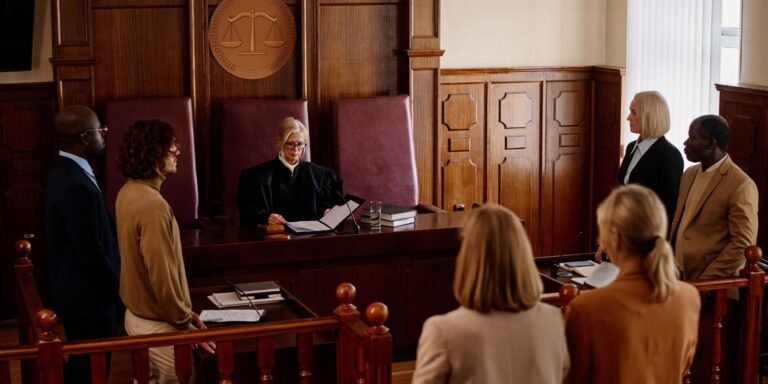
The courtroom was cold and bright, the kind of place where time stretches unnaturally. Dean sat across from me in a tailored suit, looking confident, almost smug. He believed this was his moment.
Patricia dismantled it piece by piece.
The judge did not hesitate.
Motion denied.
Costs assigned to Dean.
The gavel came down with a finality that echoed in my chest.
Outside the courtroom, Dean passed me without looking. As he brushed by, he muttered, “Just wait.”
I did not respond.
Because I knew something he did not.
He was running out of moves.
The call came the next morning.
“Sah,” Patricia said, her voice sharp with focus, “Dean and Ilia filed another complaint.”
The name made my stomach tighten.
“They’re accusing you of falsifying records,” she continued. “They submitted documents.”
For a moment, fear threatened to surface. Real fear. The kind that sinks its teeth in and refuses to let go.
Then Patricia added, “They’re fake. And poorly done.”
Relief rushed through me so fast it made me dizzy.
“They forged timestamps,” she said. “On accounts that did not even exist at the time.”
Ilia Maro had finally stepped too far.
I stared out at the city as something steady settled over me.
“Then let’s end this,” I said.
By the time we filed our counter, the narrative shifted.
Defamation.
Submission of falsified evidence.
Damages.
The courtroom was quieter the second time. Tighter. Dean’s confidence was gone, replaced by something brittle. His lawyer whispered urgently to him as the forensic analyst explained exactly how the documents had been fabricated.
When Patricia placed the final folder on the judge’s desk, I saw it happen.
Dean understood.
His lawyer stood. “My client wishes to withdraw his claims.”
The judge nodded. “Dismissed. Legal costs assigned to Mr. Keller.”
The sound of the gavel felt like an ending.
Dean walked past me without a word. I let him go.
I did not need closure from him anymore.
That came later, quietly, when Patricia slid the final settlement papers across her desk.
“It’s done,” she said.
Dean got nothing.
Not a cent.
I signed my name and felt the weight lift from my shoulders.
That night, standing on my balcony, the city lights stretched endlessly before me. The air was cool, clean, honest.
For the first time in months, I slept without fear.
The final paperwork arrived on an ordinary afternoon, the kind that would have passed unnoticed if my name had not been printed neatly across the top.
I was at my desk when my phone buzzed. Patricia’s name lit up the screen. I let it ring once longer than necessary, just to feel the moment stretch.
“It’s done,” she said when I answered. Her voice carried a calm satisfaction, the kind that comes from watching a long strategy land exactly where it was meant to. “Dean signed. Everything is finalized.”
I closed my eyes and leaned back in my chair. For a second, I did not say anything. I simply breathed. The tension I had been carrying for months loosened all at once, leaving behind an unfamiliar lightness that made my chest feel hollow in the best possible way.
“So that’s it,” I said finally.
“That’s it,” Patricia confirmed. “No appeals. No claims. No remaining motions.”
I thanked her, promised I would stop by to pick up the final copies, and ended the call. The office around me hummed softly. Keyboards clicked. Someone laughed down the hall. Life had been continuing this entire time, indifferent to the private war I had been fighting.
I stood and walked to the window.
The city stretched below, glass and steel catching the afternoon light. Chicago looked the same as it always had, vast and unconcerned, but I felt different inside it. Lighter. Untethered.
When I met Patricia later that day, she slid the final documents across her desk with a satisfied nod.
“Dean waived everything,” she said. “No financial interest. No claims against you. It’s clean.”
I skimmed the pages slowly, not because I expected surprises, but because I wanted to see the words with my own eyes. Each paragraph felt like a door closing behind me.
“How do you feel?” she asked.
I considered the question honestly. Relief was there, of course. Gratitude. Even exhaustion. But beneath all of it was something quieter and more profound.
“Clear,” I said. “Like I can finally hear myself think again.”
She smiled. “That’s what happens when you stop living in defense mode.”
I signed where indicated, my hand steady. When I stood to leave, Patricia extended her hand.
“You handled this exactly right,” she said. “Most people wait too long.”
“I won’t make that mistake again,” I replied.
That evening, my mother insisted on dinner.
She greeted me at the door with a hug that lingered longer than usual, her arms tight around my shoulders, her breath warm against my hair.
“It’s over,” she said softly.
“Yes,” I answered. “It really is.”
Beatrice brought champagne. She raised her glass with a grin that matched the sharp intelligence I had always admired in her.
“To knowing when to stay quiet,” she said, “and when to move first.”
We clinked glasses. The sound rang clean and bright through the room.
Dinner was simple. Conversation wandered. Laughter came easily. No one mentioned Dean by name. He had already begun to feel like something distant, like a story that no longer belonged to the present.
Later, when the city outside darkened and the lights flickered on one by one, I stepped out onto my balcony.
The air was cool, carrying the faint scent of the lake. Traffic moved far below like a slow river of light. I wrapped my arms around myself and looked out at the skyline that had witnessed every stage of my marriage, every quiet compromise, every moment of doubt I had pushed aside.
I thought about the woman I had been when I first moved into that high rise. The woman who believed love was enough. The woman who trusted because it felt easier than questioning.
I did not resent her.
She had done the best she could with what she knew.
My phone buzzed on the small table beside me. An unfamiliar number. I stared at it for a moment, then blocked it without hesitation.
Some doors did not deserve answers.
Inside, I opened my laptop and stared at a blank screen. For a moment, I hesitated. Then I began to type. Not plans, not strategies, not defenses. Just thoughts. Ideas. Possibilities.
A future that belonged entirely to me.
When I finally closed the laptop, the apartment felt different. Not emptier. Quieter. The kind of quiet that does not demand attention, only space.
I stood there a while longer, watching the city breathe, and let the silence settle around me without fear.
This was not the ending Dean had planned.
It was better.